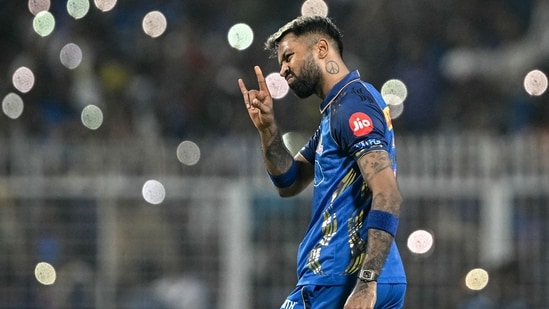
Mumbai Indians’ season of woes just keeps finding new ways to unravel. Already out of the playoff race, the five-time champions faced Kolkata Knight Riders at the iconic Eden Gardens, playing for little more than pride. But even that proved elusive as MI slumped to yet another defeat, prompting captain Hardik Pandya to deliver a painfully honest assessment of his team’s persistent Achilles’ heel: their fielding.
“We’ve been quite poor,” Pandya admitted without mincing words after the match. His candid confession wasn’t just about one game; it was a damning indictment of a season-long struggle that has plagued one of cricket’s most successful franchises.
The Fielding Fiasco: A Season-Long Problem
In T20 cricket, where margins are razor-thin and momentum shifts on a dime, fielding isn’t just an auxiliary skill – it’s a cornerstone of success. Dropped catches, missed run-out opportunities, and sloppy ground fielding don’t just add a few extra runs; they inject life into the opposition, sap confidence from bowlers, and fundamentally alter the course of a game.
Pandya’s frustration is palpable because this isn’t a new issue for MI this season. From crucial early-season encounters to these ‘dead rubber’ fixtures, the sight of Mumbai players fumbling catches or letting easy boundaries through has become a disturbingly regular occurrence. These aren’t minor blips; they are game-changing errors that have consistently cost MI valuable points and, ultimately, their playoff hopes. In a sport obsessed with power-hitting and death bowling, the forgotten art of fielding has come back to haunt the Mumbai Indians.
MI’s Woes: A Season Under Scrutiny
This latest defeat to KKR, where MI managed a modest 147 for 8 on a sluggish pitch and then failed to defend it, serves as a stark metaphor for their entire campaign. Inconsistency has been the defining characteristic. A team packed with international stars and proven match-winners has consistently failed to click as a cohesive unit.
The season began amidst a storm of controversy surrounding the captaincy change, with Hardik Pandya taking over from the beloved Rohit Sharma. This off-field drama seemed to cast a long shadow, contributing to a sense of unease within the squad and among the fan base. On the field, the team rarely found its rhythm. The batting line-up, though boasting immense firepower, often failed to build significant partnerships or accelerate when needed. The bowlers, despite flashes of brilliance, struggled for consistency, particularly in crucial phases of the game. And then, there’s the fielding, which Pandya has now highlighted as perhaps the most fundamental flaw. It’s a bitter pill for a franchise known for its professionalism and high standards.
KKR’s Clinical Campaign: A Different Story
In stark contrast to Mumbai’s struggles, the Kolkata Knight Riders displayed the kind of commanding and clinical performance that has defined their own impressive season. Playing in front of their home crowd, KKR showed no signs of complacency despite facing an eliminated team. For them, every win is crucial as they solidify their position at the top of the table and eye a strong run to the title.
Their bowling unit set the tone from the outset, expertly exploiting the conditions at Eden Gardens. They stifled MI’s star-studded batting lineup, restricting them to a total that was always going to be challenging but defendable if MI’s fielding had been up to scratch. KKR’s disciplined approach, strategic bowling changes, and sharp fielding (a stark contrast to their opponents) were instrumental in securing a vital victory that further boosts their playoff aspirations. They showcased what a well-oiled machine looks like, highlighting the gulf between the two teams on the day.
Pandya’s Post-Match Reflection
Hardik Pandya’s directness in the post-match interview is commendable, if painful. As captain, taking ownership of the team’s shortcomings, especially in a public forum, is a sign of leadership. However, acknowledging the problem is only the first step. For MI, this admission of “poor” fielding, combined with the overall dismal performance, raises serious questions about team preparation, individual accountability, and the strategic direction of the franchise moving forward. With the season drawing to a close, these are uncomfortable truths that the Mumbai Indians management will need to confront head-on.
Why This Matters
This isn’t just another loss for the Mumbai Indians; it’s a profound moment of reflection for a powerhouse franchise. When a captain openly labels a fundamental aspect of his team’s play as “quite poor,” it signals a deeper malaise. For fans, it’s a frustrating end to a season filled with dashed hopes. For the team management, it’s a clear call to action – a sign that significant changes and a rigorous re-evaluation are needed before the next season. For KKR, it’s a crucial step towards glory, but for MI, it’s a stark reminder that even the biggest names can stumble if the basics aren’t right.