
## Key Takeaways
– Former England captain Michael Vaughan openly criticised the Lord’s pitch following an unusually high number of wickets on the first day of the England vs. New Zealand Test.
– The playing surface exhibited inconsistent and alarmingly low bounce from the outset, contributing to a frenetic day where 16 wickets were claimed.
– Vaughan’s comments highlighted a perceived imbalance, questioning the quality of the pitch despite acknowledging the entertainment value derived from the rapid dismissals.
## Main Developments
The hallowed turf of Lord’s Cricket Ground, often revered as the ‘Home of Cricket’, found itself at the centre of an unexpected controversy following the opening day of the first Test between England and New Zealand. What promised to be a quintessential battle of Test cricket skill quickly transformed into a high-octane spectacle of wickets, culminating in a significant number of dismissals that left many observers, including former England captain Michael Vaughan, raising questions about the pitch’s suitability.
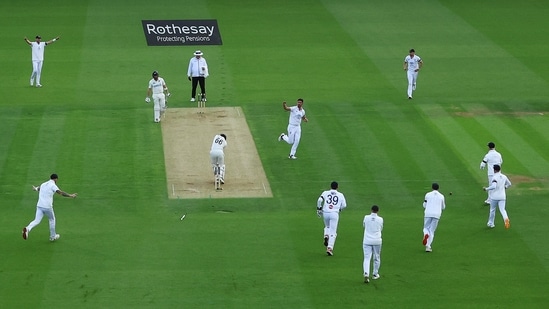
On a day that saw 16 wickets tumble, a figure remarkably high for the inaugural day of a five-day match, the playing conditions emerged as the dominant narrative. Pacemen from both sides found considerable assistance from a surface characterised by inconsistent bounce. This unpredictable element made life exceptionally challenging for batsmen, forcing constant adjustments and sowing seeds of doubt with every delivery. The specific observation of “low bounce” on the first day, according to Vaughan, was particularly alarming, suggesting a pitch that was not performing as expected for a pristine Test match surface.
Michael Vaughan, a respected voice in the cricketing world known for his candid analysis, did not mince words in his assessment. He acknowledged that the day’s play had been “royally entertained” by the rapid succession of wickets and the dynamic nature of the contest. However, he swiftly juxtaposed this excitement with a clear critique, stating that one “cannot look past the shortcomings of the 22 yards.” This sentiment underscores a crucial debate within cricket: the balance between creating an entertaining spectacle and ensuring a fair contest that allows all facets of the game – batting, bowling, and indeed, conditions – to shine equitably.
The impact of these challenging conditions was immediately evident in England’s first innings. The home side, led by Ben Stokes, struggled profoundly against the New Zealand attack, finding themselves bundled out for a mere 140 runs. This total was achieved inside 40 overs, indicating the rapid pace at which wickets fell and the dominance of the bowlers. New Zealand’s Kyle Jamieson spearheaded this demolition, delivering a superb performance to claim five wickets, showcasing his ability to exploit the demanding conditions to their fullest.
However, the nature of the pitch proved to be a double-edged sword. England’s bowlers, invigorated by the assistance on offer, responded robustly. Ollie Robinson, in particular, seized the opportunity, making significant inroads into the New Zealand batting line-up by capturing four wickets on the same eventful opening day. This rapid turnaround highlighted that while the pitch presented difficulties, it offered opportunities for skilled bowlers on both sides to exert their influence, leading to a seesaw battle of attrition and dominance.
The standard expectation for a Day 1 Test pitch, especially at a venue of Lord’s’ stature, is typically one that offers a truer, more consistent bounce, allowing batsmen to settle in and build innings. As the match progresses into its later days, pitches often deteriorate, leading to more variable bounce and spin. The early manifestation of inconsistent and low bounce, therefore, deviates from this norm, prompting concerns about the pitch’s preparation and its overall suitability for the highest form of the game from the very beginning of the series.
Vaughan’s comments hold considerable weight, given his background as a former captain who experienced playing in and leading an England team under various conditions worldwide. His insights are often taken as an authoritative commentary on the nuances of pitch preparation and its effect on the game’s flow and fairness. His dual perspective – appreciative of the entertainment yet critical of the underlying conditions – reflects a broader sentiment among purists who value a balanced contest where skill, rather than excessive external factors, primarily dictates the outcome.
The Marylebone Cricket Club (MCC), as the custodian of Lord’s, carries the responsibility for preparing the playing surface. While no direct admission from the MCC was cited in the immediate aftermath, Vaughan’s phrasing, “MCC would be first to admit,” implicitly points to the club’s awareness of the high standards expected from its iconic ground. This subtle reference suggests that even the managing body would likely acknowledge that a Day 1 pitch exhibiting such significant shortcomings is unusual for a venue with Lord’s’ esteemed reputation. The incident at the first Test sets a compelling precedent for discussions about pitch preparation in modern Test cricket, particularly at venues that hold a global symbolic significance.
## Why This Matters
The state of the Lord’s pitch and the subsequent criticism from a prominent figure like Michael Vaughan underscore several critical aspects of Test cricket. Firstly, it touches upon the integrity of the game, highlighting the importance of a balanced playing surface that allows for a fair contest between bat and ball. When a pitch exhibits extreme characteristics from the outset, it can reduce the influence of nuanced skill and increase the role of chance, potentially diminishing the quality of cricket played.
Secondly, the reputation of iconic venues such as Lord’s is deeply intertwined with the quality of their playing surfaces. As “The Home of Cricket,” Lord’s is expected to provide pitches that are not only challenging but also fair, allowing for a full exhibition of Test cricket’s complexities over five days. Any perceived shortcomings can affect its standing and the perception of the sport’s traditions.
Furthermore, these discussions influence player safety and the longevity of careers. Inconsistent bounce, especially low bounce, can lead to unpredictable movements of the ball, posing risks to batsmen and potentially altering their technique in ways that are not conducive to sustained performance. It also shapes the spectacle for fans; while many wickets can be exciting, consistently challenging conditions might inadvertently shorten matches, affecting the traditional rhythm of Test cricket. The debate ultimately prompts reflection on what constitutes an ideal Test match pitch and the standards expected from the pinnacle of the sport.
## Frequently Asked Questions
What constitutes a ‘good’ Test match pitch?
A good Test match pitch is generally one that offers a fair and balanced contest between bat and ball over the course of five days. Typically, it might offer some assistance to pace bowlers with seam or swing early on, flatten out to favour batsmen on days two and three, and then deteriorate to aid spin bowlers as cracks develop and the surface wears down. The key is consistency in bounce, allowing batsmen to trust the surface, and gradual change, which facilitates evolving strategies throughout the match.
Who is Michael Vaughan and why are his comments on cricket pitches significant?
Michael Vaughan is a former captain of the England cricket team and a highly respected cricket pundit. His comments on pitch conditions carry significant weight due to his extensive experience playing at the highest level around the world, understanding the nuances of different surfaces, and his current role as an influential commentator and analyst. His insights are often seen as authoritative and can prompt broader discussions within the cricketing community about the state of the game.
Why is Lord’s Cricket Ground considered a special venue in cricket?
Lord’s Cricket Ground is revered globally as “The Home of Cricket” due to its rich history, tradition, and iconic status. It has hosted Test cricket since 1884, is home to the Marylebone Cricket Club (MCC) which codified many of the game’s laws, and houses the Ashes urn. Its unique sloping outfield, Victorian pavilion, and long-standing traditions contribute to its mystique, making it a dream venue for cricketers and a pilgrimage site for fans worldwide.