## Key Takeaways
– Former India captain Sunil Gavaskar has challenged the “transition” theory often cited by head coach Gautam Gambhir and captain Shubman Gill.
– Gavaskar argues that team changes are normal, and India’s focus should consistently be on performance, not an excuse for evolving personnel.
– Despite India’s historic innings and 300-run victory over Afghanistan, Gavaskar believes a significant underlying concern for the team remains unaddressed.
## Main Developments
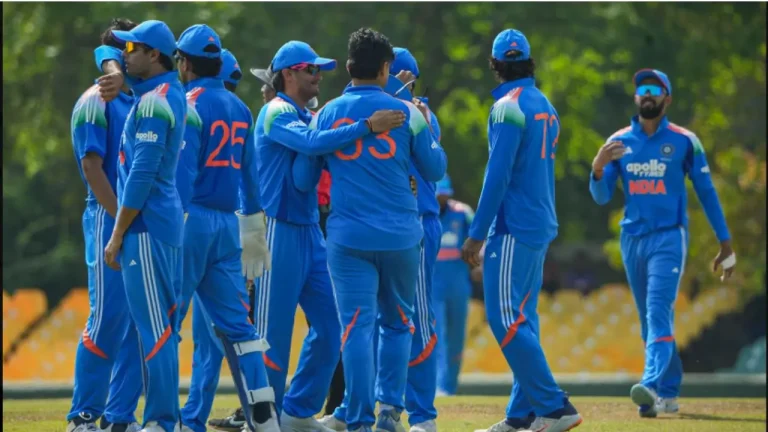
India recently secured their largest-ever Test cricket victory, defeating Afghanistan by an innings and 300 runs in a dominant performance at New Chandigarh’s Mullanpur venue. The match concluded inside three days, showcasing a commanding display from the Indian side. However, this record-breaking triumph has not entirely satisfied cricket legend and former India captain Sunil Gavaskar, who voiced a significant critique regarding the team’s perceived state.
Speaking to broadcaster JioHotstar following the match, Gavaskar publicly rejected the notion that the Indian team is merely navigating a period of “transition.” This “transition” narrative has been a recurring theme, frequently articulated by head coach Gautam Gambhir and captain Shubman Gill, particularly since a number of senior players retired from the sport last season.
Gavaskar’s argument posited that while every cricket team naturally undergoes changes in its playing personnel over time, the fundamental focus should consistently remain on delivering strong performances. He suggested that framing current dynamics as a “transition phase” risks diverting attention from the primary objective of competitive excellence on the field. For Gavaskar, the emphasis should unequivocally be on achieving results rather than attributing outcomes to a temporary state of evolution.
His remarks carry particular weight, given his status as one of India’s most respected cricketing analysts and former leaders. To offer such a pointed observation immediately after a record-setting victory underscores a deeper concern that, in his view, the immediate success against Afghanistan does not fully resolve. Gavaskar indicated that a “bigger India concern” persists, which he believes remains unaddressed despite the team’s comprehensive win. The specific nature of this underlying issue, however, was not detailed in his public comments.
The divergence in perspective highlights a philosophical difference in how the current team leadership and an influential cricketing elder view the state and direction of Indian cricket. While Gambhir and Gill seemingly employ the “transition” explanation to contextualize team development and potential shifts in form, Gavaskar appears to advocate for an unwavering standard of performance, regardless of changes to the squad. His position suggests that a winning margin, even one of historic proportions, should not obscure deeper strategic or systemic issues that may still require attention.
This critical assessment from Gavaskar serves as a pertinent reminder that even in moments of apparent triumph, scrutiny from seasoned observers can reveal underlying dynamics. For him, the ease with which India dispatched Afghanistan in the one-off Test does not necessarily mean the team is without significant challenges. Instead, it places the spotlight back on what he perceives as a lingering issue that demands proactive engagement, pushing beyond simplified explanations of team evolution.
## Why This Matters
Sunil Gavaskar’s outspoken critique, even after India’s historic Test win, is significant because it challenges the official narrative from the team’s current leadership. As a highly respected figure in Indian cricket, his views carry considerable influence among fans, pundits, and potentially even within the cricket administration. His rejection of the “transition” theory suggests a fundamental disagreement on the team’s direction or its accountability.
This difference in perspective between a revered former captain and the current coach and captain highlights potential underlying issues that might not be immediately apparent from dominant on-field results. If a figure like Gavaskar sees an “unresolved concern” despite a record victory, it suggests that the team’s foundational strength or future trajectory might warrant closer examination beyond just match outcomes. It compels a deeper look into what “performance” truly means for the team and whether the “transition” explanation might be masking deeper strategic questions.
## Frequently Asked Questions
###What was India’s recent Test result?
India achieved their biggest-ever Test victory, defeating Afghanistan by an innings and 300 runs in a match played in New Chandigarh (Mullanpur) that concluded in three days.
###Who is Gautam Gambhir in this context?
Gautam Gambhir is the head coach of the Indian cricket team, who, along with captain Shubman Gill, has frequently used the “transition” narrative to describe the team’s current phase.
###What is Sunil Gavaskar’s main argument regarding the Indian team?
Sunil Gavaskar’s main argument is that while team personnel changes are inevitable, India’s focus should consistently be on performance rather than viewing the team’s state through the lens of a “transition” period. He believes a “bigger India concern” remains unresolved, despite the recent dominant victory.