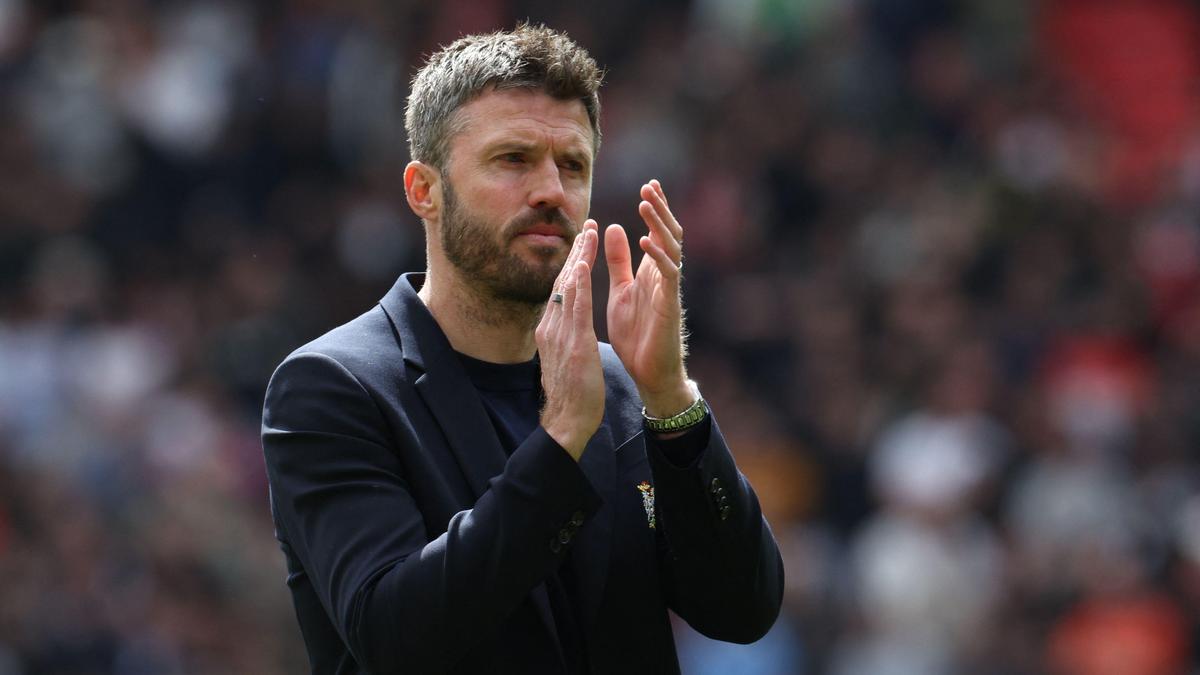
When Manchester United hit rock bottom after a string of demoralizing defeats, the club found itself in a familiar, yet unwelcome, state of crisis. Ole Gunnar Solskjaer’s emotional tenure had come to an end, leaving behind a team that looked utterly devoid of confidence, direction, and identity. The air around Old Trafford was heavy with uncertainty, and the famed ‘United Way’ felt like a distant memory. It was into this swirling vortex that Michael Carrick, a quiet legend of the club’s recent past, stepped up, initially as a reluctant interim manager. What followed was a masterclass in calm leadership and tactical pragmatism that, for a precious few weeks, pulled the Red Devils back from the brink.
### The Storm Before the Calm
The departure of a beloved figure like Solskjaer was always going to be fraught with emotion, but the results leading up to it had been stark. A humiliating 4-1 loss to Watford was the final straw, a performance that epitomized the deep-seated issues plaguing the squad. Players looked lost, tactics seemed non-existent, and the once-feared attack had become toothless. Morale was visibly shattered, and the chasm between expectation and reality had never been wider. The task facing Carrick was monumental: not just to win games, but to restore a sense of pride, purpose, and belief in a group of highly talented, yet underperforming, individuals.
### A Familiar Face, A Fresh Start
Carrick was no stranger to the pressures of Manchester United. Having spent 12 years as a player, winning numerous titles including the Champions League, and then transitioning into coaching roles under José Mourinho and Solskjaer, he embodied the club’s DNA. This intrinsic understanding proved to be his most potent weapon. There was no grandstanding, no dramatic declarations, just a methodical, calm approach rooted in his deep knowledge of the game and the club’s values. His appointment, though temporary, offered a soothing balm to a raw wound, a familiar face in turbulent times.
### Tactical Tweaks and Mental Shifts
From the outset, Carrick made it clear that while he respected the foundations laid by his predecessors, he wasn’t afraid to implement his own vision. His tactical adjustments were subtle but impactful. He focused on restoring defensive solidity, a glaring weakness in the preceding weeks, and simplifying roles to allow players to express themselves without overthinking. We saw a renewed emphasis on control in midfield, a sector where Carrick himself had excelled as a player. He also wasn’t afraid to make big selection calls, signaling a meritocratic approach that players quickly responded to.
Crucially, Carrick understood the psychological aspect of the game. He didn’t just tweak formations; he sought to mend fractured confidence. In press conferences, his calm demeanor and measured words instilled a sense of stability, projecting an image of quiet authority rather than panicked leadership. He spoke about giving players clarity and reminding them of their abilities – a stark contrast to the often-overwhelmed look of the team just days earlier.
### The Crucial First Steps
His tenure kicked off with a critical Champions League away trip to Villarreal. A loss there could have derailed United’s European hopes entirely. Instead, under Carrick, United delivered a disciplined, professional performance, securing a vital 2-0 victory. It wasn’t flashy, but it was effective, and it provided an instant shot of confidence. Cristiano Ronaldo and Jadon Sancho found the net, igniting a spark that had been missing.
Next up was a challenging Premier League clash against Chelsea at Stamford Bridge. Against the then-league leaders, Carrick’s United displayed resilience and tactical discipline, snatching a hard-fought 1-1 draw. This result, achieved by frustrating a dominant Chelsea side, further proved that the team could compete and grind out results against top opposition. It was a clear indicator that the drift was over; there was a renewed sense of purpose.
His final game in charge, a home fixture against Arsenal, saw United secure a thrilling 3-2 victory. It was a fitting end to his interim spell, showcasing attacking flair alongside renewed grit. The team played with an energy and freedom that had been conspicuously absent, and the fans at Old Trafford responded in kind.
### A Bridge to the Future
Carrick’s impact was not just about the points collected; it was about the psychological reset he provided. He created a stable environment, allowing players to breathe, regroup, and rediscover their form. He steadied a listing ship, preparing it for the arrival of Ralf Rangnick, the interim manager who would take the reins for the remainder of the season. Carrick’s quiet dignity and unwavering commitment to the club shone through, earning him widespread praise from players, pundits, and fans alike.
He chose to step away from his coaching role after Rangnick’s appointment, a decision made with his characteristic thoughtfulness, wanting to give the new manager a clean slate. His departure was as understated as his arrival, a true professional prioritising the club’s long-term well-being over personal gain.
### Why This Matters
Carrick’s brief but impactful period as Manchester United’s interim manager serves as a powerful reminder of the importance of leadership, even in temporary roles. He demonstrated that sometimes, what a struggling team needs most isn’t a revolutionary overhaul, but a return to basics, clear communication, and a calm, guiding hand. His ability to restore confidence and inject tactical discipline, all while upholding the club’s values, laid essential groundwork. It highlighted how a well-managed transition can prevent a crisis from spiralling, offering hope and stability when it’s needed most. His story is a testament to the quiet strength and profound influence that can be wielded by those who understand a club’s soul.