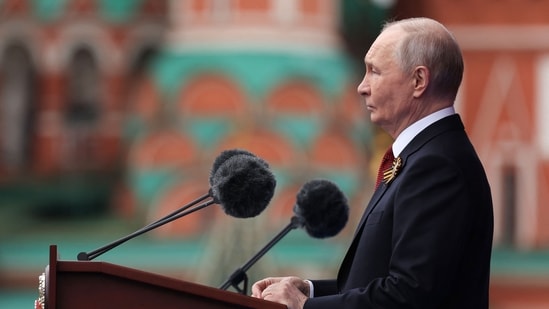
Russian President Vladimir Putin’s recent two-day visit to Beijing on May 19-20, 2026, was more than just a diplomatic calendar event. It landed at a profoundly delicate moment in global affairs, acting as a powerful lens through which to view the robust, yet often subtly complex, partnership between Russia and China. This wasn’t merely a polite exchange of pleasantries; it was a calculated and potent reaffirmation of a strategic alignment, delivered just days after former US President Donald Trump’s return to the international stage.
A Quarter Century of Connection: The Treaty and Beyond
The timing wasn’t accidental. Putin’s trip coincided precisely with the 25th anniversary of the 2001 Treaty of Good-Neighbourliness and Friendly Cooperation. Far from a ceremonial nod to history, this visit underscored the enduring bedrock of a relationship that has steadily deepened over two and a half decades. What began as a strategic understanding focused on mutual security and border issues has blossomed into a comprehensive partnership spanning economic, military, and geopolitical spheres.
For Moscow and Beijing, this treaty and its evolution represent a shared vision of a multipolar world, one less dominated by Western, particularly American, influence. They frequently champion international law and state sovereignty, often interpreting these principles in ways that challenge existing global norms or US foreign policy objectives. This shared philosophy forms the ideological backbone of their increasingly intertwined destinies.
The Trump Factor: Shifting Sands
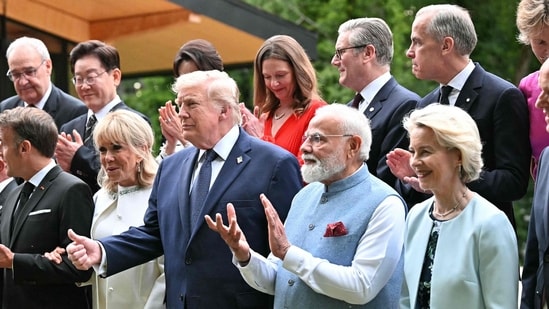
The immediate backdrop of Donald Trump’s re-emergence in the US political landscape cannot be overstated. His known skepticism towards traditional alliances and his “America First” doctrine create an environment of uncertainty for many Western allies, but potentially an opportunity for powers like Russia and China. This summit, therefore, served as a clear message: while the West grapples with its internal dynamics, the Russia-China axis stands firm and united.
For Beijing, a less predictable Washington could mean more leeway to pursue its regional ambitions, particularly concerning Taiwan and the South China Sea. For Moscow, it could signal a reduced American focus on issues like Ukraine, potentially easing pressure and sanctions. The joint statement and optics from this summit were undoubtedly crafted to maximize this perception of unwavering unity and strategic depth in the face of evolving global power structures.
Economic Lifelines and Shared Ambitions
Beyond geopolitics, the economic dimension of the Russia-China partnership is critical. Russia remains a vital supplier of energy to China, a relationship that has intensified since Western sanctions limited Russia’s access to European markets. This provides Moscow with crucial revenue and Beijing with reliable energy security. In turn, China provides Russia with essential goods, technology, and market access, mitigating the impact of Western economic isolation.
The two nations also cooperate on mega-projects, often under the umbrella of China’s Belt and Road Initiative, facilitating infrastructure development and trade routes that circumvent Western-dominated systems. This economic interdependence isn’t just about trade; it’s about building an alternative global economic architecture, one less susceptible to Western financial leverage.
Military Modernization and Strategic Drills
Security cooperation forms another pillar of their alignment. Joint military exercises have become a regular feature, showcasing interoperability and sending a clear signal to potential adversaries. Russia has historically been a key supplier of advanced military technology to China, aiding Beijing’s rapid modernization efforts.
While China is increasingly developing its own sophisticated defense capabilities, the strategic consultations and shared intelligence between the two militaries remain invaluable. This cooperation extends to areas like cybersecurity and space, areas where both nations perceive vulnerabilities and threats from Western powers.
Subtle Tensions Beneath the Surface?
Despite the outward display of unity and strategic alignment, analysts often point to subtle, underlying tensions. China’s economic might vastly overshadows Russia’s, potentially casting Russia as the junior partner in the long run. There might also be a divergence of priorities in certain regional conflicts or international bodies, even if broadly aligned against Western dominance.
Beijing’s cautious approach to outrightly endorsing all of Moscow’s foreign policy actions, particularly concerning the Ukraine conflict, illustrates this nuance. While offering diplomatic support and economic lifelines, China has avoided providing direct military aid that could trigger secondary sanctions from the West, indicating a careful balancing act to protect its own global economic interests. This visit, while strong, likely involved intricate discussions to navigate these potential fault lines.
Why This Matters
This Putin-Xi summit isn’t just about two leaders meeting; it’s a powerful declaration of an enduring strategic partnership determined to reshape the global order. It signals a robust alternative axis to Western influence, especially in a world grappling with shifting US foreign policy under a potentially resurgent Trump. For businesses, this means navigating evolving supply chains and trade routes. For governments, it necessitates a deeper understanding of a consolidated geopolitical bloc. Ultimately, this meeting reinforced the narrative of a world moving towards greater multipolarity, with significant implications for international security, trade, and diplomacy for years to come.