Forget the official readouts for a second. Something far more profound quietly unfolded in New Delhi during this year’s Quad foreign ministers’ meeting, and it had less to do with predictable diplomatic statements and everything to do with the subtle, yet powerful, political choreography surrounding them. This wasn’t just another summit; it was a clear signal of a shifting global order.
The Rubio Signal: A New Era of Consultation
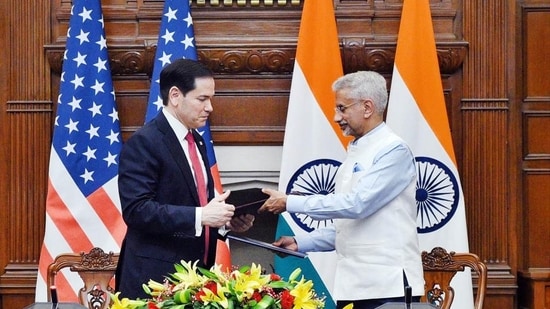
When US Secretary of State Marco Rubio touched down in India ahead of the main summit engagements, it wasn’t merely a gesture of diplomatic enthusiasm. It broadcast a much larger geopolitical truth across the globe: Washington, arguably, now sees India not as a partner that requires careful persuasion to align with its strategic goals, but rather as a genuine power that *must be consulted* before the next chapters of the Indo-Pacific story are even drafted.
This distinction isn’t just semantic; it’s monumental. It signifies a profound recalibration in how the world’s leading superpower views one of its most critical strategic partners. For decades, the narrative often involved the US gently nudging or convincing India to join various initiatives. Now, the dynamic has matured, recognizing India’s burgeoning influence and its indispensable role in shaping regional and global outcomes.
Beyond Persuasion: India as a Power Broker
This shift from ‘persuasion’ to ‘consultation’ underscores India’s growing confidence and capacity on the global stage. It acknowledges India’s economic might, its demographic dividend, its increasing military strength, and crucially, its independent foreign policy which often navigates complex geopolitical currents with a nuanced hand. For the US, consulting India means respecting its unique perspective, understanding its regional imperatives, and recognizing that solutions in the Indo-Pacific region are incomplete without India’s active co-authorship.
It speaks volumes about how both nations now perceive their relationship – not as a hierarchical partnership, but increasingly as one of equals, at least when it comes to the critical strategic calculations for the Indo-Pacific. This mutual understanding allows for deeper collaboration, built on respect rather than strategic cajoling.
The Quad’s Evolving Narrative
The Quad – comprising India, the United States, Japan, and Australia – started as a strategic dialogue, often perceived as a counterweight to growing Chinese influence in the region. However, its scope has rapidly expanded beyond traditional security concerns. Today, the Quad addresses a broad spectrum of issues from maritime security and critical technologies to climate change, resilient supply chains, and public health initiatives.
This evolution highlights its growing significance as a multilateral platform for like-minded democracies. India’s centrality within this group has never been clearer. Its geographical position, its economic potential, and its democratic values make it an anchor of stability and an indispensable voice in discussions about the region’s future. The New Delhi meeting, therefore, wasn’t just about reviewing progress; it was about solidifying India’s pivotal role within this vital strategic bloc.
The Indo-Pacific Story: Co-Authored
The “Indo-Pacific story” is arguably the defining geopolitical narrative of the 21st century. It encompasses a vast expanse of ocean and land, home to over half the world’s population and a significant portion of its economic activity. Challenges in this region – from territorial disputes and economic coercion to climate vulnerabilities and technological competition – have global ramifications.
For Washington to acknowledge India as a necessary co-author of this story means recognizing that the future stability, prosperity, and security of the Indo-Pacific cannot be dictated or solely influenced by any single power. It requires a collaborative, inclusive approach, with India bringing its unique strategic depth and moral authority to the table. This elevates India’s role beyond being just a recipient of security assistance or a market for goods; it positions India as a key architect of regional order.
What’s Next for India’s Global Clout?
This strategic moment for India comes at a time when the nation is actively pursuing a multi-aligned foreign policy, engaging with diverse global partners while safeguarding its core national interests. The enhanced status within the Quad framework empowers India further to project its influence, champion its vision for a free and open Indo-Pacific, and advocate for global governance structures that are more equitable and representative.
It also places a greater responsibility on India’s shoulders. With increased influence comes the expectation of leadership, requiring India to navigate complex diplomatic terrains, build consensus among its partners, and contribute substantively to addressing regional and global challenges. This Quad meeting in New Delhi wasn’t just a snapshot of current diplomacy; it was a strong indicator of India’s trajectory as an indispensable global player, shaping the future rather than simply reacting to it.
Why This Matters
This subtle but profound shift in diplomatic language and choreography signals a new era for global power dynamics. For the average person, it translates into a potentially more stable and predictable Indo-Pacific region, fostering conditions for economic growth, innovation, and security. India’s elevation to a ‘consultative power’ means that major global decisions will increasingly reflect a broader, more diverse set of perspectives, moving away from a unipolar or even bipolar world order towards a more truly multilateral system. This impacts everything from supply chain resilience to climate action and the very rules that govern international relations.