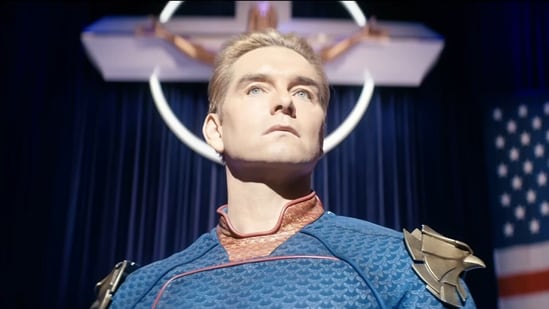
After five seasons of shocking twists, gruesome action, and biting social commentary, *The Boys* delivered its highly anticipated series finale on Amazon Prime Video this past Wednesday, May 20th, bringing an end to a seven-year saga that redefined the superhero genre. Fans who’ve ridden every bloody wave with Billy Butcher and his ragtag crew finally got to witness the ultimate showdown: Karl Urban’s vengeful anti-hero against Antony Starr’s terrifyingly charismatic Homelander. And as promised, it was a brutal, unforgettable ride.
### The Long Road to Armageddon
Since its explosive debut, *The Boys* carved out a unique space in the entertainment landscape, daring to ask uncomfortable questions about power, celebrity, and corruption. The final season meticulously built towards this climactic confrontation, with Butcher, ravaged by his use of temporary Compound V and fueled by a single-minded obsession, making his last stand. Homelander, meanwhile, solidified his terrifying grip on a world teetering on the edge of fascist adoration. The stage was set for a truly seismic collision, and the finale did not shy away from the immense stakes.
### Butcher vs. Homelander: The Fight for Humanity’s Soul
The central battle was everything viewers had hoped for and dreaded. Taking place amidst the shattered remnants of what was once a symbol of hope—a newly opened Vought tower, ironically—the fight wasn’t just a physical brawl; it was a clash of ideologies. Butcher, armed with his temporary powers, went toe-to-toe with Homelander, his desperation and fury palpable. The sheer brutality of the sequence was visceral, a testament to the show’s unwavering commitment to its dark aesthetic.
Butcher, knowing his time was short, threw everything he had into the fight, his eyes burning with a lifetime of pain. Homelander, initially appearing unassailable, was rattled by Butcher’s sheer, suicidal resolve. It wasn’t a clean fight; it was raw, messy, and filled with a horrifying sense of inevitability.
### A Cascade of Casualties: Explaining Every Major Death
As with any *Boys* finale, the body count was high, and no character felt truly safe. The series concluded with several gut-wrenching departures that will undoubtedly spark debate for years to come.
Queen Maeve’s Valiant Sacrifice: Perhaps the most impactful loss was that of Queen Maeve (Dominique McElligott). After years of wrestling with her conscience and attempting to escape Vought’s clutches, Maeve made her ultimate stand. In a breathtaking, albeit tragic, moment, she confronted Homelander directly, buying crucial time for The Boys and countless civilians by engaging him in a brutal aerial ballet above the city. She managed to inflict significant damage, pushing Homelander to his absolute limit before succumbing to her wounds, plummeting to her death as a true hero, finally free. Her sacrifice was not in vain, severely weakening Homelander and exposing his vulnerability.
A-Train’s Redemption Arc Completed: Shockingly, Reggie Franklin, aka A-Train (Jessie T. Usher), also met his end. After a season of genuine attempts at redemption, seeking to genuinely help his community and expose Vought’s misdeeds, A-Train sacrificed himself. In a final, desperate act, he used his super-speed to retrieve critical incriminating evidence against Victoria Neuman and Vought, outrunning security and even his own physical limitations. Severely overexerted, he collapsed and died moments after handing off the data, a tragic but ultimately redemptive end for the speedster who started as a villain.
The Butcher’s Final Stand: Billy Butcher himself paid the ultimate price. After his harrowing fight with Homelander, weakened by the battle and the cumulative effects of Compound V on his system, Butcher found a moment of clarity. He chose to deliver a final, devastating blow to Homelander – not with fists, but with truth. While Homelander survived the physical encounter, Butcher, with his dying breaths, released a meticulously compiled dossier of all of Vought’s darkest secrets, ensuring that even if Homelander walked free, his reign of public adoration was utterly shattered. Butcher succumbed to his injuries and the compound V, dying in Hughie’s arms, having finally achieved his life’s mission at the cost of his own.
### Who Won? The Aftermath and Lingering Shadows
The question of who “won” in *The Boys* finale is, as expected, complex. On the surface, Homelander survived. He was not killed, nor was he fully imprisoned. However, thanks to Butcher’s final, posthumous act, Homelander’s public image was irrevocably shattered. The damning evidence released by Butcher sparked global outrage, leading to mass protests against Vought and a significant decline in public trust for supes. Homelander, once revered, is now widely feared and reviled, his power base significantly eroded. He lives, but his carefully constructed world is in ruins.
The Boys, led by a grief-stricken but resolute Hughie Campbell (Jack Quaid), survived. They achieved a moral victory, exposing the truth and dismantling Vought’s absolute authority. Yet, the cost was immense. Butcher, Maeve, and A-Train are gone, leaving a gaping hole in their world. The show concludes with a sense of bittersweet realism: the good fight was fought, but the battle for a truly just world is far from over. Vought, though wounded, will undoubtedly find new ways to exploit, and new threats will emerge.
### The Butcher’s Legacy: A Pyrrhic Victory
Billy Butcher’s arc came to a fittingly tragic and impactful close. He achieved his life’s sole purpose: breaking Homelander’s tyrannical hold and exposing Vought. But he did so at the ultimate cost, becoming the very thing he fought against in moments, and ultimately sacrificing himself. His legacy isn’t one of clean victory, but of a necessary, brutal reckoning that leaves a path for others to continue the struggle, hopefully without resorting to his methods.
### Why This Matters
*The Boys* finale isn’t just the end of a hit show; it’s a cultural benchmark. It dared to deconstruct the superhero mythos, forcing us to confront the uncomfortable truths about power, celebrity, and corporate greed in our own society. By concluding with a nuanced, morally complex outcome rather than a clean, heroic win, it reinforces the show’s core message: true change is messy, painful, and often demands immense sacrifice. It leaves us not with easy answers, but with potent questions about vigilance, accountability, and what it truly means to fight for good in a flawed world. It’s a finale that will resonate, sparking conversations about its characters and themes long after the credits have rolled.