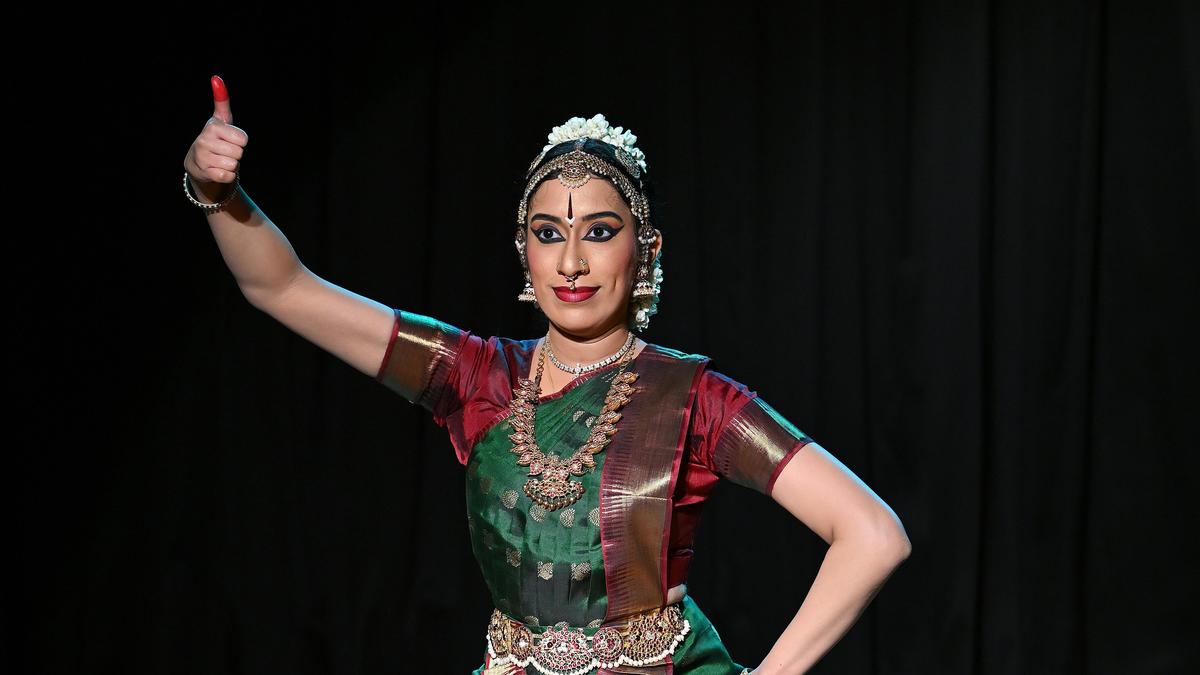
Bharatanatyam, an art form steeped in centuries of tradition, often conjures images of devotion, intricate footwork, and expressive storytelling rooted in mythology. But what if this classical dance holds a universe of untapped narratives and stylistic nuances far richer than commonly perceived? Acclaimed Bharatanatyam exponent Chitra Lakshumanan is on a mission to reveal just that, inviting audiences and practitioners alike to explore the breathtaking diversity embedded within its very fabric.
Lakshumanan, a dancer celebrated for both her technical prowess and intellectual depth, recently captivated critics and art lovers with a groundbreaking series of performances and lecture-demonstrations. Her initiative peels back layers of preconceived notions, showcasing how Bharatanatyam’s repertoire is not a static relic, but a living, breathing entity capable of immense variation and contemporary relevance.
### Beyond the Traditional Narratives
One of the most compelling aspects of Lakshumanan’s exploration lies in her expansion of thematic content. While devotional tales of gods and goddesses remain central, she passionately argues for – and demonstrates – the art form’s capacity to articulate a broader spectrum of human experience. “The beauty of Bharatanatyam is its inherent versatility,” Lakshumanan explained in a recent interaction. “It possesses a universal language of expression that can transcend time and theme, speaking to modern dilemmas and personal journeys as powerfully as it recounts ancient epics.”
Her recent choreographies have ventured into poetry from diverse linguistic traditions, explored social commentary, and even delved into abstract concepts, proving that Bharatanatyam can be a powerful vehicle for contemporary thought. This isn’t about discarding tradition; it’s about honoring its foundational strength by proving its enduring adaptability.
### Unearthing Stylistic Nuances
Bharatanatyam, while appearing monolithic to the casual observer, actually encompasses several distinct ‘bani’ or schools, each with its own unique aesthetic, emphasis, and approach to movement. Lakshumanan’s work meticulously highlights these often-subtle yet significant differences. From the robust, architectural lines of the Pandanallur style to the lyrical flow of Vazhuvoor and the nuanced emotiveness of Kalakshetra, she presented a comparative tapestry of styles.
Through demonstration, she illustrated how a single padam (expressive piece) can take on entirely different shades of emotion and interpretation when performed through the lens of a different bani. This serves as a vital educational tool, not just for aspiring dancers but for audiences seeking a deeper appreciation of the art’s intricate heritage. It underscores that Bharatanatyam is not a singular entity, but a rich mosaic of inherited wisdom and regional artistry.
### The Evolving Landscape of Rhythm and Melody
Another fascinating dimension of Lakshumanan’s exploration involves the musical and rhythmic landscape of Bharatanatyam. While Carnatic music forms its bedrock, she delves into how the dance form has historically incorporated, and can continue to incorporate, a wider array of musical influences and rhythmic patterns.
She challenged the notion of a rigid musical format, instead showcasing instances where folk melodies, specific regional compositions, and even elements of contemporary music could enrich the performance, without compromising the integrity of the dance. This innovation is not about fusion for its own sake, but about intelligently expanding the sonic palette to reflect the art form’s potential for growth and connection with diverse audiences.
### Chitra Lakshumanan’s Vision for the Future
Lakshumanan’s vision isn’t just academic; it’s deeply rooted in performance. Her recent stage productions have seamlessly integrated traditional items with new choreographies, creating a dialogue between the past and present. She employs a clear, accessible narrative style in her lecture-demonstrations, making complex ideas about ‘abhinaya’ (expression) and ‘nritta’ (pure dance) understandable and engaging for those new to the art form.
Her performances are not just aesthetically pleasing but intellectually stimulating, encouraging viewers to look beyond the surface and appreciate the layers of meaning and history contained within each movement. This dedication to both preservation and thoughtful innovation marks her as a leading voice in the contemporary Bharatanatyam landscape.
### Why This Matters
Chitra Lakshumanan’s work is crucial for several reasons. In an increasingly globalized world, preserving classical art forms requires both reverence for tradition and a willingness to explore their relevance to contemporary life. By showcasing Bharatanatyam’s inherent diversity and adaptability, she ensures its continued evolution and appeal. Her efforts make the art form more accessible, less intimidating, and profoundly engaging for a wider, modern audience, inspiring new generations of dancers and patrons alike to connect with its timeless beauty and profound depth.
Her endeavor reminds us that true tradition is not about rigid adherence, but about a dynamic continuum – a living heritage that grows, adapts, and speaks anew to each generation, while holding firm to its roots. Lakshumanan is not just a dancer; she is a bridge-builder, connecting ancient wisdom with future possibilities, ensuring Bharatanatyam’s light shines ever brighter.