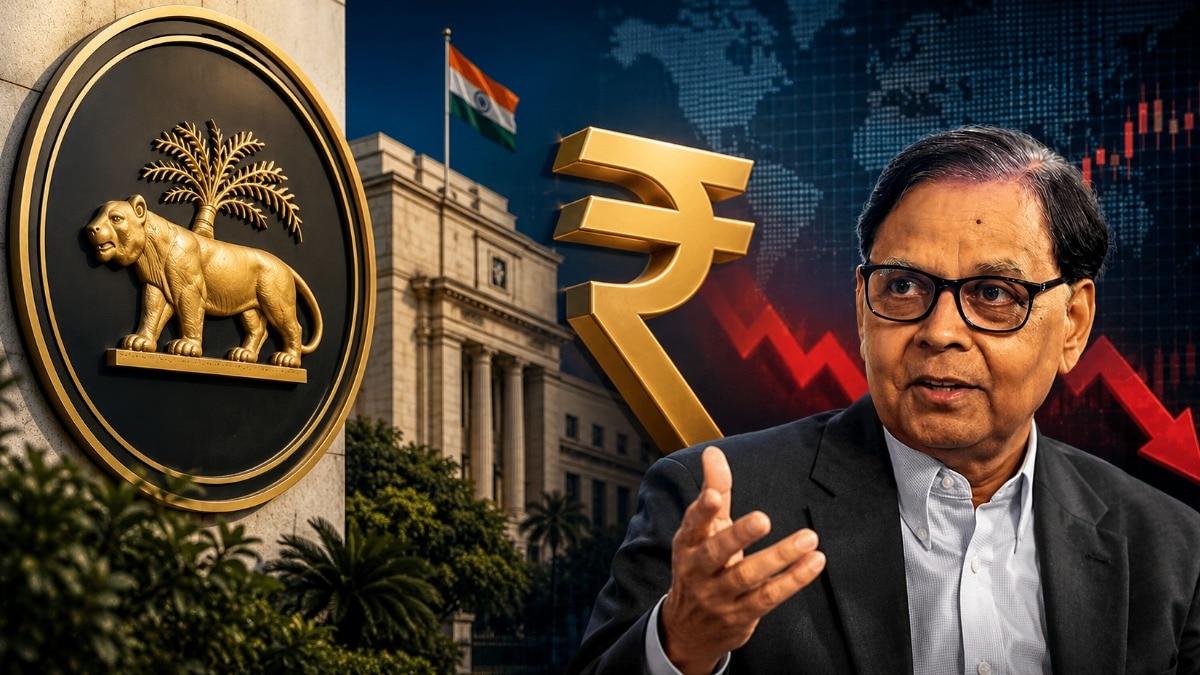
India’s currency market has been a hot topic this week, not just for hitting fresh lows against the mighty US dollar, but for sparking a high-stakes debate at the very top of economic policy-making. As the Indian Rupee flirted dangerously close to the 97-per-dollar mark, a powerful voice from within the government delivered a clear, provocative message to the Reserve Bank of India (RBI): don’t let a mere number dictate your strategy.
A Rollercoaster Week for the Rupee
It was a week of significant volatility. On Wednesday, the Indian Rupee breached a critical psychological barrier, plummeting to an unprecedented intra-day low of 96.95 against the US dollar. It eventually closed at an all-time low of 96.86, leaving many market watchers on edge. The specter of the ‘100-mark’ – a widely anticipated but dreaded benchmark for depreciation – loomed larger than ever.
However, the currency showed some resilience on Thursday, bouncing back to settle at 96.37, gaining 49 paise. While a rebound offers a sigh of relief, the recent lows have undoubtedly highlighted the ongoing pressures on the Indian economy and its currency.
The Finance Commission Chief’s Bold Stance
Amidst this currency turbulence, Arvind Panagariya, the chairman of the Finance Commission, stepped forward with a notably strong piece of advice for the RBI. Taking to social media platform X (formerly Twitter), Panagariya urged the central bank to resist succumbing to the “psychology” of the Rs 100-a-dollar level.
“Dear @RBI: Do not let the psychology of Rs 100 per dollar determine your policy response. 100 is just a number, like 99 and 101,” Panagariya wrote. His message was unequivocal: the RBI should not be constrained by an arbitrary figure, but rather focus on sound economic policy.
Why “100 is Just a Number”
Panagariya’s statement challenges a deeply ingrained human tendency to assign outsized importance to round numbers. For currency traders, economists, and the general public alike, the 100-mark holds a significant psychological weight. Crossing this threshold could trigger a wave of negative sentiment, fuel speculation, and potentially lead to further capital outflows.
However, from a purely economic standpoint, as Panagariya rightly points out, there’s little fundamental difference between a rupee trading at 99, 100, or 101 against the dollar. The underlying economic realities and market forces should be the primary drivers of policy, not arbitrary psychological barriers. His call is a reminder for policymakers to look beyond the immediate optics and focus on the broader economic picture.
The Oil Shock & Economic Strategy
Beyond just dismissing the “100 psychology,” Panagariya put forward a specific economic rationale for his advice: “He argued that a weaker currency was the right response to the ongoing oil shock.” This is where his argument truly becomes critical for understanding India’s current economic predicament.
India is a major importer of crude oil. When global oil prices surge – which they have been doing due to various geopolitical factors and supply chain disruptions – it directly impacts India’s import bill. A higher import bill drains foreign exchange reserves and puts pressure on the rupee.
In such a scenario, allowing the rupee to depreciate naturally can act as an economic shock absorber. Here’s how:
1. Export Boost: A weaker rupee makes Indian exports cheaper and more competitive in international markets. This can help boost export volumes, bringing in more foreign currency and partially offsetting the higher cost of imports.
2. Import Discouragement: Conversely, a weaker rupee makes imports more expensive for domestic consumers and businesses. This can naturally curb non-essential imports, thus reducing the overall import bill.
3. Current Account Management: By encouraging exports and discouraging imports, a depreciating rupee can help manage the country’s current account deficit, which is the difference between money flowing in and out of the country through trade, services, and transfers.
4. Managing External Shocks: For an economy heavily reliant on imports like oil, a flexible exchange rate allows the country to adjust to external shocks without depleting its foreign exchange reserves through direct intervention.
Panagariya’s argument suggests that trying to artificially prop up the rupee through interventions (like selling dollars from reserves) might be counterproductive in the long run, especially when facing a persistent external shock like high oil prices.
RBI’s Tightrope Walk
The Reserve Bank of India traditionally walks a tightrope when it comes to currency management. Its primary mandate is price stability and economic growth, but exchange rate stability also plays a crucial role. The RBI intervenes in the forex market through buying or selling dollars to smooth out excessive volatility and prevent sharp, speculative movements that could destabilize the economy.
However, continuous intervention to prevent depreciation comes with its own set of challenges. It can deplete foreign exchange reserves, reduce the central bank’s firepower for future crises, and go against fundamental market forces. Panagariya’s advice implicitly challenges the RBI to prioritize a market-driven approach, even if it means accepting a weaker rupee, over maintaining a purely psychological barrier.
What This Means for Everyday Indians
While economic debates often seem abstract, a depreciating rupee has tangible impacts on daily life.
* More Expensive Imports: From electronics and luxury goods to essential commodities and even the petrol in your car (as India imports crude oil), a weaker rupee means you’ll pay more. This can fuel inflation.
* Overseas Travel & Education: For those planning foreign trips or sending children abroad for studies, a weaker rupee means every dollar costs more, making international experiences pricier.
* Boost for Exporters: On the flip side, Indian businesses that export goods and services (like IT, textiles, pharmaceuticals) stand to benefit as their products become more competitive globally, potentially leading to more jobs and revenue.
Why This Matters
This isn’t just a technical economic debate; it’s a crucial discussion about India’s economic resilience and its approach to global challenges. Panagariya’s intervention highlights the tension between economic theory (allowing market forces to adjust) and the practicalities of public sentiment and political implications. His call for the RBI to “let it depreciate” underscores a belief that sometimes, allowing a market correction, even if uncomfortable, is the healthiest long-term strategy for an economy facing external shocks. How the RBI balances these perspectives will significantly shape India’s economic trajectory in the months to come.