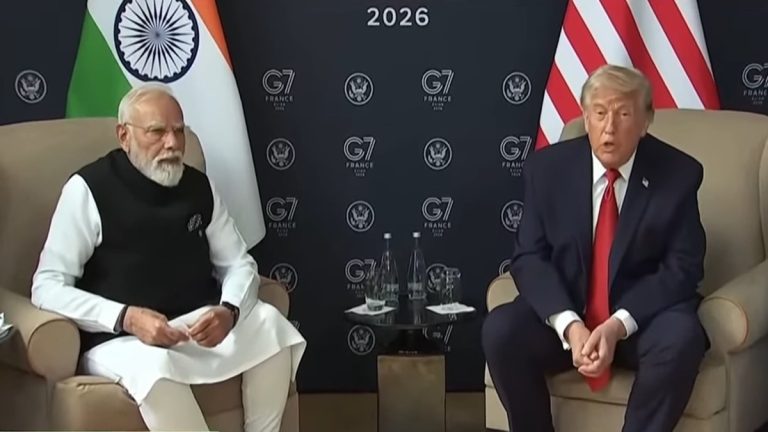
In a significant move underscoring the deepening strategic ties between two of the world’s largest democracies, US Secretary of State Marco Rubio is set to embark on a four-day official visit to India starting May 23. This marks his inaugural trip to the South Asian nation since taking office, a journey the US Department of State has confirmed amidst a backdrop of increasing engagement between New Delhi and Washington.
A Critical First Visit
For any US Secretary of State, an initial visit to a country often signals its perceived importance on the global stage. For Marco Rubio, choosing India as an early destination for his diplomatic outreach sends a clear message: the United States sees India not just as a partner, but as a pivotal player in its foreign policy agenda. This trip isn’t merely a formality; it’s a strategic embrace, aimed at strengthening a relationship that has grown exponentially in recent decades.
“A Great Ally”: More Than Just Words
Speaking ahead of his journey, Secretary Rubio didn’t mince words, describing India as “a great ally” and a “key partner” for the United States. These aren’t throwaway phrases in diplomatic circles. Such terminology reflects a shared vision, mutual interests, and a commitment to cooperation on a multitude of fronts. It speaks to a relationship built on democratic values, a commitment to a rules-based international order, and a shared concern for regional and global stability.
Rubio further emphasized the need for bilateral cooperation, acknowledging that there’s “a lot to work on” with India. This pragmatic outlook suggests that while the foundation is strong, both nations are keen to expand and refine their partnership across various sectors, addressing existing challenges and forging new pathways for collaboration.
The Evolution of a Strategic Partnership
The journey of US-India relations has been remarkable. From a period of relative distance during the Cold War, the two nations have steadily moved towards an increasingly robust strategic partnership. This evolution has been driven by converging geopolitical interests, particularly in the Indo-Pacific region, and a mutual recognition of each other’s growing economic and military might.
Today, this partnership spans a broad spectrum, from defense and security cooperation to trade, technology, climate change, and people-to-people exchanges. Both countries are vibrant democracies, committed to pluralism and innovation, which forms a natural bedrock for their collaboration. High-level visits like Rubio’s are crucial for maintaining momentum, discussing policy, and setting future agendas.
What’s on the Diplomatic Table?
While specific agenda items for Secretary Rubio’s visit have not been fully detailed, one can anticipate a robust series of discussions touching upon several key areas:
* Regional Security and the Indo-Pacific: Both the US and India are vital members of the Quad (Quadrilateral Security Dialogue), an informal strategic forum comprising the United States, Japan, Australia, and India. Discussions will likely focus on maintaining a free, open, and inclusive Indo-Pacific, navigating challenges posed by an assertive China, and enhancing maritime security.
* Economic Ties and Trade: Boosting bilateral trade and investment will undoubtedly be a high priority. Addressing any existing trade irritants, exploring new opportunities for collaboration in emerging technologies, and strengthening supply chain resilience are crucial for both economies.
* Defense Collaboration: The US has become a significant defense partner for India, offering advanced military technology and joint exercises. Further deepening defense ties, co-development, and co-production initiatives are expected to be on the table.
* Global Challenges: Discussions will extend to pressing global issues like climate change, counter-terrorism efforts, energy security, and cooperation in multilateral forums like the G20 and the United Nations. The ongoing geopolitical fallout from events like the conflict in Ukraine may also feature, given its global economic and strategic implications.
* Technology and Innovation: With both nations at the forefront of technological advancement, fostering cooperation in areas like artificial intelligence, quantum computing, space exploration, and secure digital infrastructure will be pivotal.
Geopolitical Context: Why Now?
Rubio’s visit comes at a time of evolving global geopolitical challenges. The world is grappling with shifts in power dynamics, economic uncertainties, and regional conflicts. In this complex landscape, the US views India as a critical counterweight and a reliable partner in upholding democratic values and stability, especially in Asia.
For India, strengthening ties with the US offers access to advanced technology, investment, and a powerful ally in navigating its own regional complexities and securing its strategic interests. The visit therefore isn’t just about bilateral relations; it’s about shaping a more stable and prosperous global order.
Looking Ahead: A Partnership for the Future
Secretary Rubio’s first official visit to India is more than just a diplomatic courtesy; it’s a reaffirmation of a rapidly maturing and increasingly indispensable strategic partnership. It highlights a shared commitment to addressing global challenges and leveraging mutual strengths for the benefit of both nations and the wider world. As Rubio himself noted, there’s “a lot to work on,” and this visit will undoubtedly lay further groundwork for that important work.
Why This Matters
This high-profile visit underscores India’s critical and growing role in US foreign policy and global geopolitics. It signifies a continued commitment from both nations to deepen cooperation on security, trade, technology, and global governance, which has profound implications for regional stability, economic growth, and the future of the rules-based international order. It reinforces the idea that the US-India partnership is not just beneficial, but essential in today’s complex world.