Imagine waking up one morning to find something fundamental, something you rely on daily, has undergone a shocking, almost grotesque transformation. For many watching India’s economy, this feeling might resonate as the Indian Rupee recently hit an unprecedented milestone: 100 to the US dollar. It’s a moment that has sent ripples of concern through financial markets and households alike, prompting serious questions about the nation’s economic direction.
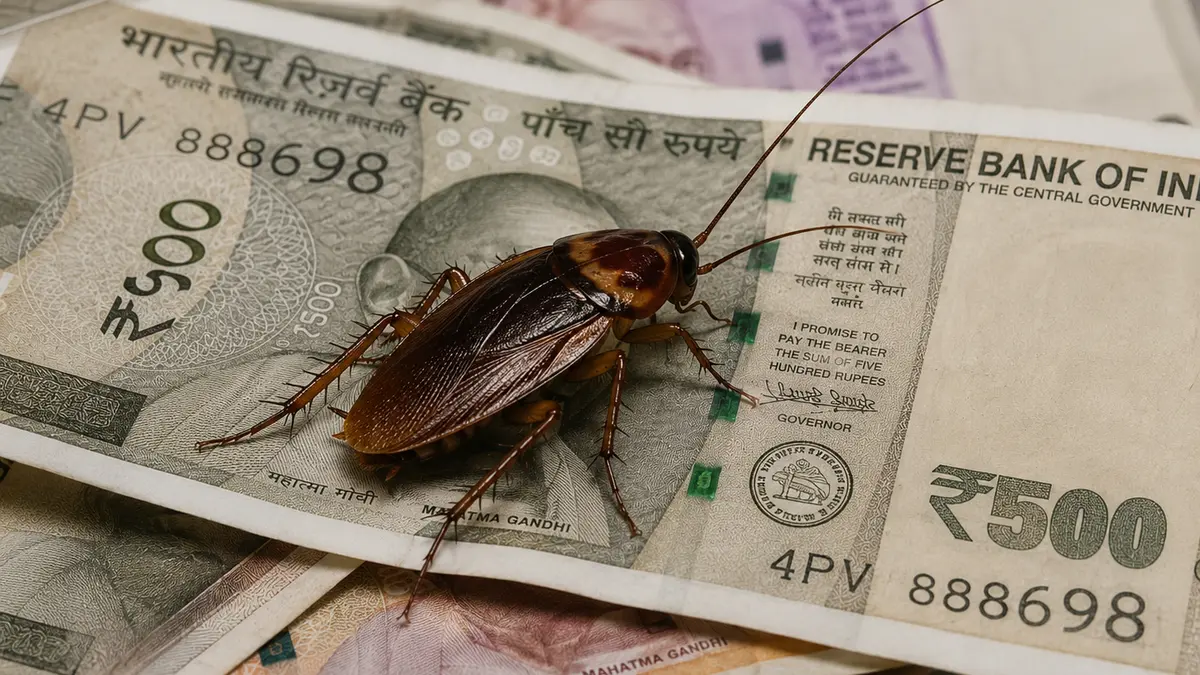
The dramatic drop isn’t just a number; it’s a stark indicator of deeper issues. As one prominent legal figure starkly put it, the rupee has transformed into a “cockroach”—vulnerable, unable to get back on its feet, and signaling a significant deterioration in its standing. This isn’t just a passing phase; it’s a moment of reckoning for India’s economic management under the current government.
### The Hundred-Rupee Question
Reaching the 100-mark against the dollar is more than just a psychological blow. It has tangible effects on everyone, from the largest corporations to the smallest households. A weaker rupee makes imports more expensive, fueling inflation that hits the common person’s wallet directly, whether it’s through the cost of fuel, electronics, or even essential goods. For students studying abroad or families with international financial commitments, the burden becomes significantly heavier overnight.
This isn’t an isolated incident; it’s the culmination of several underlying factors that critics argue have been allowed to fester. The economic model championed over the past decade is now facing intense scrutiny as its structural weaknesses become glaringly apparent.
### Crony Capitalism: A Deep-Seated Issue
One of the most frequently cited culprits behind the rupee’s malaise is the pervasive issue of crony capitalism. This isn’t just a political buzzword; it refers to an economic system where success in business is dependent on close relationships between businesspeople and government officials. Instead of fostering true competition and merit, it often leads to a concentration of wealth and power in the hands of a few favored entities.
When economic policies are perceived to benefit a select group of well-connected businesses rather than creating a level playing field, it stifles innovation, discourages new entrants, and ultimately undermines the broader economy’s health. It creates a system where efficiency and productivity take a backseat to political connections, severely hindering sustainable growth.
### Manufacturing Miss: Stalled Progress
For a country with India’s vast population and potential, a robust manufacturing sector is crucial for job creation and economic stability. However, the manufacturing growth has remained stubbornly weak. Despite ambitious campaigns like “Make in India,” the sector has struggled to pick up pace and compete on a global scale.
A weak manufacturing base means India remains heavily reliant on imports for many goods, making the economy vulnerable to global price fluctuations and currency depreciation. Without a strong domestic production engine, the nation struggles to create enough quality jobs, absorb its burgeoning workforce, and build resilience against external economic shocks. This missed opportunity is a major drag on the rupee’s strength.
### The Tech Train: Missed Connections
In an era defined by technological advancement, India’s perceived missed opportunities in cutting-edge sectors like Artificial Intelligence (AI) and semiconductor manufacturing are particularly concerning. While India has a formidable IT services industry, the foundational hardware and advanced R&D in these critical areas haven’t received the necessary impetus or investment.
These sectors are not just about futuristic gadgets; they are the backbone of modern economies, offering high-value jobs, fostering innovation, and driving productivity across industries. By lagging behind, India risks falling further behind in the global economic race, impacting its long-term potential for growth and, consequently, its currency’s stability.
### Investor Jitters: Confidence Takes a Hit
Global investors are always looking for stability, predictability, and strong growth prospects. When an economy exhibits signs of cronyism, weak manufacturing, and missed opportunities, investor confidence naturally takes a hit. Falling investor confidence translates directly into capital outflows, as international funds pull their money out of the country in search of safer or more lucrative havens.
When foreign money leaves, it reduces the demand for the Indian Rupee and increases the demand for foreign currencies, inevitably leading to depreciation. This creates a vicious cycle: a weaker rupee further deters investment, making it harder for the currency to recover.
### A Lack of Long-Term Vision?
Underlying these specific issues, critics argue there’s a broader problem: an economy rarely driven by robust, long-term strategic planning. Short-term fixes and populist measures, while politically expedient, often fail to address deep-seated structural issues. Sustainable economic growth requires consistent policy frameworks, predictable regulatory environments, and investments in foundational sectors over many years.
Without a clear, consistent long-term vision that prioritizes industrial growth, technological advancement, and fair economic practices, the rupee – and the broader economy – will continue to be vulnerable to internal and external pressures.
### Why This Matters
The rupee’s slide isn’t just a headline for economists; it’s a direct blow to every Indian. It means higher prices for everything from fuel and imported goods to education and travel abroad. It impacts the nation’s standing on the global stage and reflects growing concerns about the long-term health of one of the world’s most populous economies. For real change to happen, a hard look at the structural issues, from cronyism to missed industrial opportunities, is desperately needed.