
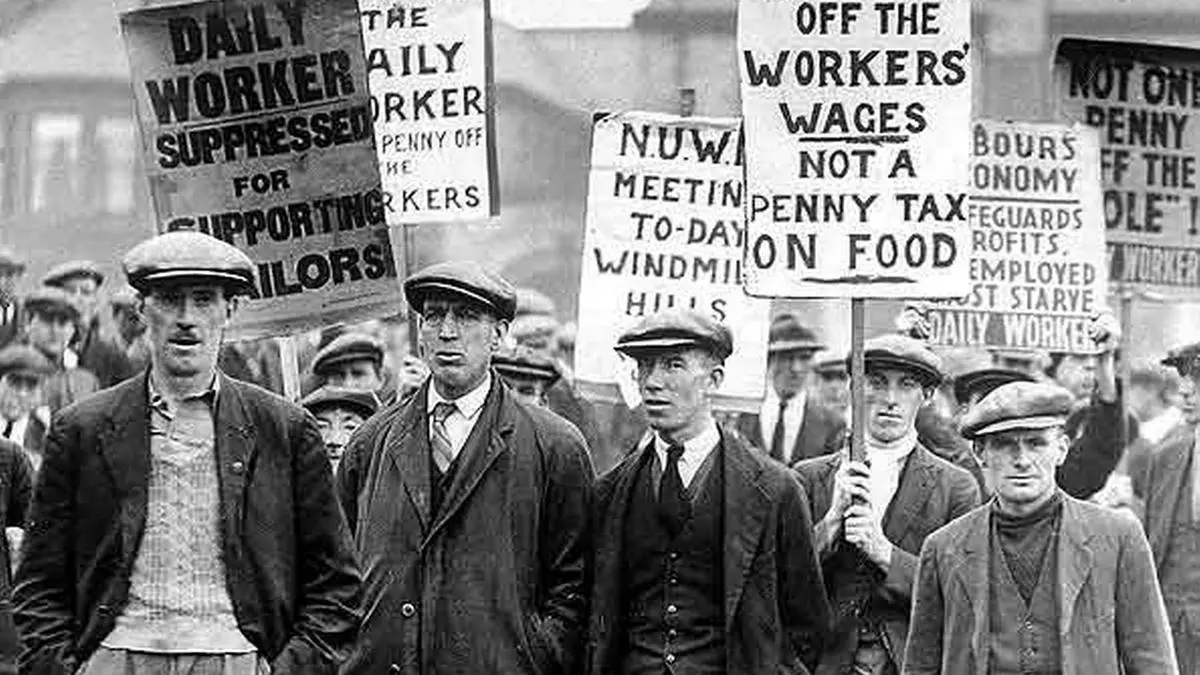
Think the struggles for fair pay and decent conditions are new? Think again. History often rhymes, and a look back at two monumental labor upheavals – the 1926 General Strike in the UK and the 1974 Railway Strike in India – reveals startling parallels with the working-class battles we see unfolding today. These weren’t just disputes over wages; they were seismic shifts that reshaped the political landscape and showed the enduring power of collective action when people are pushed to their limits.
### The British Spark: May 1926
Imagine Britain in the roaring twenties, but not for everyone. For millions, life was hard, and industrial unrest simmered. On May 4, 1926, the country ground to a halt. Millions of workers across crucial sectors – transport, printing, docks, iron, steel, and more – downed tools in a nationwide General Strike. It was an extraordinary act of solidarity, sparked by the plight of coal miners who had been locked out by their employers in a bitter dispute over pay cuts and longer hours.
Back then, coal wasn’t just fuel; it was the very lifeblood of the UK economy. Over a million adult males toiled in the mines, making up a significant chunk of the 43 million strong population. Their harsh working conditions and meager pay had reached breaking point. The strike, lasting nine intense days, was a direct challenge to the establishment, a powerful testament to the workers’ belief that an injury to one was an injury to all. It’s hard to overlook the intellectual currents of the time, with figures like Karl Marx, born on May 5, 1818, having laid much of his revolutionary theory while living in the UK, undoubtedly inspiring a generation to fight for their rights.
### India’s Locomotive of Discontent: May 1974
Fast forward to May 1974 in India, where a different but equally potent struggle was brewing. The nation’s vast railway network, often called the lifeline of India, became the stage for one of the largest industrial actions in global history. Over 1.7 million railway workers went on an indefinite strike, demanding better pay, improved working conditions, and the right to collective bargaining. Much like the British miners decades earlier, Indian railway staff found themselves trapped in a cycle of low wages and arduous labor, feeling undervalued despite their critical role in the country’s economy.
This wasn’t just about trains stopping; it was a profound expression of dissatisfaction that echoed through every corner of the nation. The strike disrupted essential services, created widespread chaos, and forced the government into a severe crackdown, deploying military and paramilitary forces. The repercussions were immediate and far-reaching, highlighting the government’s struggle to manage a restive workforce and igniting a broader discussion about economic equity and workers’ rights in a developing nation. It was a clear signal that the working class was no longer willing to accept the status quo.
### A Shared Spirit: Low Pay, Harsh Conditions
Despite the decades and continents separating them, the 1926 UK General Strike and the 1974 Indian Railway Strike share a striking common DNA. Both were born from the crucible of low pay and harsh working conditions. Both transcended their immediate causes to become wider working-class upheavals, demonstrating a deep-seated demand for dignity, respect, and a fair share of the wealth they helped create.
These weren’t isolated incidents of discontent; they were symptoms of systemic issues. In both cases, the workers, integral to their respective national economies, felt unheard and exploited. Their strikes weren’t just about economics; they were about political power, social justice, and the fundamental right to a life free from grinding poverty, even while contributing immensely to national prosperity. The courage shown by millions in both instances speaks volumes about the human spirit’s resilience when confronted with injustice.
### The Modern Echoes: India Today
Why revisit these historical moments now? Because the echoes are ringing louder than ever. India, for instance, has recently seen a surge in strikes and protests, particularly in sectors where low wages and precarious working conditions are still rampant. Whether it’s gig economy workers, public sector employees, or agricultural laborers, the underlying grievances bear an uncanny resemblance to those of their predecessors in 1974.
The “latest strikes” in India may very well foreshadow deeper economic and political unrest, much like the general strike of 1926 or the railway strike of 1974 did. As global economies evolve and technology reshapes industries, the core demand for fair treatment, decent pay, and secure livelihoods remains constant. These historical examples serve as potent reminders that ignoring the plight of the working class can have profound and lasting societal consequences, sparking widespread movements that demand attention and change.
### Why This Matters
Understanding these historic labor movements isn’t just about looking back; it’s about looking forward. They underscore that fundamental workers’ rights are rarely given – they are fought for. From the coal mines of Britain to the railway tracks of India, these struggles highlight the power of collective action, the persistent fight against exploitation, and the profound impact of economic injustice on societal stability. As we navigate contemporary challenges, these stories serve as powerful lessons in resilience, solidarity, and the ongoing human quest for a fairer world.