The Indian domestic cricket circuit is a grueling grind, a battlefield where dreams are forged and futures are shaped. Every season, countless cricketers toil, aiming for that elusive national call-up. As the 2026 Indian Premier League lights up stadiums and the domestic calendar draws to a close, all eyes naturally turn to national selection announcements. These are moments of triumph for some, and often, heartbreaking disappointment for others. But rarely does a decision spark such immediate and widespread bewilderment, particularly from seasoned experts.
A Season for the Ages: Auqib Nabi’s Ranji Masterclass
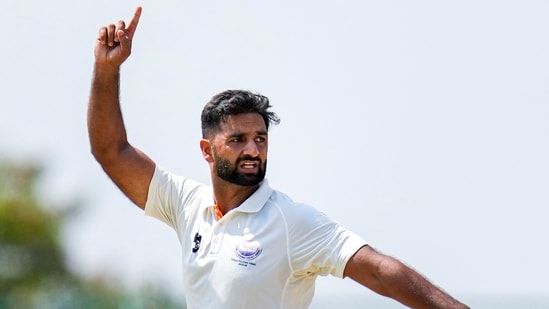
Enter Auqib Nabi. The name might not have been on every casual fan’s lips a year ago, but his performance throughout the 2025-26 Ranji Trophy season left an indelible mark on Indian cricket history. Representing Jammu and Kashmir, Nabi wasn’t just good; he was exceptional, a force of nature with the ball. He spearheaded his team’s charge to a truly historic maiden Ranji Trophy title, a monumental achievement that sent ripples of excitement across the cricketing landscape.
His personal tally? A staggering 60 wickets. Let that sink in for a moment. Sixty wickets in a single Ranji season is not merely a good performance; it’s a testament to immense skill, relentless effort, and sustained dominance. It’s the kind of season that screams “future international prospect,” demanding attention and, usually, an opportunity. Nabi had not just knocked on the door of national selection; he had hammered it down with an axe.
The Selection Shockwave
Then came May 19th, 2026. The Indian selection committee unveiled the Test and ODI squads, signaling the start of a crucial international season. India is set to kick off its red-ball campaign with a one-off Test against Afghanistan, led by the promising Shubman Gill, before facing challenging series against New Zealand. As expected, the squads featured a mix of fresh faces and established stars, along with some “notable omissions.”
But one omission, in particular, transcended the usual debate and ignited a firestorm of disbelief: Auqib Nabi. Despite his historic 60-wicket haul and leading Jammu and Kashmir to their first-ever Ranji Trophy, his name was conspicuously absent from the Test squad.
Aakash Chopra’s Outrage: “What More Must He Do?”
The reaction was immediate and vocal. Among the most prominent voices was former Indian opener and highly respected cricket commentator, Aakash Chopra. Known for his candid insights and deep understanding of the domestic game, Chopra didn’t mince words. His sentiments, echoing those of countless fans and pundits, were summed up in a single, poignant question: “What more must he do?”
Chopra’s disbelief highlights a fundamental question about the criteria for national selection. When a player delivers such an overwhelmingly dominant and historically significant performance in the country’s premier first-class competition, what could possibly justify their exclusion? It suggests a potential disconnect between domestic heroics and the selectors’ vision for the national team, leaving many to wonder about the message this sends to other aspiring cricketers slogging it out in the Ranji Trophy.
Decoding the Omission: Puzzling Questions Remain
While selection is never straightforward and involves balancing various factors – team composition, opposition, conditions, long-term plans – Nabi’s case appears uniquely baffling. Was it a focus on specific skill sets? A preference for players from certain pipelines? Or a forward-looking strategy ignoring current, undeniable form? Without official explanations, speculation runs rife, and the decision feels increasingly incongruous with the principle of rewarding outstanding domestic performance.
The Afghanistan Test, while a significant fixture, is also seen as an opportunity to blood new talent and build momentum. If not now, after a season like Nabi’s, then when? This omission doesn’t just impact Auqib Nabi; it raises broader questions about the value placed on the Ranji Trophy and the psychological impact on players who might feel their monumental efforts go unnoticed or unrewarded.
Looking Ahead: A Test of Resilience
For Auqib Nabi, this will undoubtedly be a bitter pill to swallow. After scaling the peaks of domestic cricket, to be overlooked for national duty is a stark reminder of the cutthroat nature of the sport. Yet, history is replete with tales of players who faced such setbacks only to return stronger. The challenge for Nabi now will be to channel this disappointment into even more compelling performances, making his continued exclusion an increasingly untenable position for the selectors.
The cricketing world will be watching, not just how Shubman Gill’s refreshed squad performs against Afghanistan, but also how the Indian selection committee addresses the murmurs of discontent surrounding decisions like Nabi’s. For many, his story has become a potent symbol of the dreams and frustrations that define the journey of a domestic cricketer in India.
Why This Matters
Auqib Nabi’s omission isn’t just about one player; it’s a critical discussion point for the health of Indian domestic cricket. When a player’s historic performance in the Ranji Trophy goes unrewarded at the national level, it can undermine the perceived value of the competition and dampen the morale of countless aspiring cricketers who view it as their pathway to the top. It sparks essential conversations about transparency, consistency, and the fairness of the selection process, ultimately impacting the future talent pipeline for Indian cricket.