The final whistle blew, but the echoes of controversy lingered long after the players had left the pitch at the London Stadium. What should have been a dramatic, last-gasp equaliser for West Ham United against title-chasing Arsenal instead became another flashpoint in the tumultuous history of the Video Assistant Referee (VAR). A 92nd-minute Callum Wilson strike, which initially sent the home crowd into raptures, was ultimately chalked off, securing a crucial 1-0 victory for the Gunners and reigniting a fiery debate about the very soul of football.
### The Decisive Moment
The game was a tense affair, typical of a high-stakes London derby. Arsenal, desperate to maintain their pursuit of a first Premier League title since 2004, had taken an early lead and were battling hard to protect it. As the clock ticked past the 90-minute mark, West Ham threw everything forward in a desperate search for an equaliser.
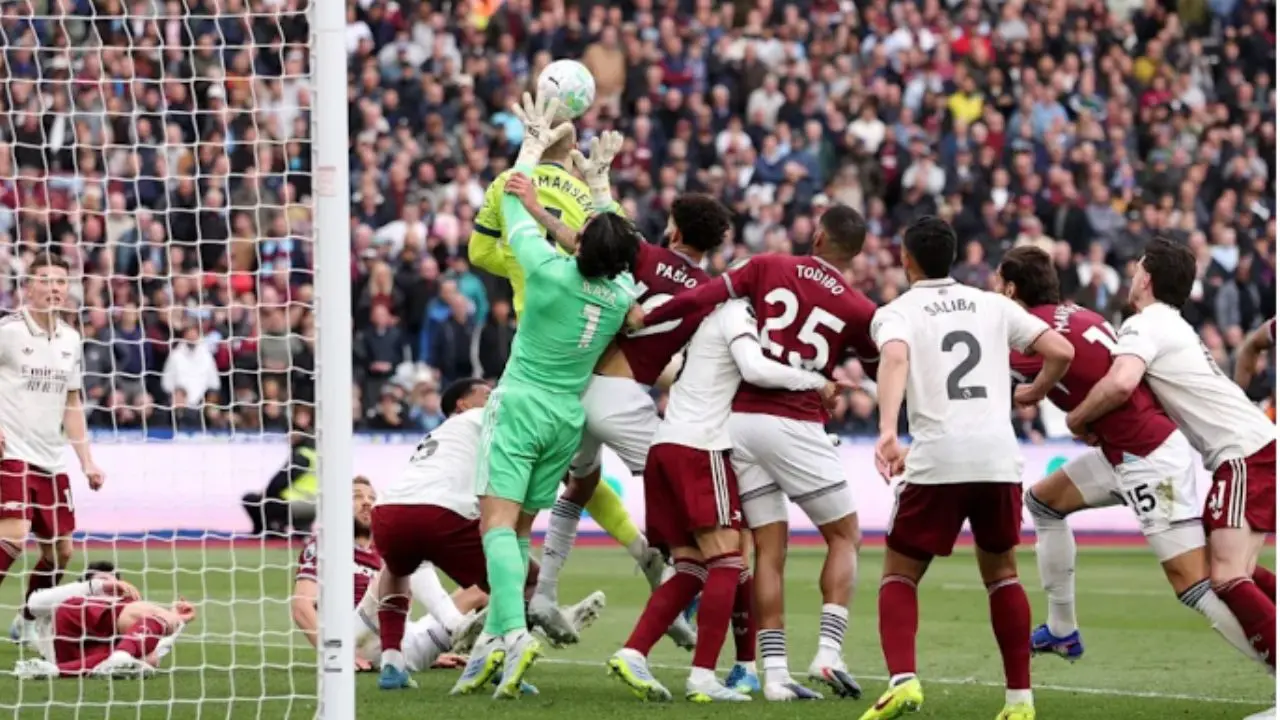
Their moment seemed to arrive when a frantic scramble in the Arsenal box saw the ball fall to Callum Wilson. The striker, known for his clinical finishing, made no mistake, bundling the ball past Arsenal goalkeeper David Raya. The stadium erupted. Fans celebrated wildly, players embraced, and it looked as though West Ham had snatched a point that would have been a significant blow to Arsenal’s title aspirations.
### The VAR Intervention
But the celebrations were short-lived. Almost immediately, the dreaded signal for a VAR review appeared on the stadium screens. The replay showed Wilson in close proximity to Raya during the build-up to the goal. After an agonizing few minutes of review, referee Michael Oliver was advised to consult the pitchside monitor.
What followed was a decision that sent shockwaves through the stadium and across social media. Following a lengthy examination of the replays, often shown from multiple angles and at excruciatingly slow speeds, Oliver returned to the pitch and signalled that the goal was disallowed. The reason? A foul on David Raya.
Images shown on television broadcasts highlighted minimal contact between Wilson and Raya. The contention revolved around whether Wilson had impeded the goalkeeper’s ability to challenge for the ball or if Raya had simply been caught in the natural flow of play. For West Ham fans, it felt like a harsh, almost pedantic, interpretation. For Arsenal supporters, it was a reprieve, a testament to VAR “doing its job.”
### The “Clear and Obvious” Conundrum
This incident perfectly encapsulates the ongoing frustration with VAR. The initial premise of the technology was to correct “clear and obvious errors” that referees might miss in the heat of the moment. However, increasingly, decisions are being made on subjective interpretations of contact, offside lines drawn with microscopic precision, and handballs that defy common sense.
What constitutes a “clear and obvious” error seems to be in the eye of the beholder, or more accurately, the VAR official looking at a frozen frame. This subjectivity is precisely what drains the spontaneity and joy from the game, leading to lengthy delays that suck the life out of goal celebrations and often leave fans, players, and pundits more confused than before the technology was introduced.
### Fan Frustration and The Beautiful Game
For many, football is about passion, raw emotion, and the thrill of the unexpected. VAR, while intended to bring fairness, often feels like it’s sterilizing the sport. Goal celebrations are now tinged with anxiety, waiting for the inevitable check. The roar of the crowd is replaced by an eerie silence as everyone stares at a screen, waiting for a verdict that can feel arbitrarily applied.
This particular decision, coming in the 92nd minute of a crucial London derby with significant implications for both ends of the Premier League table, amplified the anger. For West Ham, it meant losing a valuable point. For Arsenal, it was three points earned, but not without a cloud of controversy hanging over the victory.
### What’s Next for VAR?
As the season progresses, and particularly with Arsenal battling for the title, every VAR decision comes under intense scrutiny. This latest incident will undoubtedly add fuel to the fire, prompting renewed calls for reform, clearer guidelines, or even a re-evaluation of VAR’s role in football. The technology was meant to solve problems, but it often feels like it’s creating more, consistently overshadowing the on-field drama with off-field technicalities.
### Why This Matters
This incident is more than just a single disallowed goal; it’s a microcosm of the larger debate raging in football. Decisions like this can swing title races, relegate teams, or determine qualification for European competitions. When such pivotal moments are decided by a highly subjective interpretation through a monitor, it impacts the integrity of the sport, the emotional connection of fans, and the very narrative of the season. It raises fundamental questions about whether VAR is truly enhancing the “beautiful game” or inadvertently chipping away at its unpredictable magic.