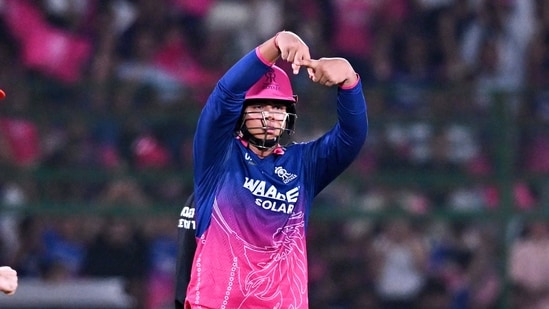
In the high-stakes arena of the Indian Premier League (IPL), where talent meets tremendous financial valuations, a single performance can sometimes redefine a player’s worth and deliver mind-boggling returns for a franchise. Such was the case on May 20, 2026, when Rajasthan Royals’ rising star, Vaibhav Sooryavanshi, unleashed an innings against Lucknow Super Giants (LSG) that wasn’t just game-changing on the field, but financially astronomical for his team. His 93 runs off a mere 38 balls transcended a simple score, morphing into a spectacular ₹60.4 crore ‘night’ in the ledger for RR, making him the season’s unexpected golden goose.
### The Night of Golden Runs
The atmosphere was electric, as it always is when two formidable IPL teams clash. Lucknow Super Giants, known for their competitive spirit, faced off against a Rajasthan Royals side eager to solidify their position. All eyes were on the usual suspects, but it was Vaibhav Sooryavanshi, affectionately dubbed “India’s wonderkid,” who stole the show. Stepping onto the crease, perhaps with a point to prove or simply an instinct to dominate, Sooryavanshi didn’t just bat; he launched an assault.
His innings was a masterclass in aggressive, calculated hitting. From the moment he took guard, boundaries flowed, peppered with audacious sixes that sailed into the stands, leaving LSG bowlers scratching their heads. Each swing of his bat wasn’t just adding runs to the scoreboard; it was adding digits to a financial valuation that would soon capture headlines. Finishing with a blistering 93 runs from just 38 deliveries, Sooryavanshi didn’t just win a match for RR; he staged a demolition, turning what could have been a tight contest into a comprehensive victory for the Royals.
### Decoding the ₹60.4 Crore Magic
While the runs on the board tell one story, the financial impact tells another, equally fascinating one. Rajasthan Royals’ internal valuation ledger pegged Vaibhav Sooryavanshi’s “match cost” for that particular game at a modest ₹7.86 lakh. This ‘match cost’ is typically derived from a player’s overall auction price or salary, amortised across the number of games they’re expected to play in a season. It represents the direct financial outlay for his participation in that specific fixture.
However, his extraordinary “output” from that single innings was valued at an astounding ₹4.75 crore. This ‘output’ figure isn’t just a fantasy; it’s a sophisticated calculation that considers various factors: the impact of his performance on the game’s outcome, potential prize money implications, increased viewership and engagement, brand value enhancement for the player and team, and the sheer entertainment quotient that drives IPL’s commercial success.
The numbers become truly staggering when you look at the pure profit line. After accounting for his match cost, Sooryavanshi’s innings generated a net profit of ₹4.67 crore for RR. This translates into a mind-boggling 59.4 times profit return on the match investment! To put it into perspective, if the Royals had been able to ‘invest’ ₹1 crore at that phenomenal rate of return, it would have theoretically generated ₹60.4 crore worth of performance value. This isn’t literal cash in hand from that single game, but rather a powerful metric illustrating the immense value and disproportionate return generated by an individual player’s exceptional performance in the high-stakes world of franchise cricket. It effectively turned a routine league match into a gold crush for the franchise.
### The Wonderkid’s Journey
Vaibhav Sooryavanshi isn’t just a flash in the pan; he’s been on the radar as a prodigious talent for some time, hence the “wonderkid” moniker. Known for his aggressive batting style and ability to accelerate the scoring rate under pressure, his inclusion in the Rajasthan Royals squad was a testament to his raw potential. Young, dynamic, and fearless, Sooryavanshi embodies the new generation of Indian cricketers who aren’t afraid to take the game by the scruff of the neck.
This innings against LSG, however, cemented his status, not just as a promising youngster, but as a player capable of delivering monumental value. It’s a performance that will undoubtedly be scrutinised by national selectors and rival franchises alike, further elevating his profile in the competitive ecosystem of Indian cricket. For a player still carving out his niche, such a dominant, high-impact display is invaluable for career progression.
### Impact Beyond the Boundary
Sooryavanshi’s heroics extend far beyond the immediate financial returns for RR. For the team, it was a crucial performance that likely swung the momentum of their season, boosting morale and solidifying their position in the points table. For the IPL itself, it’s yet another testament to the league’s ability to unearth and amplify talent, transforming promising players into overnight sensations and financially invaluable assets.
This kind of return also provides a fascinating case study for sports economists and franchise owners, highlighting the often-unpredictable yet incredibly lucrative nature of investing in high-potential athletes. It underscores the belief that while big names draw crowds, sometimes the most profound impact, both on the field and in the balance sheets, comes from unexpected heroes. Sooryavanshi has not only delivered a memorable performance but has also etched his name into the IPL’s folklore as the man behind the legendary ₹60.4 crore night.
### Why This Matters
Vaibhav Sooryavanshi’s extraordinary innings against LSG isn’t just another cricket highlight; it’s a powerful narrative about talent, value, and the unique economics of modern sports. It showcases how a single, brilliant performance can generate astonishing financial returns for a franchise, far exceeding the initial investment in a player. For Sooryavanshi, it’s a career-defining moment, propelling him from a promising wonderkid to a proven match-winner and a player of immense financial significance in the IPL. It’s a vivid illustration of the league’s ability to create superstars and generate immense value, both on and off the field.