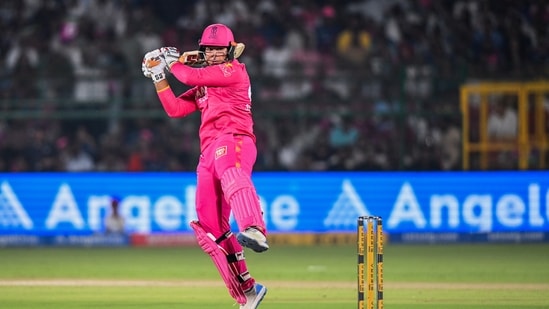
The cricketing world is buzzing, and it’s all thanks to a prodigious 15-year-old named Vaibhav Sooryavanshi. His T20 game has exploded onto the scene, shattering the usual cautious approach to young talent. But as the dazzling fours and sixes pile up, a new question looms large, one that even the legendary AB de Villiers has now openly posed: Can this T20 sensation conquer the ultimate format – Test cricket?
The T20 Phenomenon
Vaibhav Sooryavanshi, making waves for Rajasthan Royals in IPL 2026, isn’t just a promising youngster; he’s a full-blown phenomenon. His aggressive yet mature approach at such a tender age has made headlines, captivating fans and experts alike. He represents the new breed of fearless cricketers, unburdened by past conventions and perfectly suited for the demands of the shortest format. The noise around his T20 exploits is deafening, and for good reason – his talent is undeniable, his impact immediate.
AB de Villiers Weighs In
It was during the “For The Love of Cricket” podcast, with Stuart Broad and Jos Buttler, that AB de Villiers, the original Mr. 360, gently nudged the conversation towards Vaibhav’s future. De Villiers, known for his ability to master all formats, articulated the looming decision point for the young star.
“A lot of things will change unless someone comes around and says to him… Listen, you will be a T20 specialist for the rest of your life. Congratulations, that’s all you’re going to do,” de Villiers mused. “Then there will be a very long and successful career, but if he does start nibbling around in ODIs, particularly Test cricket, he will discover a whole different area of his cricket mentally and physically.”
De Villiers’ words carry immense weight. They aren’t a criticism but a profound observation about the distinct demands of each format. T20 cricket thrives on instinct, power, and immediate impact. Test cricket, however, is a marathon of patience, technique, unwavering concentration, and the ability to adapt to myriad conditions and challenges over five grueling days.
The Test Cricket Conundrum
For many, the transition from T20 success to Test match prowess isn’t straightforward. The skillset required for each is vastly different. In T20, batters often play without fear, knowing an early dismissal isn’t necessarily catastrophic. Bowlers prioritize economy and wicket-taking variations over sustained pressure.
Test cricket demands a deeper understanding of one’s own game, the opposition, and the pitch. It requires defensive technique, the mental fortitude to graft for hours, the stamina to perform day after day, and the ability to handle various types of bowling – from relentless pace to nagging spin – across multiple sessions. A player purely honed in the T20 furnace might find the slower pace, the emphasis on leaving the ball, and the need for sustained concentration a jarring adjustment.
Learning from Legends: The Multi-Format Blueprint
However, the fears surrounding a T20 specialist’s Test future have been gloriously disproven by some of the game’s titans – names explicitly invoked in the debate around Sooryavanshi: Virender Sehwag, Adam Gilchrist, and de Villiers himself.
Virender Sehwag
Often initially perceived as a limited-overs slogger, Sehwag redefined Test opening. He brought his audacious, attacking philosophy to the longest format, dismantling bowling attacks with breathtaking ease. His success wasn’t just about hitting boundaries; it was about backing his natural game with immense self-belief and a surprisingly solid technique that allowed him to score quickly without being reckless. He proved that aggression could be a Test match weapon.
Adam Gilchrist
The Australian legend wasn’t just a brilliant wicketkeeper; he was a revolutionary batter who brought the essence of limited-overs hitting to Test cricket. His explosive counter-attacking innings often turned the tide of matches, coming in lower down the order and changing the tempo of the game. Gilchrist showed that a player didn’t have to choose between formats; he could master both by adapting his natural game to the situation.
AB de Villiers
And then there’s de Villiers himself – the ultimate versatile player. From classical Test hundreds to absurd T20 sixes, he could do it all. His ability to switch gears, adapt his technique, and maintain peak fitness across all formats made him a rare gem. He understood the nuances of each game and possessed the mental and physical resilience to excel in every scenario. He is living proof that a “T20 specialist” can indeed become a Test great.
The Path Ahead for Vaibhav
For Vaibhav Sooryavanshi, the road ahead is thrillingly complex. He possesses raw talent in abundance, but the transition to Test cricket requires more than just natural ability. It demands mentorship, disciplined training, a willingness to refine his technique, and crucially, extensive exposure to first-class cricket. This domestic grind is where the mental and physical foundations for Test cricket are truly forged.
The choice isn’t necessarily about picking one format over another but about developing the comprehensive skillset and temperament to excel across the board. If Vaibhav can heed de Villiers’ advice, embrace the “different area” of cricket, and draw inspiration from the likes of Sehwag, Gilchrist, and his insightful mentor, the cricketing world could be witnessing the rise of another multi-format superstar. The question isn’t whether he *can* do it, but whether he *will*.
Why This Matters
The debate around Vaibhav Sooryavanshi isn’t just about one player; it highlights the evolving landscape of modern cricket. As T20 leagues proliferate, the pressure to specialize grows, potentially threatening the supply of multi-format players essential for Test cricket’s health. Vaibhav’s journey will be a significant indicator of whether young talents can resist pigeonholing and strive for greatness across all formats, ensuring the rich diversity of cricket continues to thrive.