## Key Takeaways
– Sai Sudharsan is under considerable pressure to perform in an upcoming one-off Test against Afghanistan, following a rapid transition from T20 cricket.
– India’s head coach, Gautam Gambhir, has expressed support for Sudharsan as he navigates the demanding shift between formats.
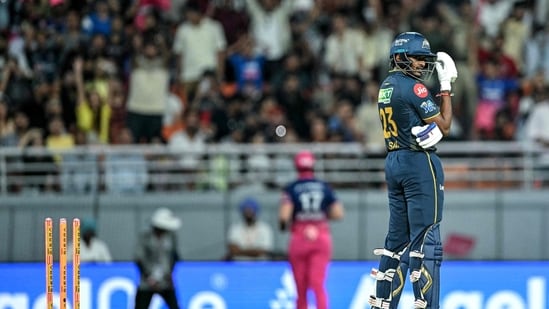
– The challenge for Sudharsan is amplified by the fact he was playing the IPL final for Gujarat Titans on May 31, necessitating a swift mental and technical adjustment to Test match requirements.
## Main Developments
Indian cricket finds itself in a familiar, yet consistently demanding, scenario as emerging talent Sai Sudharsan prepares for a crucial one-off Test match against Afghanistan. The young batsman, recently immersed in the high-octane environment of the Indian Premier League (IPL), faces the significant task of adapting to the rigours of Test cricket with minimal transitional period. His situation has drawn the attention of India’s head coach, Gautam Gambhir, who has publicly extended his backing to Sudharsan amidst this unique challenge.
The shift from the Twenty20 format to the traditional demands of Test cricket is widely acknowledged as one of the most difficult adjustments for any player. Sudharsan’s case is particularly acute, having played the IPL final for the Gujarat Titans on May 31. The whirlwind pace of franchise cricket, where batsmen are expected to attack from the first ball, stands in stark contrast to the patient, methodical approach required in Test matches. The very essence of the two formats dictates vastly different skill sets, temperaments, and strategic outlooks.
In T20, batsmen are programmed for aggressive stroke play, seeking boundaries and quick runs, often employing a ‘see ball, hit ball’ mentality. Defensive techniques, while still present, are secondary to finding scoring opportunities. Leaving deliveries, a fundamental aspect of Test batting, is largely foreign to the T20 discipline. This inherent difference means that a player transitioning swiftly must rewire their muscle memory, recalibrate their shot selection, and re-engage a defensive mindset that prioritizes preservation of the wicket over rapid scoring. The mental shift alone is profound, demanding a quick detachment from the frenetic energy of T20 and an embrace of the meticulous, often attritional, battle of Test cricket.
Gautam Gambhir, a former international cricketer who successfully navigated multiple formats himself, understands the nuances and pressures associated with such transitions. His support for Sudharsan is a crucial element in alleviating some of the external expectations. A head coach’s endorsement can instil confidence in a player, signaling belief in their inherent ability to adapt and perform, irrespective of the challenging circumstances. This public backing often serves to shield the player from undue scrutiny, allowing them to focus more intently on the technical and mental adjustments required. Gambhir’s assurance suggests a recognition of Sudharsan’s talent and potential, alongside an understanding of the non-ideal preparation window.
The short timeframe between the IPL final and the Test match against Afghanistan presents a substantial hurdle for Sudharsan. There is little opportunity for a gradual acclimatization to the longer format. Batting in Test cricket demands not only a different technique—emphasizing a solid defence, leaving the ball well outside the off-stump, and the ability to grind out long innings—but also a heightened level of mental endurance. Players must be prepared to bat for hours, or even days, concentrating for extended periods against bowlers who are constantly probing for weaknesses. This stark contrast with T20, where innings are typically over in a matter of overs, underscores the magnitude of the challenge.
Furthermore, the nature of a one-off Test match adds another layer of pressure. Unlike a multi-match series where a player might have opportunities to recover from an initial dip in form, a single Test offers no such luxury. Every innings, every session, every decision carries heightened significance. For a player like Sudharsan, potentially looking to establish himself in the Test arena, this singular opportunity becomes a critical assessment point. The performance will be under intense scrutiny, making the need to adapt swiftly and effectively even more paramount.
The cricketing calendar, with its proliferation of T20 leagues globally, increasingly presents this dilemma to national teams. Balancing the commercial success and player development offered by leagues like the IPL with the demands of international Test cricket remains a perennial challenge for boards and coaching staff. Players often find themselves shuttling between formats, testing their versatility and adaptability to the extreme. Sudharsan’s current predicament is a microcosm of this broader issue, highlighting the physical and mental toll on cricketers navigating a packed, multi-format schedule.
While the specific details of Sudharsan’s preparation following the IPL final are not extensively detailed, the necessity for focused practice and mental conditioning would be immediate. The limited days available would be crucial for re-engaging with Test match specific drills, such as playing with a straighter bat, developing patience at the crease, and honing defensive techniques. For any player, the transition requires not just physical adjustment but a profound psychological shift towards the extended periods of concentration and resilience that define Test cricket. Despite the inherent difficulties, Sudharsan’s talent and the backing from the team management suggest an opportunity for him to demonstrate his mettle under challenging circumstances, potentially laying the groundwork for a successful career across formats.
## Why This Matters
This situation highlights critical aspects of modern professional cricket, particularly the ever-present tension between lucrative T20 leagues and the demands of traditional Test match play. For Sai Sudharsan, it represents a pivotal moment in his career, an immediate test of his versatility and mental fortitude under pressure. His ability to adapt quickly could significantly influence his trajectory in international cricket. For the Indian team management, it underscores the ongoing challenge of managing player transitions and ensuring athletes are optimally prepared for different formats, especially when schedules are tight. The performance in such a one-off Test also holds importance for the integrity and competitive spirit of international cricket, demonstrating India’s depth and commitment to the longer format even against emerging cricketing nations.
## Frequently Asked Questions
What is the main challenge facing Sai Sudharsan?
Sai Sudharsan’s main challenge is the extremely rapid transition from the T20 format, having played the IPL final on May 31, to the traditional demands of a one-off Test match against Afghanistan. This requires a significant and quick mental and technical adjustment from aggressive, short-form play to patient, long-form Test cricket.
How does Test cricket differ from the T20 format Sudharsan recently played?
Test cricket demands immense patience, meticulous defensive technique, the discipline to leave deliveries outside the off-stump, and the mental fortitude to bat for extended periods, sometimes across multiple sessions. T20 cricket, conversely, prioritizes rapid scoring, aggressive strokeplay, and a high-risk, high-reward approach, with minimal emphasis on leaving deliveries or traditional defensive batting.
What is the significance of head coach Gautam Gambhir’s support?
Head coach Gautam Gambhir’s support is significant because it provides crucial confidence and reassurance to Sudharsan during a challenging period. It signals belief in the player’s abilities despite the difficult circumstances of the format switch, potentially alleviating some external pressure and allowing Sudharsan to focus more effectively on his performance.