## Key Takeaways
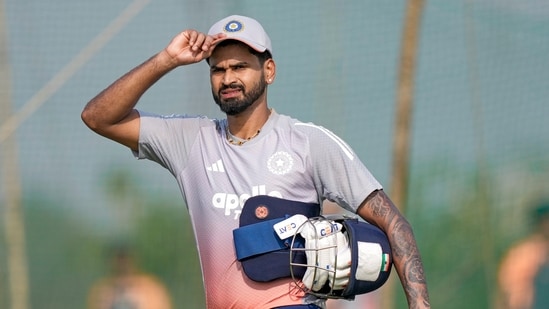
– Shreyas Iyer has been appointed as the 15th player to captain India in men’s T20 International cricket.
– He assumes the leadership role from Suryakumar Yadav, becoming the latest in a lineage that began with Virender Sehwag in 2006.
– This appointment signifies a continuation of India’s evolving T20I captaincy strategy, marked by periods of stable leadership and more recently, by rotation and workload management.
## Main Developments
Mumbai-based batter Shreyas Iyer has been named India’s newest T20 International captain, marking a significant milestone in his international career. His appointment places him as the 15th individual to lead the Men in Blue in the shortest format of the game, highlighting an ongoing evolution in the team’s leadership strategy. Iyer steps into the role previously held by Suryakumar Yadav, becoming the latest addition to a distinguished list of captains.
The journey of India’s T20I captaincy began in 2006 with the dynamic Virender Sehwag. Since then, the leadership mantle has been passed among several prominent players, reflecting different phases and strategic approaches in Indian cricket. Most recently, Shubman Gill also had the opportunity to lead the side in this format, further illustrating the breadth of leadership talent within the squad. Iyer’s elevation to captaincy is a notable marker in his international career, placing him at the forefront of the national team’s T20 ambitions.
India’s approach to T20I captaincy has traversed several distinct phases over the years. The initial years saw various players take the helm as the format itself was relatively new and evolving on the international stage. A period of profound stability and success followed under the long command of Mahendra Singh Dhoni, whose tenure is widely remembered for establishing India as a dominant force in white-ball cricket, including the inaugural T20 World Cup triumph. Dhoni’s leadership provided a consistent strategic vision and a calm presence, shaping a successful era for the team.
Following Dhoni’s extensive period at the helm, the captaincy transitioned into an era largely defined by two of India’s cricketing titans, Virat Kohli and Rohit Sharma. This phase saw a continuation of high-level performance, with both players contributing significantly to India’s T20I record, either as primary captains or in shared leadership capacities across formats. Their tenures were characterized by an aggressive brand of cricket and a focus on maintaining India’s competitive edge on the global stage.
In recent times, a discernible shift has occurred in India’s captaincy policy for T20 Internationals. The approach has moved towards a period characterized by rotation, diligent workload management for multi-format players, and making format-specific leadership calls. This strategic pivot acknowledges the demanding international cricket calendar, which places immense physical and mental strain on top players. By rotating captains, the team aims to distribute leadership responsibilities, foster a wider pool of leaders, and ensure that key players remain fresh and perform optimally across all formats without undue fatigue or risk of injury. This also allows for developing specialized leaders who understand the unique dynamics and tactical requirements of T20 cricket.
This contemporary strategy of adapting leadership reflects a broader trend in modern international cricket, where teams often opt for specialized roles and flexible player management to sustain peak performance. The appointment of Shreyas Iyer aligns perfectly with this ongoing strategic framework. It suggests a continued commitment to nurturing multiple leadership options within the squad, ensuring that India possesses a robust and adaptable leadership core capable of navigating various challenges and player availabilities.
For Iyer, this captaincy role represents a significant opportunity to demonstrate his leadership acumen on the international stage. Having previously captained in domestic cricket and the Indian Premier League, he brings prior leadership experience to this new role. This appointment could be seen as a chance for him to stamp his authority and vision on the team’s T20I strategy, contributing not just with his bat but also with his tactical guidance and ability to rally the squad.
The decision to appoint Iyer as the 15th T20I captain underscores the depth of talent available in Indian cricket and the management’s willingness to entrust leadership to a wider array of players. As India continues to evolve its approach to T20 cricket, especially with global tournaments frequently on the horizon, developing and testing multiple leaders becomes a critical component of long-term planning. Iyer’s inclusion in this elite group marks the latest chapter in India’s dynamic T20I leadership story.
His leadership will be keenly watched, as he takes on the mantle during a phase where the team is continually refining its T20 blueprint. The selection reflects confidence in his abilities to lead from the front and guide the team through upcoming challenges, embodying the spirit of adaptability and strategic foresight that has characterized India’s recent T20 International journey.
## Why This Matters
The appointment of Shreyas Iyer as India’s 15th T20I captain is significant for several reasons. It highlights the dynamic and often fluid nature of leadership in modern Indian cricket, particularly in the T20 format, where strategic flexibility and talent depth are paramount. For readers, this change signals India’s ongoing commitment to exploring various leadership options, fostering a broader pool of captains, and managing the considerable workloads of its multi-format players. This approach is critical in the packed international schedule, aiming to prevent player burnout and injuries while ensuring a fresh, tactically astute squad for every series and tournament.
Moreover, Iyer’s elevation provides him with a substantial opportunity to demonstrate his leadership credentials at the highest level, potentially cementing his position as a future long-term captain or a key leadership figure. It reflects the selectors’ faith in his abilities to guide the team, not just as a player but as a strategic mind. For fans, it means a fresh perspective at the helm, and a chance to observe how this new leadership might influence team dynamics and on-field performance in forthcoming T20 International series. It’s a clear indication that India continues to experiment and evolve its team composition and leadership structure in pursuit of sustained success in the shortest format.
## Frequently Asked Questions
Who is India’s 15th T20I captain?
Shreyas Iyer has been appointed as India’s 15th T20I captain.
Who did Shreyas Iyer take over the T20I captaincy from?
Shreyas Iyer took over the T20I captaincy from Suryakumar Yadav.
Who was India’s first T20I captain?
Virender Sehwag was India’s first T20I captain, leading the team in 2006.