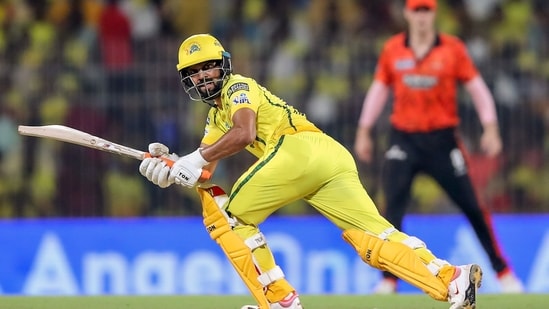
The roar of the Chennai Super Kings faithful is usually reserved for moments of brilliance, but lately, a different kind of tension has been brewing. At the heart of it lies Ruturaj Gaikwad, the elegant opener once hailed as a future CSK captain and India star. His recent outing against Sunrisers Hyderabad, a ponderous 15 runs off 21 balls, has thrown a spotlight on a brutal question: is Gaikwad, despite his past glories, becoming a burden for the Yellow Army?
The Gaikwad Conundrum
That innings against SRH wasn’t just a statistical blip; it was a narrative in itself. Facing 21 deliveries in a high-octane T20 encounter, Gaikwad failed to find the boundary once. Not a single four. Not a single six. In a format where quick starts and aggressive intent are paramount, his performance felt like a handbrake on the CSK engine. He occupied the crease, yes, keeping the scoreboard ticking over at a glacial pace, but offered no momentum, no strategic advantage, no relief.
An opener’s role in T20 cricket is multifaceted: to provide a solid foundation, capitalize on the powerplay, and set the tone for the innings. Gaikwad’s approach, or lack thereof, in that crucial game meant that CSK’s innings stalled around him. Opposing captains didn’t need to innovate; they just kept their fields conventional, knowing the pressure would mount on the other end, forcing risky shots and potentially wickets. It wasn’t just the final score; it was the suffocating impact on CSK’s overall tempo that truly hurt.
The Shadow of Rising Stars
Perhaps the most potent aspect of this growing dilemma isn’t just Gaikwad’s form, but the vibrant, aggressive energy emerging from CSK’s talent pool. Names like Urvil Patel, Ayush Mhatre, and Kartik Sharma are now buzzing around the dressing room and in fan discussions. While their specific performances haven’t been detailed in the mainstream yet, their very existence and perceived readiness are forcing management to confront uncomfortable truths.
These young guns represent the fearless, boundary-hunting spirit often associated with modern T20 cricket. Their rise, whether through impressive net sessions, strong domestic showings, or promising practice game performances, signifies a fresh wave of talent knocking loudly on the first-team door. When a senior player struggles for intent, and a bench full of hungry youngsters is waiting in the wings, the pressure intensifies exponentially.
CSK’s Strategic Tightrope Walk
For a franchise built on loyalty and long-term vision, this isn’t an easy situation. CSK’s management, known for backing their players through thick and thin, now faces a delicate balancing act. On one hand, Ruturaj Gaikwad has delivered match-winning performances in the past, earning him immense goodwill and a pivotal role in the team’s structure. On the other, the IPL is a results-driven business, and a struggling opener can derail an entire season.
The strategic imperative in T20 cricket demands dynamism. Teams need players who can explode from the start, manipulate the field, and maintain a high strike rate. If Gaikwad consistently fails to provide this, especially when other options are demonstrating that very capability, CSK will have to make tough calls. The questions extend beyond just the opening slot: how does one balance experience with raw, unadulterated talent and aggressive intent? What message does it send to the squad if underperforming seniors are retained while promising youngsters are sidelined?
The Pressure Cooker of IPL 2026
The Indian Premier League is arguably the most demanding cricket league in the world. Every match is scrutinized, every performance analyzed, and every decision debated by millions. For Ruturaj Gaikwad, the weight of expectation from the passionate CSK fanbase, coupled with the relentless pressure to perform, must be immense.
His current form suggests a mental hurdle as much as a technical one. In a format where confidence breeds aggression, a lack of boundaries can chip away at a batter’s self-belief. Meanwhile, Urvil Patel, Ayush Mhatre, and Kartik Sharma likely bring an unburdened mindset, ready to seize any opportunity with both hands. Their presence adds a layer of competitive intensity that Gaikwad simply cannot ignore.
Why This Matters
This situation isn’t just about one player’s form; it’s a microcosm of the continuous evolution and brutal meritocracy of the IPL. It highlights the strategic dilemmas faced by every franchise – balancing loyalty with performance, managing an aging core with emerging talent, and adapting to the ever-increasing demands of modern T20 cricket. For CSK, a team that prides itself on its stability and shrewd decision-making, how they navigate this Gaikwad conundrum could define their IPL 2026 campaign and set a precedent for their future.