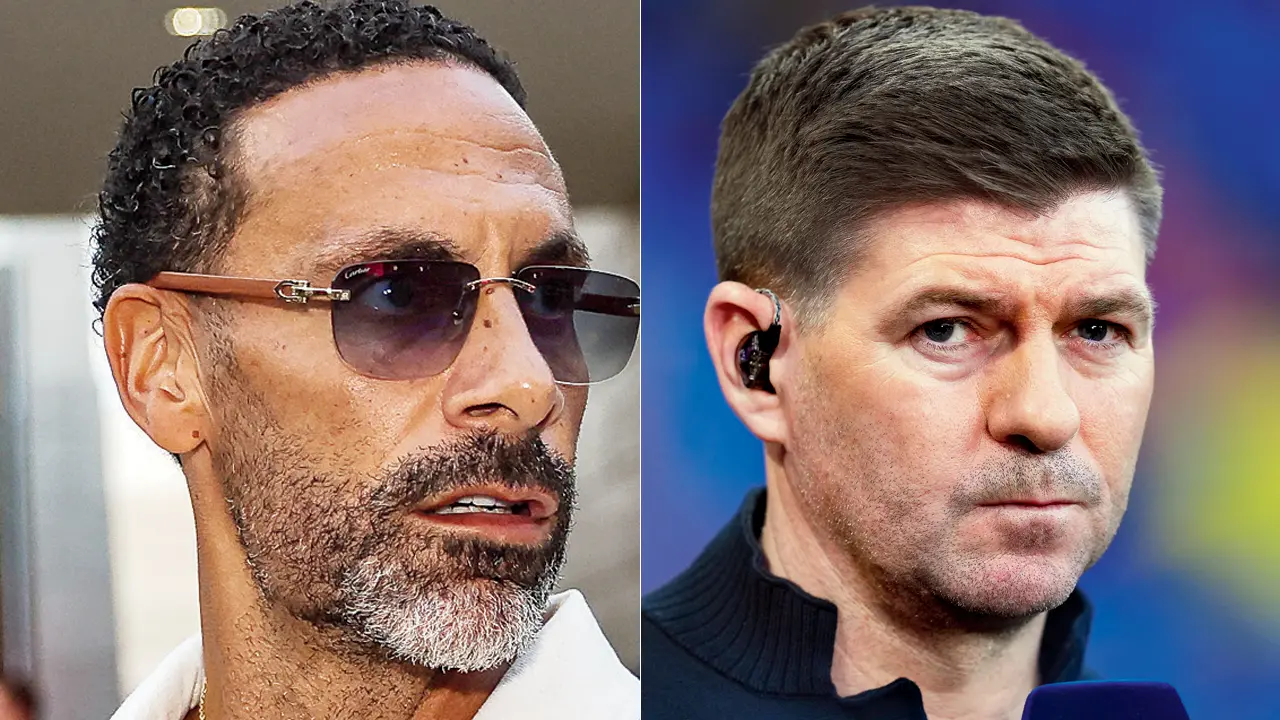
In a revelation that has sent shockwaves through the football world and reignited debates about England’s most talented generation, Manchester United legend Rio Ferdinand has publicly admitted to a deep-seated animosity towards former Liverpool captain Steven Gerrard. This isn’t just about friendly rivalry; Ferdinand used the stark word “hated” to describe his feelings, shedding a surprising new light on one of the most intriguing and ultimately disappointing eras in English football history.
The Bombshell Admission
The confession came during an interview with a British publication, where Ferdinand didn’t mince words. “Gerrard didn’t like me and I didn’t really like him. There was hate between us,” he stated candidly. For fans who watched both titans represent England on the international stage, often alongside each other, this admission is jarring. It peels back the veneer of professional camaraderie, exposing the raw, intense club rivalries that simmered beneath the surface, even when wearing the Three Lions shirt.
Two Titans, One Fierce Rivalry
Rio Ferdinand, an iconic figure at the heart of Manchester United’s defense, and Steven Gerrard, the undisputed heartbeat of Liverpool’s midfield, were more than just star players; they were embodiments of their respective clubs. Their careers coincided with a period of intense, often bitter, rivalry between United and Liverpool – two footballing giants separated by a mere 30 miles and centuries of history, each vying for supremacy in English football.
Ferdinand, a commanding centre-back, was a cornerstone of Sir Alex Ferguson’s dominant United sides, collecting multiple Premier League titles and a Champions League trophy. Gerrard, on the other hand, was Liverpool through and through, a talismanic captain who dragged his team to FA Cup and Champions League glory with sheer will and unforgettable moments of brilliance. They were fierce competitors, each driven by an unwavering loyalty to their club, battling for every inch on the pitch. This intense club allegiance, it now seems, seeped deep into their personal interactions.
England’s Unfulfilled Promise: The Golden Generation
For years, football pundits and fans alike lamented the underperformance of England’s “Golden Generation.” The early to mid-2000s saw a constellation of world-class talent emerge: Ferdinand, Gerrard, Frank Lampard, Paul Scholes, David Beckham, Michael Owen, Wayne Rooney – a squad that, on paper, should have conquered the world. Yet, tournament after tournament, they faltered, often exiting major competitions with a whimper rather than a bang.
The question of “why?” has haunted English football for decades. Was it managerial tactics? Bad luck? The immense pressure of a nation’s hopes? Ferdinand’s recent comments offer a poignant, if uncomfortable, new perspective. While external factors undoubtedly played a role, the admission of “hate” between two pivotal players suggests an underlying lack of cohesion, perhaps even active discord, within the squad. Could the inability to truly put club rivalries aside have been a major contributing factor to their collective failure?
The Seeds of Dislike
Ferdinand attributes this animosity directly to their roles at rival clubs. In an era where loyalty to one’s team was paramount, players were expected to embody the club’s spirit – which often included a healthy dose of disdain for their rivals. For Ferdinand at Manchester United and Gerrard at Liverpool, the stakes were sky-high. Every tackle, every pass, every goal carried the weight of historical enmity. It was a gladiatorial contest not just for three points, but for bragging rights, for pride, and for the very soul of English football.
This rivalry was so deeply ingrained that it appears it became almost impossible to switch off when donning the England shirt. Imagine stepping onto the field for your country, knowing that the player beside you, meant to be your comrade-in-arms, is someone you actively “hated” just weeks prior in a brutal league encounter. The psychological toll, the subtle lack of trust, the unspoken barriers – these could profoundly impact on-field chemistry and decision-making, especially in high-pressure tournament situations.
Beyond the Pitch: A Lingering Animosity?
While Ferdinand’s comments focus on the past, they highlight the unique challenges faced by national teams where club loyalties run so deep. Unlike today’s more globalised game where players move frequently and rivalries can be less personal, the era of Ferdinand and Gerrard was one of entrenched, almost tribal, club identity. It raises questions about how much individual players were willing – or able – to compromise their club-forged identities for the greater national good.
This revelation doesn’t just rewrite football history; it offers a human perspective on the intense pressures and complex emotions that even elite athletes navigate. It’s a reminder that beneath the jerseys and the professional facade, there are individuals with strong feelings, biases, and long-standing rivalries that can, at times, override the collective goal.
A Look Back: What Could Have Been?
With the benefit of hindsight, Ferdinand’s words are a stark indictment of a generation that promised so much but delivered so little. If key figures harboured such strong negative feelings towards each other, it casts a shadow over the team’s ability to operate as a cohesive unit. For England fans, it’s a bitter pill to swallow, adding another layer of complexity to the perennial question of why that “Golden Generation” never quite shone as brightly on the international stage as they did for their respective clubs. It leaves us to wonder what might have been had those deep-seated club rivalries been truly left at the national team door.
—
Why This Matters
This candid admission from a football legend isn’t just a juicy piece of gossip; it’s a significant insight into the psychological landscape of elite sport. It provides a crucial, missing puzzle piece in understanding why England’s “Golden Generation,” despite immense individual talent, consistently underperformed. It highlights how deeply ingrained club rivalries can impact national team cohesion and offers a poignant reminder that even the greatest athletes are human, carrying their emotions and loyalties onto the biggest stages. This revelation reshapes our historical understanding of an iconic football era and serves as a fascinating study of sports psychology and team dynamics.