## Key Takeaways
– KL Rahul survived a clear edge in a Test match against Afghanistan after the opposition captain, Hashmatullah Shahidi, opted not to review an appeal.
– Replays later confirmed contact between Rahul’s bat and the ball, highlighting a crucial missed opportunity for Afghanistan.
– Former England spinner Graeme Swann humorously praised Rahul’s “blinder” of an act for convincing the fielding side.
## Main Developments
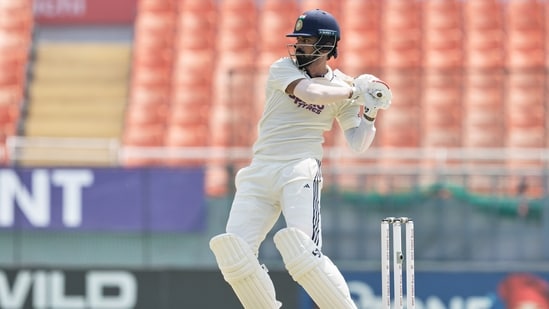
In a pivotal moment on the opening day of the one-off Test between India and Afghanistan, Indian batsman KL Rahul received a significant reprieve, escaping dismissal despite a clear edge. The incident, which has drawn considerable attention and commentary, occurred early in India’s innings, leaving the Afghanistan team to reflect on a costly decision not to challenge the on-field umpire’s call.
The dramatic event unfolded on the very first delivery of the 11th over. Pacer Ziaur Rahman Sharifi delivered a short-of-a-length ball, which KL Rahul attempted to cut with a powerful, sweeping stroke. While the Afghanistan fielders appealed vociferously, convinced they had heard a sound, the umpire remained unmoved, ruling it not out. Crucially, despite visible and audible appeals from various players, including Rahmanullah Gurbaz who appeared eager to push for a review, Afghanistan’s captain, Hashmatullah Shahidi, ultimately decided against using the Decision Review System (DRS).
The decision-making process within the Afghan camp appeared fraught. While Gurbaz, a keen observer from the fielding side, seemed confident of an edge and attempted to persuade his captain, the primary input from wicketkeeper Afsar Zazai was that he had heard nothing. In the high-pressure environment of Test cricket, captains often rely heavily on their wicketkeeper’s immediate sensory feedback regarding nicks and faint edges. Ultimately, Shahidi sided with Zazai’s assessment, allowing the moment to pass without recourse to technology.
The ramifications of this choice became starkly clear shortly after. Television replays, incorporating advanced audio and visual evidence, definitively showed a discernible connection between Rahul’s bat and the ball. This revelation confirmed the Afghanistan fielders’ initial instincts and underscored the magnitude of their missed opportunity. The non-review meant that Rahul, a key Indian batsman, survived what should have been an early exit, continuing his innings and potentially shaping the trajectory of the Test match.
The incident quickly became a talking point among cricket analysts and former players. Graeme Swann, the former England spinner, offered a humorous take on the situation, suggesting that Rahul’s composed demeanor and apparent lack of reaction after the edge were so convincing that he deserved an “Oscar” for his performance. Swann’s comment, while light-hearted, highlights a common, unspoken aspect of cricket where batsmen often attempt to mask a clear edge in the hope that the fielding side misses it or botches the review.
For Afghanistan, an emerging force in Test cricket, this moment serves as a sharp reminder of the fine margins that define success at the highest level. Utilising DRS effectively is a critical skill, demanding quick judgment, collective input, and trust in one another’s perceptions. Misjudging such a vital opportunity, especially against an established Test nation like India and a player of KL Rahul’s caliber, can have significant consequences on the match’s flow and ultimate outcome.
The decision not to review, despite the protestations from some teammates, underscores the immense pressure on captains during live match situations. They must synthesize multiple pieces of information—the sound, the appeal, the batsman’s reaction, and the input from close-in fielders, especially the wicketkeeper—all within a tight 15-second window. In this instance, Shahidi’s reliance on his wicketkeeper’s counsel, which proved incorrect, cost his team a potential breakthrough. The incident, therefore, offers a valuable, if painful, learning experience for the Afghan team as they continue to develop their strategic acumen in Test match cricket.
## Why This Matters
This incident highlights the critical role of the Decision Review System (DRS) in modern Test cricket and the immense pressure on captains to make split-second decisions that can profoundly influence a match’s outcome. An early wicket of a key batsman like KL Rahul can shift momentum, but a missed opportunity due to a failed or absent review can be demoralizing and costly. For Afghanistan, an emerging Test nation, it underscores the importance of refining their review strategy and decision-making processes, as these fine margins often differentiate between competitive performances and missed chances at the highest level. The incident also subtly touches on the unwritten “spirit of the game,” where a batsman’s reaction after an edge can sometimes play a role in the fielding side’s perception, as humorously pointed out by Graeme Swann.
## Frequently Asked Questions
##What was the central incident involving KL Rahul?
KL Rahul survived a clear edge off Ziaur Rahman Sharifi’s bowling when Afghanistan chose not to review the umpire’s ‘not out’ decision, despite replays confirming contact between bat and ball.
##Who was responsible for the decision not to review?
Afghanistan captain Hashmatullah Shahidi made the final decision not to use the DRS, reportedly influenced by wicketkeeper Afsar Zazai not hearing anything, despite other fielders like Rahmanullah Gurbaz sensing an edge.
##Why is this incident considered significant in cricket?
The incident is significant because it highlights how crucial the Decision Review System (DRS) is for correcting umpire errors, and how a missed review can deny a team a vital wicket, potentially altering the course of a Test match. It also showcases the pressure on captains and the importance of accurate collective decision-making in high-stakes situations.