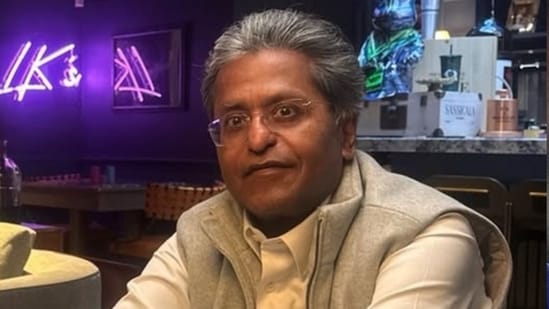
Lalit Modi, the controversial but undeniably pivotal architect of the Indian Premier League (IPL), has peeled back the curtain on one of Indian cricket’s most intense administrative battles: the 2005 Board of Control for Cricket in India (BCCI) elections. His recent revelations paint a vivid picture of a no-holds-barred power struggle, complete with diverted flights and strategically “held” members, ultimately paving the way for Sharad Pawar’s presidency – a victory Modi claims was indispensable for the IPL’s eventual birth.
The Chessboard of Power: BCCI in 2005
Rewind to 2005. Indian cricket was at a crossroads, administratively speaking. The BCCI, a behemoth in global cricket, was a hotbed of political maneuvering, with factions constantly vying for control. The presidency of the board wasn’t just a position of honor; it was a seat of immense power, influence, and financial sway, capable of shaping the future of the sport in the world’s biggest cricketing nation. It was within this charged atmosphere that the election for the BCCI president became a battleground of epic proportions.
The incumbent, Ranbir Singh Mahendra, backed by then-ICC President Jagmohan Dalmiya, faced a formidable challenge from Sharad Pawar, a seasoned politician with considerable clout. The stakes were extraordinarily high, and as Modi recounts, no stone was left unturned in the quest for victory.
Modi’s Bombshell: Flights, Hotels, and High Drama
According to Modi, who was actively involved in Pawar’s campaign, the 2005 election was far from a conventional democratic process. It was a strategic masterclass in political maneuvering, bordering on the theatrical. His claims of “flights diverted” and “members held in hotels” offer a tantalizing glimpse into the lengths to which both sides allegedly went to secure votes and influence the outcome.
Imagine the scene: delegates, often representing state cricket associations, becoming prized assets. “Flights diverted” suggests last-minute changes to travel plans, possibly to prevent rival camps from meeting delegates or to ensure they arrived at specific, controlled locations. “Members held in hotels,” meanwhile, hints at a more direct strategy – perhaps a form of strategic isolation, persuasion, or even protection, ensuring that key voters remained committed to a particular faction and were shielded from opposition influence right up until the decisive vote. These weren’t mere whispers; they were open secrets within the corridors of cricket power, reflecting the intense pressure and Machiavellian tactics at play.
Modi’s active involvement, he states, was driven by a singular vision: the creation of a groundbreaking T20 league. He believed that only with a forward-thinking administration at the helm could such an audacious project come to fruition. His efforts were reportedly instrumental in consolidating support for Sharad Pawar, seeing him as the catalyst for change.
Sharad Pawar’s Ascent and a New Era
In a dramatic election that went down to the wire, Sharad Pawar ultimately emerged victorious, securing the presidency of the BCCI. His triumph marked a significant shift in the administrative landscape of Indian cricket, signaling a departure from the previous regime and ushering in what many hoped would be a new, more progressive era.
Pawar, known for his administrative acumen and willingness to embrace new ideas, provided the crucial leadership and institutional backing that Modi believed was necessary. His victory was not just about personnel change; it was, for Modi, about creating the ideological and operational space required for radical innovation.
The IPL Connection: A Vision Realized
It’s easy to connect the dots backward now, but at the time, the IPL was merely a nascent idea, a bold vision in Modi’s mind. However, he consistently maintained that Sharad Pawar’s ascension to the BCCI presidency was a non-negotiable prerequisite for the IPL’s eventual launch. Without Pawar’s leadership, his willingness to challenge existing norms, and the administrative stability that followed, Modi argues, the IPL might have remained just a dream.
The successful implementation of the IPL in 2008 transformed cricket globally. It ushered in an era of unprecedented commercial success, entertainment, and player opportunities. This massive undertaking, with its complex financial structures, franchise model, and global appeal, needed not just an innovator like Modi, but also a supportive and powerful administrative framework. Modi’s assertion is that Pawar’s tenure provided exactly that fertile ground.
A Legacy of Controversy and Innovation
Lalit Modi himself remains one of Indian cricket’s most polarizing figures. His flamboyant style, ambitious projects, and eventual exile amidst charges of financial irregularities have cemented his controversial status. However, even his harshest critics find it hard to deny his foundational role in conceptualizing and launching the IPL. His latest revelations serve as a potent reminder of the complex interplay of power, politics, and personal ambition that often underpins the biggest transformations in sports.
Why This Matters
Understanding the behind-the-scenes machinations of the 2005 BCCI election offers crucial insight into the very DNA of modern Indian cricket. It highlights how administrative power struggles can profoundly impact the sport’s trajectory, shaping everything from player welfare to commercial enterprises like the IPL, which has now become a global phenomenon. Modi’s candid account reveals the high-stakes environment in which such monumental decisions are made, underscoring the influence of key individuals and the dramatic, often unseen, battles that precede major innovations. It’s a reminder that behind every dazzling six and celebrated victory often lies a complex tapestry of political maneuvering and strategic foresight.