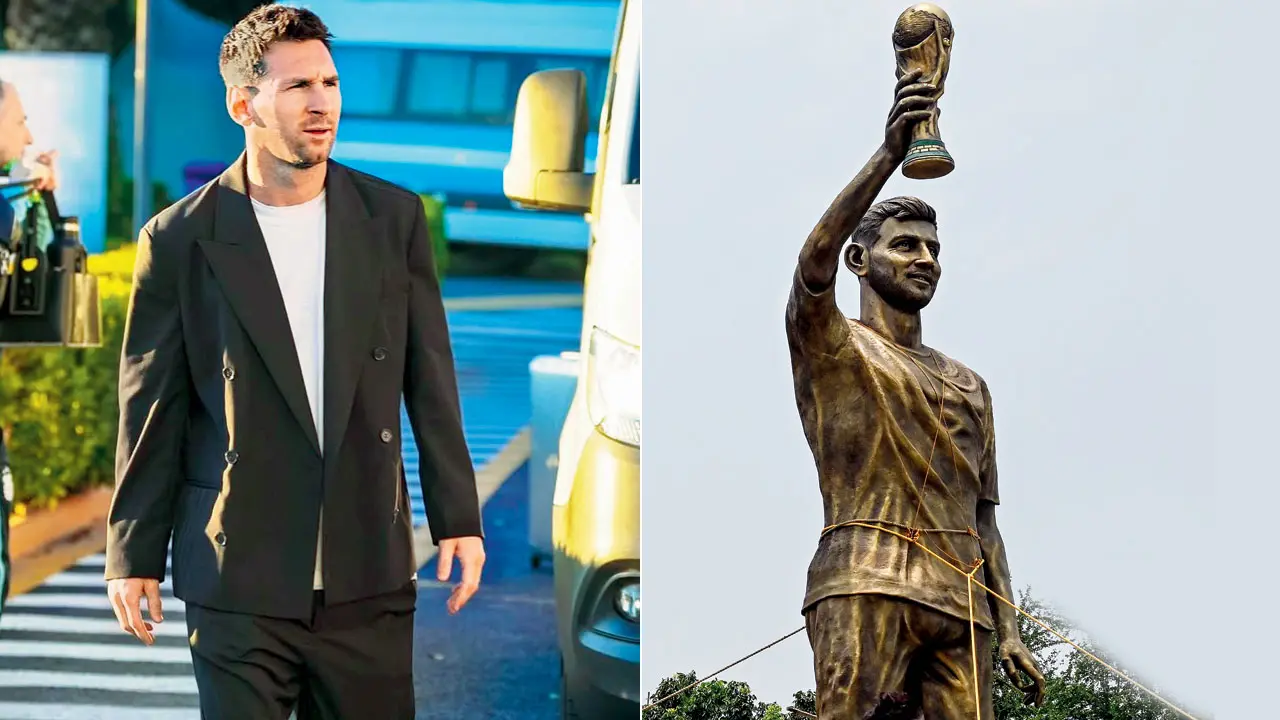
Kolkata, India – Imagine a towering tribute to a global icon, standing proud one moment, then battling the very elements it was meant to defy the next. That’s precisely the dramatic scene unfolding in Kolkata, where a colossal 21-meter statue of football legend Lionel Messi, erected to celebrate his enduring legacy and a significant visit, has been deemed unsafe and is now slated for removal. The news, confirmed by a local lawmaker, comes after the massive monument was observed “swaying in the wind,” prompting immediate safety concerns.
A Monument to Messi’s Magic
Kolkata isn’t just a city; it’s a living, breathing testament to football fanaticism. For generations, the City of Joy has cradled a deep, almost spiritual connection with Argentine football, first through the legendary Diego Maradona, and now, with unparalleled fervor, for Lionel Messi. So, when the idea emerged to erect a giant statue honoring the eight-time Ballon d’Or winner, it was met with widespread enthusiasm.
The statue, depicting Messi in a characteristic pose – ball at his feet, ready for action – was unveiled last year, a grand gesture to immortalize his connection with the city, stemming from his memorable visit in 2011. It quickly became a prominent landmark on a busy road, drawing eyeballs and selfie-seekers, a testament to the city’s profound admiration for ‘La Pulga’.
The Alarming Sway
However, what began as a symbol of unwavering devotion has turned into a perilous problem. Eyewitnesses and authorities noted the statue exhibiting concerning movements, swaying visibly in the wind. A 21-meter structure, approximately seven stories tall, isn’t something you want to see dance precariously in the breeze, especially over a bustling thoroughfare. The potential for disaster was clear and immediate.
The first responders to this looming crisis were a team of courageous workers. Scrambling up the colossal figure, they threw ropes over its shoulders, attempting to secure the precarious monument and prevent any catastrophic collapse. These dramatic images underscore the severity of the situation and the urgency with which authorities had to act.
Safety First: The Removal Decision
The decision to remove such a significant public art piece is never taken lightly, especially one dedicated to a figure as beloved as Messi. However, public safety overrides all other considerations. A lawmaker, speaking to AFP, confirmed that the statue’s precarious state necessitates its removal. While no specific timeline for the full dismantling has been provided, the immediate actions taken to stabilize it indicate an expedited process.
The incident raises questions about the structural integrity, material choices, and engineering oversight during the statue’s construction. Was it a design flaw? The impact of unforeseen weather conditions? Or a combination of factors that led to this worrying instability? These are likely questions that will be explored by local authorities as they proceed with the removal and assess any future plans for similar public tributes.
A Bittersweet Farewell
For the countless football fans in Kolkata, the news is undoubtedly bittersweet. While the statue’s initial erection was a moment of immense pride and celebration, its removal, though for understandable safety reasons, marks the end of a very visible tribute. It’s a stark reminder that even the most monumental gestures require rigorous planning and maintenance to stand the test of time and elements.
The spirit of Lionel Messi, however, and Kolkata’s undying passion for the beautiful game, will surely remain as robust as ever. This episode, while disappointing, will unlikely diminish the city’s love for the Argentine maestro, whose magic transcends physical monuments.
Why This Matters
This story isn’t just about a statue; it highlights the critical balance between grand public gestures, the intricate challenges of urban infrastructure, and the paramount importance of public safety. Investing in monumental art is a way for cities to celebrate heritage, identity, and heroes. Yet, this incident serves as a crucial reminder that such projects demand meticulous planning, robust engineering, and ongoing maintenance to prevent them from becoming hazards. It underscores the responsibility authorities bear in ensuring that tributes, no matter how heartfelt, never compromise the well-being of their citizens.