Even the most celebrated figures face their toughest battles off the field, often against invisible opponents. Cricket icon Virat Kohli, a name synonymous with relentless aggression and unmatched success, has just revealed a deeply personal struggle that offers a rare glimpse into the mind of a superstar: a debilitating bout of imposter syndrome following his departure from India’s captaincy. It took the steadying hands of former head coach Rahul Dravid and batting coach Vikram Rathour to help him navigate this turbulent period, a time when he admitted, he doubted himself profoundly and “wanted to play for them” to rediscover his joy for the game.
### The Crown Sits Heavy: A Captain’s Exodus
The period following early 2022 marked a significant shift in Indian cricket, and for Virat Kohli personally. After a record-breaking run as captain across all formats, Kohli made the decision to step down from the T20I captaincy in late 2021, followed by his removal from the ODI leadership and, finally, his shocking resignation as Test captain in January 2022. This confluence of events, coming amidst what he described as one of the most “turbulent phases” in Indian cricket, left a void that was not just about leadership, but about identity.
For years, Kohli had been the undisputed leader, the aggressive face of Indian cricket, carrying the hopes of a billion fans on his broad shoulders. When the captaincy responsibilities were shed, or taken away, it appears to have triggered a profound crisis of self-belief, even for a player of his calibre. The very foundation of his role, his self-perception, seemed to crumble, paving the way for the insidious creeping in of imposter syndrome.
### Battling the Inner Critic: When Self-Doubt Takes Hold
Imposter syndrome is a psychological pattern in which an individual doubts their accomplishments and has a persistent internalized fear of being exposed as a “fraud.” Despite external evidence of their competence, those experiencing it remain convinced that they don’t deserve the success they have achieved. For a legend like Virat Kohli, with an unparalleled list of records and accolades, admitting to such a struggle is nothing short of remarkable.
He opened up about this challenging phase at the RCB Innovation Lab Indian Sports Summit Powered by Leaders, held recently at the Centre for Sports Excellence in Bengaluru. Kohli confessed that post-captaincy, he found himself questioning his abilities, his worth, and whether he could still perform at the elite level without the added mantle of leadership. It’s a sobering reminder that even the strongest minds can be vulnerable to internal struggles, especially when identity and immense public expectation are intertwined.
### The Healing Touch: Dravid and Rathour’s Guiding Hand
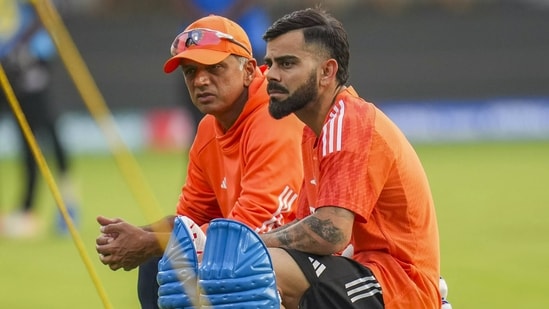
In this period of deep introspection and self-doubt, Kohli found solace and strength in the unwavering support of the team management, particularly former India head coach Rahul Dravid and batting coach Vikram Rathour. While the details of their interventions remain private, Kohli’s admission that he “wanted to play for them” speaks volumes about the positive, supportive environment they cultivated.
Rahul Dravid, known for his calm demeanour and profound understanding of the game and its players, likely provided the stable, reassuring presence Kohli needed. Rathour, as batting coach, would have worked closely with Kohli, not just on technique, but perhaps more crucially, on rebuilding his confidence and rekindling his love for the sport that seemed to have dimmed. Their belief in him, even when he doubted himself, appears to have been the lifeline that pulled him back from the brink of losing joy in cricket. It highlights the often-understated, yet critical, role that empathetic coaching plays in the mental well-being and performance of elite athletes.
### From Darkness to Light: The Path to Redemption
Kohli’s journey since that “turbulent phase” has been a testament to his resilience. After a prolonged lean patch, he has steadily regained his blistering form, smashing records and once again dominating the global cricketing landscape. His centuries have flowed, his aggression has returned, and his passion for the game is visibly reignited. This resurgence is not just a story of cricketing brilliance, but a powerful narrative of overcoming mental adversity with the right support system.
His candid revelation serves as a beacon of hope and understanding, normalising mental health struggles even among those at the pinnacle of their professions. It underscores the fact that vulnerability is not a weakness, but a profound strength, especially when coupled with the courage to seek and accept help.
### Why This Matters
Virat Kohli’s willingness to speak openly about his battle with imposter syndrome after his captaincy exit is incredibly significant. It shatters the myth of invincibility surrounding elite athletes and destigmatizes mental health struggles in the high-pressure world of professional sport. For countless fans and aspiring athletes, hearing such an admission from a legend like Kohli can provide immense relief and encouragement to acknowledge their own internal battles and seek support. It also highlights the crucial, often unseen, role of coaching and team management in fostering a supportive environment where athletes feel safe to be vulnerable and ultimately thrive again.