The Indian Premier League is a relentless beast, a marathon of highs, lows, and intense scrutiny. For the Rajasthan Royals, a team often lauded for its astute player development and tactical nous, the spotlight has recently swivelled to their dynamic young opener, Vaibhav Sooryavanshi. Once heralded for his fearless hitting, Sooryavanshi now finds himself at the heart of a captivating debate within the Royals’ camp: has a perceived weakness been exposed, or is this just part of a young player’s evolving journey?
### The Rising Star’s Rollercoaster Ride
When Vaibhav Sooryavanshi burst onto the IPL scene, he did so with the kind of audacious confidence that immediately captures fan attention. His early performances were nothing short of spectacular – blistering starts, boundary-laden powerplay assaults, and a fearless approach that set the tone for the Royals’ innings. He was the kind of player who could turn a match on its head in a few overs, injecting vital momentum.
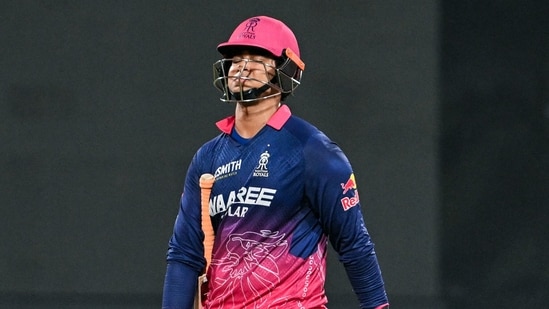
However, the nature of the IPL means opposition analysts are always at work. While Sooryavanshi continues to provide brisk, aggressive beginnings, converting those starts into the ‘big scores’ – specifically, half-centuries – has become a challenge since April 25. He’s stacked up a series of impactful 30s and 40s, valuable contributions indeed, but the milestone that signals true dominance has eluded him. Most recently, against the Delhi Capitals, Sooryavanshi missed his fifty by a mere four runs, dismissed by a slower delivery from Madhav Tiwari.
### Sangakkara’s High Expectations
It’s a testament to the Royals’ ambition and high standards that even impressive 40s can spark discussion. Kumar Sangakkara, the team’s Director of Cricket, is known for his sharp cricketing intellect and his unwavering demand for excellence. He had previously voiced a nuanced concern, suggesting that Sooryavanshi hadn’t quite delivered the returns expected from him, particularly in turning promising starts into match-winning contributions. For a franchise vying for the top, the expectation is simple: if you get in, make it count. Sangakkara’s comments, while not a criticism of effort, highlighted the performance gap between ‘good’ and ‘great’ that the team is always striving to bridge.
### Rathour’s Staunch Defence: “Not His Kryptonite!”
In a league known for its rapid narratives, it didn’t take long for Rajasthan Royals batting coach Vikram Rathour to offer a robust counter-perspective. Rathour, whose role involves nurturing talent and instilling confidence, painted a more encouraging picture of Sooryavanshi’s contributions. He believes the youngster has, in fact, “produced what was needed,” pointing to the consistent brisk starts that still provide a crucial platform for the team.
When confronted with the idea that slower deliveries might be Sooryavanshi’s ‘kryptonite’ – his fatal flaw – Rathour was unequivocal. “Not quite,” he insisted. His defiance wasn’t just a coach backing his player; it was a challenge, an open dare to the opposition.
### The Slower Ball Showdown: Fact or Fiction?
The slower delivery, in cricket, is a psychological weapon as much as a physical one. Designed to deceive a batsman expecting pace, it relies on a subtle change in grip, release, or wrist action, taking crucial milliseconds off the ball’s speed. For an aggressive batsman like Sooryavanshi, who thrives on timing the ball at pace, a well-disguised slower ball can disrupt rhythm, lead to mistimed shots, and ultimately, dismissal. Madhav Tiwari’s slower ball that ended Sooryavanshi’s innings at 46 against DC was a classic example, catching him off guard.
Yet, Rathour’s stance suggests this isn’t an unfixable flaw. “I’d challenge bowlers to keep trying it,” he stated, a clear message that the Royals have faith in their player’s ability to adapt. He explained that Sooryavanshi has been “working extremely hard” on his game, implying specific training and mental preparation to counter such tactics. “He has the game to tackle it,” Rathour asserted, indicating that the tools and techniques are there, it’s just a matter of execution under pressure.
### The Unseen Work: Adaptation and Resilience
What Rathour’s words underscore is the intensive, often unseen, work that goes into player development at the elite level. Adapting to opposition strategies is a fundamental aspect of T20 cricket. For Sooryavanshi, this means not just physical drills to improve footwork and hand-eye coordination against slower balls, but also mental fortitude – learning to read the bowler’s hand, anticipate variations, and adjust shot selection in a split second.
The Royals coaching staff, spearheaded by Sangakkara and Rathour, are known for fostering an environment where players can openly address challenges and refine their skills. Sooryavanshi’s journey from a blazing newcomer to a player now expected to consistently deliver match-winning scores is a natural progression. It’s about converting raw talent into polished performance, and that involves identifying areas for improvement and diligently working to overcome them. This isn’t just about a single dismissal; it’s about the evolution of a promising cricketer under the intense glare of the IPL.
### Why This Matters
This internal discussion, though seemingly about one player’s technique, actually reflects the broader strategic approach of a top-tier IPL franchise. How the Rajasthan Royals manage and develop Vaibhav Sooryavanshi could be crucial to their campaign. His ability to provide explosive starts is invaluable, and if he can consistently convert those into substantial scores, it significantly boosts the team’s chances. For Sooryavanshi himself, overcoming this perceived challenge is a critical step in cementing his place not just in the Royals’ lineup, but as one of the league’s formidable future stars. It’s a test of adaptation, resilience, and the belief that hard work truly pays off under pressure.
As the IPL season charges forward, all eyes will be on Vaibhav Sooryavanshi. Will bowlers continue to “try it” with slower balls? And more importantly, will the young gun prove his batting coach right, showcasing that he truly does have “the game to tackle it”? The answer will undoubtedly shape the Royals’ fortunes and Sooryavanshi’s burgeoning career.