## Key Takeaways
– Gus Atkinson’s decisive double-wicket performance late on day two significantly strengthened England’s position in the first Test.
– Debutant opener Emilio Gay registered a valuable half-century, providing a crucial backbone to England’s scoring in challenging conditions.
– New Zealand concluded the day at a precarious 36 for 3 in their second innings, requiring a further 218 runs to chase down England’s target of 254.
## Main Developments
England has asserted a commanding position in the opening Test against New Zealand at Lord’s, largely thanks to a late double strike from bowler Gus Atkinson and a resilient debut half-century from opener Emilio Gay. As the second day drew to a close on Friday, June 6, 2026, New Zealand found themselves struggling at 36 for 3 in pursuit of 254, still needing a substantial 218 runs for victory.
The day’s play culminated with England firmly in the ascendancy, pressing for a decisive outcome in this crucial encounter. The momentum undeniably shifted in the home side’s favour during the closing stages, underscoring the fickle nature of Test cricket where fortunes can turn rapidly. Atkinson’s timely interventions under the gathering twilight were particularly instrumental in dismantling New Zealand’s nascent second innings.
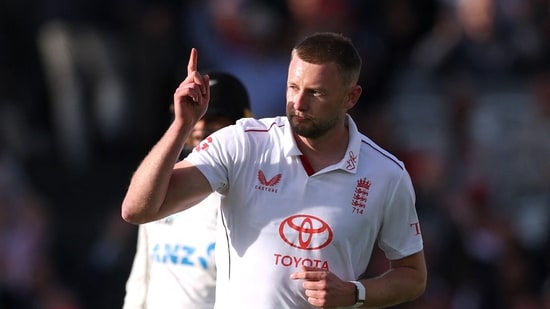
Gus Atkinson, making a significant impact with the ball, delivered a pivotal spell that saw him claim two vital wickets towards the end of day two. His ability to penetrate the New Zealand top order at such a crucial juncture underscored his growing reputation. One of his critical breakthroughs came in the form of New Zealand captain Tom Latham, who was dismissed for a third-ball duck, edging a loose drive. The catch was cleanly taken by Harry Brook in the slips, providing England with an immediate and psychological advantage at the very outset of New Zealand’s chase. The loss of their captain so early set a challenging tone for the visitors.
Earlier in the match, New Zealand had endured a torrid time with the bat in their first innings, collapsing to just 113 all out. This significant underperformance set the stage for a low-scoring contest, exacerbated by what was described as a bowler-friendly pitch. Such conditions inherently favour disciplined seam and swing bowling, often making life arduous for batsmen, and this match at Lord’s proved to be no exception. The early struggles of both teams highlighted the demanding nature of the playing surface.
Amidst the challenging conditions and flurry of wickets, England’s debutant opener, Emilio Gay, demonstrated remarkable composure and skill. His valuable half-century emerged as a cornerstone of England’s efforts, especially considering the overall low-scoring nature of the game. On a pitch where batsmen found it difficult to settle and accumulate runs, Gay’s fifty was more than just a personal milestone; it was a substantial contribution that provided England with the necessary runs to build a formidable lead. His ability to negotiate the potent New Zealand bowling attack and lay a foundation was critical in shaping England’s strong position by the end of the second day.
New Zealand’s second innings commenced under immense pressure, compounded by the deficit from their first innings. The early loss of Tom Latham to Atkinson’s probing delivery left them reeling. The situation worsened significantly when key batsman Kane Williamson, who had battled hard to score 18 runs, was dismissed leg before wicket (lbw) by fast bowler Josh Tongue. Williamson’s departure, coming shortly before stumps, was a hammer blow to New Zealand’s hopes. His wicket was not only vital for England in terms of match control but also carried an air of poignancy, as it was speculated to be the key batsman’s final appearance at the historic Lord’s ground. The fall of such an experienced figure left New Zealand’s batting lineup severely depleted and facing an uphill battle.
The recurring theme throughout the second day was the dominance of the bowlers, a direct consequence of the pitch conditions. The surface offered considerable assistance to the pace bowlers, with movement off the seam and through the air testing the techniques and resolve of every batsman. Such an environment naturally limits scoring opportunities and places a premium on resilient batting performances. Both teams found run-scoring a laborious task, emphasizing the value of every single run and underscoring the exceptional efforts of players like Emilio Gay to achieve substantial scores. The persistent threat of dismissal meant batsmen could never truly relax, even when seemingly set.
As England continues to push for an early victory in this initial Test of the series, New Zealand faces a monumental task on the third day. To secure a win, they must overcome a deficit of 218 runs with only seven wickets remaining, a challenge made even more formidable by the loss of their established top-order batsmen. The performance of Gus Atkinson in the final session, coupled with the foundation laid by Emilio Gay, has placed England in an exceptionally strong position, poised to capitalize further and aim for a decisive outcome. The match hangs finely balanced in England’s favour, setting the stage for an intriguing battle on Saturday.
## Why This Matters
This match serves as a crucial barometer for both England and New Zealand at the start of their Test series. For England, the dominant performance, particularly from a debutant like Emilio Gay and a relatively newer bowler like Gus Atkinson, highlights the depth and emerging talent within their squad. A strong victory here would provide significant momentum and confidence for the rest of the series. For New Zealand, the precarious position underscores the challenges of adapting to foreign conditions and the importance of resilience. The early collapse in both innings raises questions about their batting stability against an aggressive English attack. Furthermore, the potential final appearance of a cricketing icon like Kane Williamson at Lord’s adds a layer of historical significance, drawing attention to the end of an era for a player who has left an indelible mark on the sport. The outcome of this Test could significantly influence the trajectory of the entire series.
## Frequently Asked Questions
What is the current score in the match?
At stumps on day two, New Zealand was 36 for 3 in their second innings, chasing a target of 254 set by England.
Who were the key performers for England on Day 2?
Gus Atkinson struck twice late in the day to rattle New Zealand’s top order, while debutant opener Emilio Gay scored a valuable fifty for England. Josh Tongue also contributed by taking the crucial wicket of Kane Williamson.
What is New Zealand’s target to win?
New Zealand requires a further 218 runs for victory, with their current score being 36 for 3 in their second innings, aiming to reach a total of 254.