
## Key Takeaways
– Afghanistan A clinched a narrow four-run victory against India A, with the match decided by the Duckworth-Lewis-Stern (DLS) method.
– India A posted a formidable 349/9 in 49 overs, featuring notable half-centuries from Prabhsimran Singh, Tilak Varma, and Ruturaj Gaikwad.
– The tri-nation series encounter was significantly affected by persistent rain, leading to a revised target for Afghanistan A of 294 runs from 38 overs.
## Main Developments
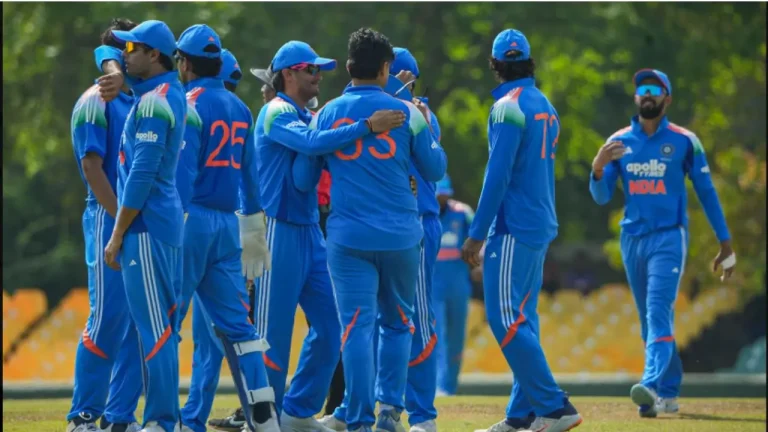
In a significant upset within the ongoing tri-nation series, Afghanistan A emerged victorious over a highly-touted India A side by a slender margin of four runs, with the outcome determined by the Duckworth-Lewis-Stern (DLS) method. The contest, held on Thursday, was frequently interrupted by rain, ultimately leading to a revised target for the chasing team and a dramatic conclusion.
India A, batting first, showcased their batting prowess by compiling a challenging total of 349 runs for the loss of nine wickets in their rain-curtailed innings of 49 overs. The foundation for this imposing score was laid by several strong individual performances, demonstrating the depth and aggressive intent of their lineup.
Leading the charge for India A was Prabhsimran Singh, who played a blistering knock of 84 runs from just 69 deliveries. His aggressive approach and rapid scoring set a formidable pace for the innings. He received excellent support from captain Tilak Varma and Ruturaj Gaikwad, both of whom contributed crucial half-centuries, scoring 66 runs apiece. Their efforts ensured India A maintained a high run rate and posted what appeared to be a daunting target.
However, the prevailing weather conditions introduced an unpredictable element to the match. Persistent rain intervals continually interrupted play, significantly altering the complexion of the contest and necessitating adjustments to the playing conditions. As a result of these interruptions, the Duckworth-Lewis-Stern method was applied to recalculate Afghanistan A’s target.
Following the DLS adjustments, Afghanistan A was tasked with chasing a revised target of 294 runs from 38 overs. This reduction in overs meant a heightened required run rate, demanding an immediate and aggressive response from their batsmen.
Afghanistan A began their chase with an explosive start, indicating their clear intent to pursue the challenging total. Captain Imran led from the front, showcasing resilience and skill with an unbeaten innings of 75 runs off 70 balls. His leadership and composure were vital in keeping his team in contention. He was ably assisted by Hassan Eisakhil, who contributed a quickfire 34 runs from 29 deliveries, further boosting the scoring rate during the early stages of the innings.
As the rain interruptions continued, the match reached a point where a complete innings was no longer feasible. The DLS calculations revealed that Afghanistan A was four runs ahead of the par score requirement at the time the match was called off. This specific calculation ultimately sealed their victory, marking a memorable win for the emerging cricketing nation against a star-studded Indian outfit. The result underscored the effectiveness of the DLS method in providing a fair outcome in weather-affected matches, albeit leading to a nail-biting finish. This narrow triumph is a testament to Afghanistan A’s competitive spirit and strategic play in adverse conditions.
## Why This Matters
This victory for Afghanistan A signifies more than just a win; it represents a notable step forward for emerging cricket nations on the international stage. Defeating a formidable side like India A, which often features players on the cusp of national team selection, highlights the growing quality and competitive spirit within Afghanistan’s cricket development programs.
The reliance on the Duckworth-Lewis-Stern method also underscores the critical role that precise calculations and adaptable strategies play in modern limited-overs cricket, particularly when weather intervenes. For fans, such a narrow, DLS-decided contest provides compelling drama and unpredictability, reinforcing the excitement of the sport. For India A, this unexpected defeat serves as a valuable lesson in resilience and the need for consistent performance, regardless of the opponent or conditions. It adds an intriguing dynamic to the tri-nation series, suggesting that any team can emerge victorious on their day.
## Frequently Asked Questions
###How did Afghanistan A secure their win against India A?
Afghanistan A won by four runs under the Duckworth-Lewis-Stern (DLS) method, having been found to be ahead of the par score when the match concluded due to rain.
###What were the key batting performances for India A?
Prabhsimran Singh led India A with an impressive 84 runs off 69 balls, supported by captain Tilak Varma and Ruturaj Gaikwad, who both scored 66 runs.
###What role did rain play in the match’s outcome?
Persistent rain intervals throughout the match necessitated the use of the DLS method, leading to a revised target for Afghanistan A and ultimately determining the winner based on their position relative to the par score.