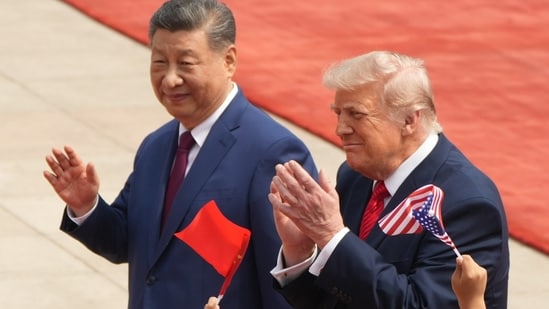
When Donald Trump makes a move on the international stage, the world pays attention. His recent visit to China was no exception, sparking a flurry of analysis, speculation, and concern across global capitals. Far from just a handshake and photo op, this trip — like all high-stakes diplomatic encounters – is already reshaping the intricate dance of international relations, particularly concerning the titans of the global economy: the United States and China.
The implications are vast, touching everything from trade balances and tech supremacy to military postures and regional stability. For a modern audience, understanding these shifts isn’t just about geopolitics; it’s about grasping the forces that influence the cost of goods, the availability of jobs, and the future of innovation.
### The Economic Chessboard: Latent Power at Play
At the heart of US foreign policy, especially under a Trump administration, lies a fundamental belief: economic power isn’t just about wealth; it’s the bedrock of national strength. As analysts like John Mearsheimer often highlight, economic might is “latent power” – the raw material that eventually fuels military power and geopolitical influence. For the US, with its colossal military-industrial complex, maintaining and extending its economic lead has always been paramount.
During his presidency, Trump consistently utilized America’s economic leverage as his primary tool in dealings with China. His China strategy wasn’t just about trade deficits; it was a calculated move to reassert American economic dominance, believing that a strong economy translates directly into superior military capabilities and, consequently, greater global sway. This recent visit, therefore, can’t be viewed in isolation; it’s another chapter in a long-running saga where tariffs, market access, and industrial policy are weapons in a silent, yet fierce, power struggle.
### Beyond Tariffs: The Tech Tussle
While tariffs often grab headlines, the true battleground between the US and China has increasingly shifted to technology. From 5G networks and artificial intelligence to semiconductors and quantum computing, the race for technological supremacy is a zero-sum game with profound economic and security implications. China’s rapid advancements have challenged Washington’s long-held technological lead, prompting aggressive measures from the US, including export controls and sanctions on key Chinese tech firms.
Trump’s recent engagement in Beijing undoubtedly had this tech rivalry high on its agenda. Discussions would have focused on intellectual property theft, forced technology transfers, and the global supply chain for critical components. The goal isn’t just to protect American innovation, but to slow China’s progress in areas deemed vital for future economic and military superiority. Any agreements, or lack thereof, coming out of this visit will have ripple effects across global tech markets, impacting everything from smartphone prices to the development of next-generation AI.
### Geopolitics in Motion: Beyond the Bilateral
A Trump visit to China is never solely about the two nations. It sends shockwaves through the Indo-Pacific and beyond. Allies like Japan, South Korea, Australia, and the European Union watch closely, eager to discern shifts in the US-China dynamic that could impact their own economic and security interests.
Areas like the South China Sea, Taiwan, and North Korea remain flashpoints where US and Chinese interests diverge sharply. While Trump’s rhetoric often prioritizes “America First” and bilateral deals, the underlying geopolitical currents are undeniable. How a US president engages with China on these sensitive issues can embolden or deter regional actors, reshape alliances, and influence global stability. The visit could signal a new phase of engagement – whether more confrontational, cooperative, or a confusing mix of both – with far-reaching consequences for regional peace and the international order.
### What Does This Mean for the World?
Ultimately, the implications of Trump’s China visit filter down to global consumers, businesses, and governments. Businesses face ongoing uncertainty regarding trade policies, supply chain resilience, and market access. Consumers could see fluctuating prices for goods, depending on the status of tariffs and import restrictions. Governments worldwide must recalibrate their own foreign policies to navigate the evolving relationship between the world’s two largest economies.
This isn’t just political theater. It’s a strategic reassessment of global power dynamics, a test of economic fortitude, and a shaping of the future international order. The outcomes of such high-level diplomacy are rarely immediate or simple, but their long-term effects resonate across every aspect of modern life.
### Why This Matters
Understanding the intricacies of US-China relations, especially during high-profile visits like Trump’s, is crucial because these two nations represent nearly 40% of the global economy and wield immense geopolitical influence. Decisions made in Washington and Beijing directly impact international trade, technological innovation, environmental cooperation, and global security. For anyone navigating today’s interconnected world, comprehending this relationship isn’t just academic; it’s essential for making informed choices, both personally and professionally.