In a moment that blended profound spiritual significance with strategic cultural diplomacy, the serene landscape of Leh, Ladakh, recently played host to a truly monumental event. For the first time in 75 years, the sacred Piprahwa relics of Tathagata Buddha, believed to be among the most authentic remnants of the enlightened one, made their grand public return to the region. This historic exposition, inaugurated by Union Home Minister Amit Shah, has not only reconnected a nation with its ancient spiritual roots but also cast a global spotlight on India’s rich Buddhist heritage.
The Return of the Venerated Relics
Imagine relics steeped in over two millennia of history, objects that witnessed the dawn of one of the world’s most enduring philosophies. These aren’t just artifacts; they are tangible links to Siddhartha Gautama himself. The Piprahwa relics, originally discovered in the late 19th century at the ancient Piprahwa Stupa in Kapilavastu – a site widely believed to be the ancient city of Kapilavastu where Buddha spent his early life – have long held immense significance for Buddhists worldwide.
Their return to Leh on May 1, 2026, for an international exposition at Jive-Tsal, wasn’t merely an exhibition; it was a homecoming. For seven and a half decades, these precious items had been housed elsewhere, their public display less frequent. Now, in the heart of the Himalayas, amidst towering peaks and a vibrant Buddhist culture, they stand as a powerful symbol of continuity and spiritual rejuvenation.
A High-Profile Inauguration
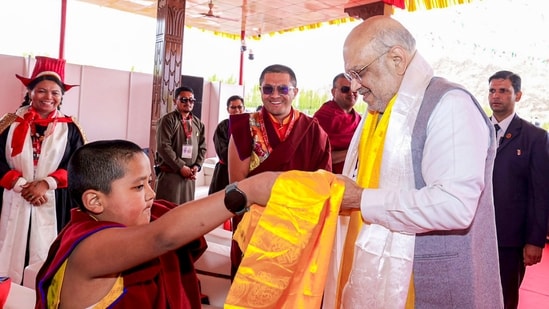
The gravity of the occasion was underscored by the presence of Union Home Minister Amit Shah, who personally inaugurated the exposition. His participation signaled the government’s strong commitment to preserving and promoting India’s rich cultural and religious tapestry, particularly its Buddhist legacy. The choice of Leh, a region steeped in Buddhist tradition and often referred to as ‘Little Tibet,’ couldn’t have been more fitting. Its stunning monasteries, prayer flags fluttering in the crisp mountain air, and a populace deeply devoted to Buddhist principles provided the perfect spiritual backdrop for this historic event.
The inauguration ceremony was reportedly a blend of traditional rituals and modern diplomatic statements, emphasizing the universal message of peace and compassion that Buddha espoused. For attendees and observers, it was a rare opportunity to connect with a profound piece of history and spirituality.
Prime Minister’s Endorsement
Adding another layer of national and international significance, Prime Prime Minister Narendra Modi himself weighed in on the event. In a special message delivered on Buddha Purnima – the most auspicious day for Buddhists, commemorating Buddha’s birth, enlightenment, and passing – he highlighted the immense importance of the exposition. The Prime Minister’s endorsement further amplified the spiritual and diplomatic resonance of the relics’ return, positioning it not just as a cultural event, but as a statement of India’s enduring role as a cradle of Buddhism.
His words likely resonated with millions globally, reinforcing India’s commitment to sharing its spiritual treasures with the world and fostering peace through cultural exchange.
Ladakh: A Beacon of Buddhist Heritage
The decision to host this international exposition in Leh is strategically profound. Ladakh, with its unique geographical and cultural identity, has long been a living museum of Tibetan Buddhism. Its ancient monasteries, thangka paintings, and vibrant festivals are testaments to a faith that has thrived in isolation for centuries. By bringing the Piprahwa relics to Jive-Tsal, India is not only celebrating a national heritage but also reaffirming Ladakh’s status as a global hub for Buddhist pilgrimage and scholarship.
This move is expected to significantly boost spiritual tourism to the region, drawing devotees, scholars, and curious travelers from across the globe keen to experience the profound spiritual energy of the Himalayas and witness these sacred relics firsthand. It’s a powerful statement about cultural preservation and the vital role of local communities in safeguarding these traditions.
Cultural Diplomacy in Action
Beyond its spiritual dimensions, the exposition serves as a powerful instrument of India’s cultural diplomacy. In an increasingly interconnected world, soft power – the ability to attract and co-opt through cultural appeal and political values – is paramount. By showcasing these revered relics and inviting international participation, India is subtly reinforcing its historical links to Buddhism and its continued commitment to promoting the faith’s timeless message of peace and harmony.
This gesture has the potential to strengthen ties with Buddhist-majority nations, foster interfaith dialogue, and position India as a responsible custodian of global cultural heritage. Experts in international relations, like Professor Sriparna Pathak who authored the original insights, would likely see this as a strategic move to enhance India’s global standing through its rich historical and spiritual legacy.
Why This Matters
This isn’t just a story about ancient relics; it’s a narrative about identity, spirituality, and global connection. The return of the Piprahwa relics to the Himalayas is a profound reminder of India’s deep-rooted Buddhist heritage and its enduring relevance in the modern world. It offers a unique opportunity for spiritual introspection, boosts cultural tourism, and strengthens India’s role as a beacon of peace and cultural diplomacy on the world stage. For many, it’s a chance to witness history, touch faith, and be inspired by a message that transcends time.