## Key Takeaways
– Nepal’s Prime Minister, Balendra Shah, acknowledged in parliament that both India and Nepal have encroached on each other’s territories.
– Shah proposed resolving these border issues through the involvement of historians, surveyors, and other experts.
– His statements have ignited significant political controversy domestically, prompting calls for his resignation from opposition parties and student groups.
## Main Developments
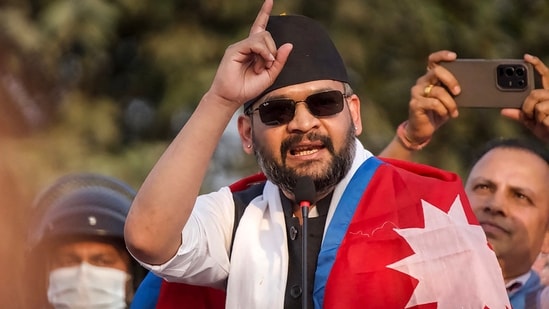
Nepal’s political landscape has been stirred by recent remarks from Prime Minister Balendra Shah concerning territorial disputes with neighboring India. Speaking in his inaugural formal address to parliament since assuming the premiership earlier this year, PM Shah made a notable declaration that has since triggered widespread debate and opposition.
In an unexpected departure from typical diplomatic discourse, the Prime Minister asserted that the issue of border encroachment is not unilateral. He explicitly stated that while India has encroached upon Nepalese territories, Nepal, too, has encroached upon Indian territories in multiple locations along their shared border. This admission, coming from the country’s youngest Prime Minister, marked a significant moment in his young tenure.
During his address, PM Shah outlined a proposed approach for resolving these long-standing and often contentious territorial matters. He advocated for a collaborative effort between the two nations, suggesting that both Nepal and India should engage the expertise of historians, professional surveyors, and other relevant experts. The objective, as articulated by the Prime Minister, would be to comprehensively address and ultimately resolve the complex border issues that have historically complicated bilateral relations.
The immediate aftermath of Prime Minister Shah’s parliamentary speech saw a swift and strong reaction within Nepal. His remarks rapidly sparked significant controversy across the political spectrum. Opposition political parties were quick to voice their disapproval, interpreting his statements in various critical ways. This political backlash was further amplified by student groups, who also joined the chorus of dissent.
The intensity of the negative reaction escalated to the point where both opposition political parties and student organizations have begun to demand Prime Minister Shah’s resignation. This collective call for his departure indicates the serious nature of the political fallout resulting from his candid comments on border encroachments. The controversy underscores the sensitive nature of territorial issues and the delicate balance required in public pronouncements by national leaders.
Prime Minister Shah, having taken office earlier this year, made these statements during his first major address to the legislative body, setting an assertive tone on a critical national issue. The incident has thus become a focal point for domestic political discourse, challenging the new administration as it navigates both internal expectations and external relations. The call for experts and historians suggests a desire for a fact-based resolution, yet the admission of Nepal’s own encroachment has proven contentious domestically. The ongoing demands for his resignation highlight the profound political implications of his frank assessment of the border situation.
## Why This Matters
Prime Minister Balendra Shah’s parliamentary remarks hold significant implications for Nepal’s domestic politics and its relationship with India. For Nepal, the admission by its own leader that the country has also encroached on Indian territory is a notable shift in public discourse. This acknowledgment challenges traditional narratives and could influence how future border negotiations are approached. Domestically, the immediate and strong calls for the Prime Minister’s resignation highlight the highly sensitive nature of national sovereignty and territorial integrity in public perception. It tests the stability of his young administration and reveals the deep divisions within the country’s political landscape regarding how such delicate issues should be communicated and managed.
For India-Nepal relations, Shah’s proposal for a resolution involving historians, surveyors, and experts could, if pursued collaboratively, offer a structured pathway to address long-standing disputes. However, the domestic controversy in Nepal could also complicate any future bilateral engagement, as the Nepali government may find itself under increased pressure from internal factions. The episode underscores the complexities inherent in managing shared borders and the profound political consequences when leaders address these issues openly. The controversy reinforces that while directness might be intended to foster resolution, it can also ignite fierce internal political battles.
## Frequently Asked Questions
What specific claim did Nepal’s Prime Minister Balendra Shah make?
Nepal’s Prime Minister Balendra Shah stated in parliament that both India and Nepal have encroached on each other’s territories in various locations.
What solution did PM Shah propose for the border issues?
He suggested that both neighboring countries should engage historians, surveyors, and other experts to help resolve the territorial disputes.
What has been the immediate reaction to PM Shah’s parliamentary remarks?
His comments have generated significant controversy domestically, leading opposition political parties and students to demand his resignation.