
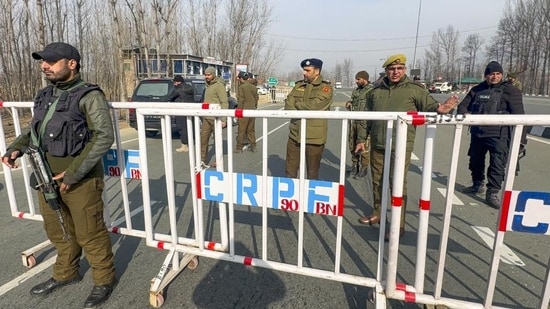
### Recent arrests of ISI-backed operatives in Delhi underscore an unaddressed terror threat, prompting a closer look at India’s long-standing counter-terrorism approach.
## Key Takeaways
– Seven operatives linked to a Pakistan-based ISI terror network were recently arrested in Delhi.
– These arrests highlight the ongoing and persistent nature of the terror threat.
– India’s current counter-terror strategy still reflects vulnerabilities exposed by past attacks.
## Main Developments
Recent arrests in Delhi have drawn attention to India’s counter-terror strategy. Seven individuals connected to a Pakistan-based ISI-backed terror network were apprehended.
These arrests serve as a clear reminder that the threat of terrorism has not diminished. They underscore an persistent challenge to national security.
India’s existing approach to counter-terrorism continues to bear the marks of previous vulnerabilities. This strategy still reflects gaps that became apparent after specific past incidents.
The Pahalgam attack and the Red Fort blast in Delhi are mentioned as events that exposed these strategic weaknesses. While the initial impact of these attacks has faded, their influence on the counter-terror framework remains.
## What Next
The provided information focuses on the current state and historical context of India’s counter-terror strategy. It does not detail specific upcoming developments, government initiatives, or future deadlines related to this strategy.
The article itself reflects a call for or an analysis of the need to rethink the current approach. However, no concrete next steps or policy changes are outlined.
## Why This Matters
The ongoing arrests of operatives linked to foreign-backed terror networks highlight persistent security challenges for India. Such incidents underscore the continuous need for robust national security measures.
Evaluating existing counter-terror strategies is crucial for national stability and public safety. Addressing identified gaps ensures a more effective response to evolving threats.
The historical context of past attacks like Pahalgam and the Red Fort blast emphasizes the importance of learning from previous experiences. It points to the critical need for an adaptable and resilient security framework.
## Frequently Asked Questions
### What prompted the recent discussion about India’s counter-terror strategy?
The arrest of seven operatives in Delhi, linked to a Pakistan-based ISI-backed terror network, served as a fresh reminder of the ongoing threat. This has brought India’s strategy back into focus.
### Who authored the article discussing India’s counter-terror strategy?
The article was authored by Shreya Nautiyal, who is a doctoral candidate at the Centre for European Studies, Jawaharlal Nehru University, located in New Delhi.
### What past attacks influenced the current counter-terror approach?
The Pahalgam attack and the Red Fort blast in Delhi are cited as incidents that exposed gaps within the counter-terror approach, whose imprint is still visible today.