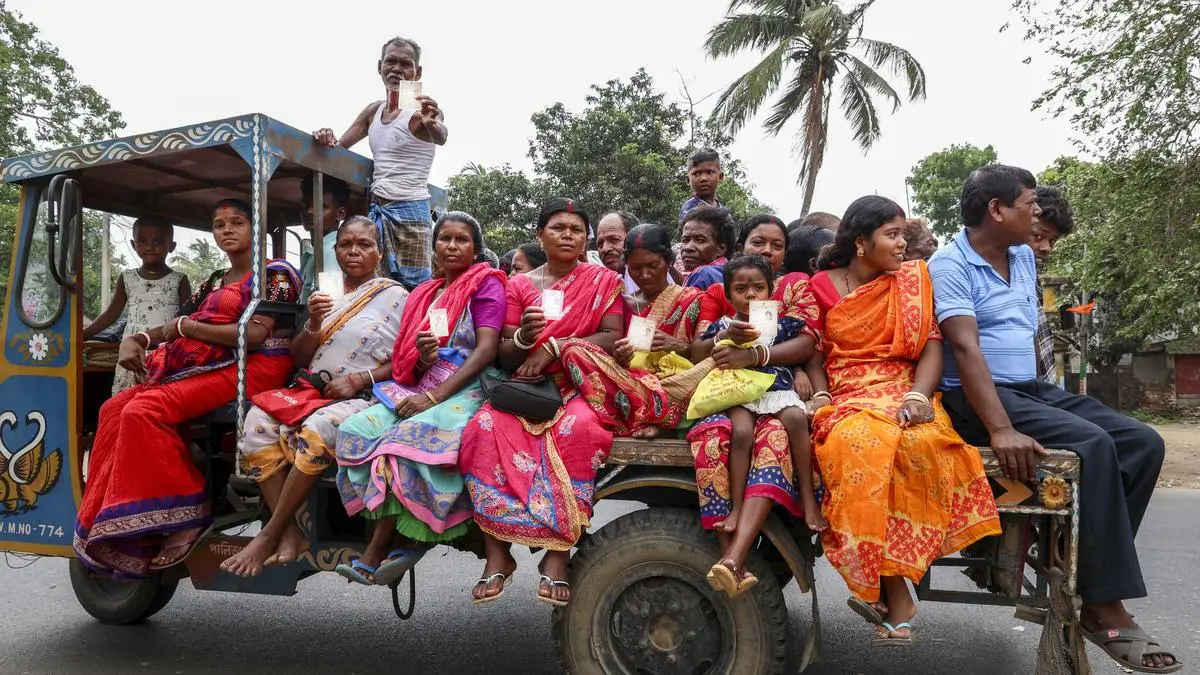
In the bustling landscape of Indian democracy, where electoral strategies are often as diverse as the nation itself, one question has increasingly come to the fore: How do government welfare schemes, particularly those targeting women, truly influence voting patterns? Following the high-stakes Assembly elections in West Bengal, Kerala, and Tamil Nadu this April and May, fresh post-poll data is now pointing towards a far more nuanced story than a simple quid pro quo between aid and allegiance.
The Rise of Welfare as an Electoral Powerhouse
For years, social assistance programs have been a cornerstone of governance in India. From direct cash transfers designed to empower households, to subsidies that ease daily burdens, and scholarships that open doors to education, state governments have increasingly leveraged these initiatives. They’re not just about public service; they’ve become potent political tools, shaping public perception and, crucially, voter sentiment. The idea is simple: provide tangible benefits, and voters will reward you at the ballot box.
Women at the Forefront of Policy and Politics
Within this broader welfare canvas, schemes specifically designed for women have gained exceptional prominence. Recognising women as a distinct and powerful electoral constituency, political parties have poured resources into programmes aimed at enhancing financial independence, improving health outcomes, boosting education, and ensuring safety. The logic is compelling: uplift women, uplift families, and secure a loyal voting bloc. But is it always that straightforward? The recent elections in three key states suggest otherwise.
The Three-State Crucible: Bengal, Kerala, and Tamil Nadu
The Assembly elections held in April-May 2026 offered a fascinating arena to test this hypothesis. In West Bengal, the All India Trinamool Congress (TMC), led by a powerful woman leader, has made women-centric schemes a hallmark of its governance. Similarly, in Kerala, the Left Democratic Front (LDF) has implemented various social welfare measures. Down south in Tamil Nadu, the Dravida Munnetra Kazhagam (DMK) has a long history of pioneering welfare initiatives, many of which directly benefit women. All three incumbents managed to retain power, prompting a deeper dive into the factors that swayed voters.
Beyond the Handout: A Complicated Relationship Unveiled
Early analyses of post-poll data, as highlighted by researchers like Sanjay Kumar, Vibha Attri, and Arindam Kabir, indicate that the relationship between welfare access and voting choices among women is anything but linear. While the schemes undoubtedly play a role, they rarely act in isolation. Instead, they intertwine with a complex web of existing political loyalties, deep-seated concerns about women’s safety, and a growing willingness among voters to explore new electoral alternatives.
Access to Welfare vs. Political Loyalty
The data suggests that simply receiving welfare benefits doesn’t automatically translate into a vote for the incumbent. Many women, while appreciative of the assistance, may still hold strong loyalties to other political parties based on ideology, historical affiliation, or local leadership. For some, welfare might be seen as an entitlement or a basic function of government, rather than a special favour demanding reciprocal votes. This challenges the simplistic notion that direct benefits guarantee electoral success. It points to a more discerning electorate, capable of separating governance delivery from political allegiance.
The Shadow of Safety: A Powerful Motivator
One of the most significant revelations from the post-poll data is the powerful, often understated, role of women’s safety. While financial aid or subsidies are crucial, the feeling of security and protection from violence or harassment can be an equally, if not more, potent determinant of voting behaviour. If welfare schemes uplift women economically but the broader environment doesn’t ensure their safety, it creates a disconnect. Voters, particularly women, might prioritize a party or candidate perceived to better ensure their personal security, even if another offers more tangible welfare benefits. This highlights a critical dimension that goes beyond economic incentives.
New Electoral Choices: A Shifting Landscape
The rise of new electoral choices and the increasing political awareness among women also contribute to this “complicated relationship.” Women are not a monolithic voting bloc. Their concerns are multifaceted, ranging from local governance issues to broader national narratives. The data points to an electorate increasingly willing to consider new parties, independent candidates, or alternative policies that resonate with their evolving aspirations. This shift suggests that traditional appeals, even those centered on welfare, might need to adapt to a more dynamic and informed voter base.
Why This Matters
Understanding the intricate dance between women-centric welfare schemes and voting patterns is crucial for the future of Indian democracy. It moves beyond superficial analyses, compelling policymakers and political parties to engage with women voters on a deeper, more holistic level. It highlights that empowerment isn’t solely economic; it encompasses safety, dignity, and political agency. For journalists, it means telling richer, more nuanced stories about the electorate, challenging simplistic narratives and reflecting the true complexity of citizen choices. As India continues to evolve, the insights gleaned from these elections will shape future policy decisions and electoral strategies, hopefully leading to more comprehensive and effective governance.