
In a development that could fundamentally redraw the geopolitical map of West Asia, whispers are growing louder about a potential non-aggression pact between long-time rivals Saudi Arabia and Iran. While nothing has been made official, the very notion of such a deal signals a dramatic pivot in regional strategy, driven by urgent economic imperatives and the recent, stark lessons of widespread conflict.
A Shift in Sands?
For decades, the relationship between Riyadh and Tehran has been defined by cold war dynamics, proxy conflicts, and a deep-seated struggle for regional influence. From the battlegrounds of Yemen to the political arenas of Lebanon and Iraq, their rivalry has fueled instability, making the prospect of any formal agreement – let alone a non-aggression pact – seem like a distant pipe dream. Yet, sources suggest Saudi Arabia is actively considering such a groundbreaking move, indicating a profound re-evaluation of its foreign policy objectives.
Echoes of Conflict: The Urgent Push for Peace
What could possibly bring these two adversaries to the negotiating table for such a pact? The answer, according to reports, lies in the wake of what’s described as a “devastating conflict” involving Iran and a joint US-Israeli offensive. This period of heightened hostilities has not only plunged West Asia into unprecedented levels of instability but has also directly threatened the economic lifelines of nations across the Gulf.
The scale of this recent conflict, while not fully detailed in public reports, has clearly served as a potent catalyst for change. It underscored the severe risks inherent in an endlessly volatile region, pushing even staunch opponents to consider avenues for de-escalation that were once unthinkable. The specter of a broader, more destructive regional war, with devastating consequences for all, has evidently brought a new urgency to diplomatic efforts.
Economic Lifelines and Vulnerabilities
For Saudi Arabia, the rationale for exploring such a pact is deeply rooted in its economic vulnerability. The Kingdom’s prosperity hinges significantly on its crude oil exports, a dependency it has long sought to reduce through diversification, but which remains largely unchanged. This reliance means any disruption to its energy infrastructure sends shockwaves not just through the national economy, but globally.
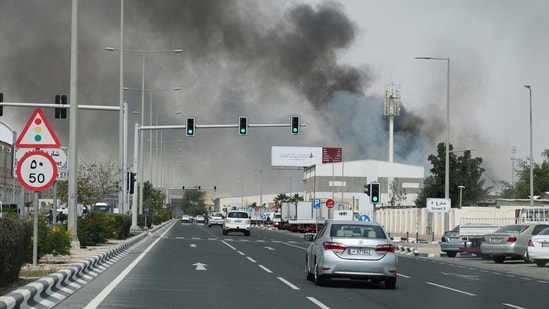
During the recent conflict, Saudi infrastructure faced direct threats. Reports indicate that facilities within the Kingdom were targeted by elements identified as the Islamic Revolutionary Guard Corps (IRGC) – Iran’s elite military force – during its broader confrontation with the US and Israel. These incidents were stark reminders of how easily regional disputes can spill over, threatening vital oil processing plants, export terminals, and shipping lanes. Such attacks not only cripple output but also deter foreign investment, stalling the very diversification efforts Riyadh is keen to accelerate. A non-aggression pact would, ideally, create a more secure environment, allowing Saudi Arabia to safeguard its economic interests and pursue its ambitious Vision 2030 reforms without the constant shadow of regional conflict.
Beyond the Bilateral: A Regional Ripple?
While the immediate benefits for Saudi Arabia are clear – primarily safeguarding its economy – a non-aggression pact would have far-reaching implications for the entire West Asian region. Such an agreement could usher in an era of unprecedented stability, potentially cooling down proxy conflicts that have plagued Yemen, Iraq, Syria, and Lebanon for years. It could also significantly alter geopolitical alignments, potentially reducing the need for external military intervention and encouraging regional solutions to regional problems.
For Iran, entering such a pact, especially in the aftermath of a “devastating conflict” with a US-Israeli offensive, could serve multiple purposes. It could offer a path to reduce its international isolation, open economic avenues, and solidify its position as a key regional player committed to stability. While not explicitly stated, the reciprocal nature of such an agreement implies mutual benefits in de-escalation.
A Hard-Won Trust: Obstacles Ahead
Despite the compelling reasons, the path to a non-aggression pact is fraught with challenges. Decades of entrenched animosity, deep-seated mistrust, and ideological differences cannot be erased overnight. Hardline elements within both nations, as well as external actors with vested interests in maintaining the status quo, could pose significant obstacles. The devil, as always, will be in the details of the agreement: verification mechanisms, confidence-building measures, and clear definitions of aggression will be crucial.
The fact that “nothing has been officially done” yet underscores the delicate nature of these discussions. It suggests ongoing negotiations, careful internal deliberation, and perhaps cautious external engagement with allies. Should it materialize, however, it would mark a truly historic turning point, signifying a pragmatic shift by two of the region’s most powerful nations towards a future defined by coexistence rather than perpetual confrontation.
Why This Matters
A non-aggression pact between Saudi Arabia and Iran isn’t just a bilateral deal; it’s a potential game-changer for global stability and the world economy. It could significantly de-escalate tensions in a volatile region, secure vital energy supplies, and open new avenues for economic development and cooperation. For millions of people across West Asia, it offers a glimmer of hope for peace and security after years of relentless conflict. Its success, or failure, will send powerful signals about the future of diplomacy in one of the world’s most critical geopolitical hotspots.