The dust has settled on the West Bengal Assembly Elections of 2026, but the echoes of its outcome continue to reverberate across India. In a political landscape often defined by intense battles, the results from West Bengal have emerged as a focal point of both fascination and fierce debate. While the Bharatiya Janata Party (BJP) celebrated a landmark victory, securing the state’s top executive post for the first time, questions are now swirling around the very process that delivered this historic win.
A High-Stakes Battleground
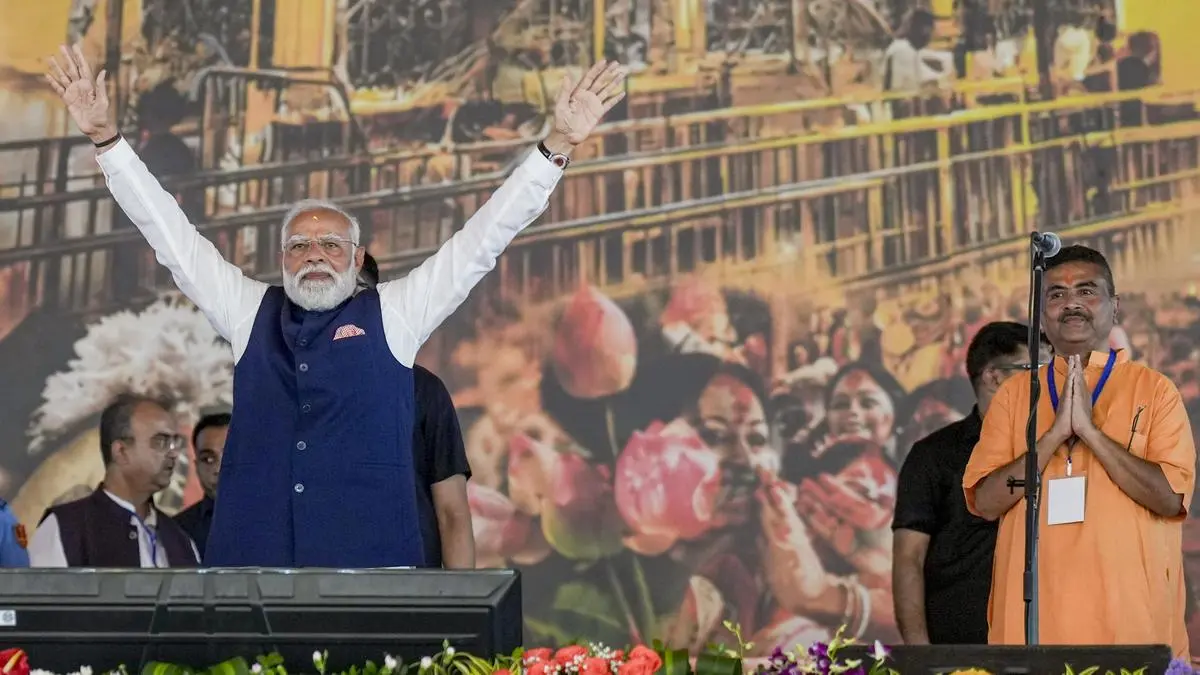
Of the four states and one Union Territory that went to the polls in April, West Bengal undeniably captured the most attention. The stakes were incredibly high for the ruling party at the Centre, which threw its entire might into the campaign. Prime Minister Narendra Modi himself embarked on an extraordinary tour, addressing no fewer than 18 election rallies across the state, even finding time for a relatable pit stop at a local jhaal muri shop.
The Union Home Minister took the campaign intensity to another level, practically setting up camp in West Bengal for nearly two weeks. During this period, he addressed a staggering 50 rallies, demonstrating an unparalleled commitment to securing a victory. This wasn’t just a two-person show; numerous Chief Ministers from the National Democratic Alliance (NDA) and a battalion of Union Ministers descended upon the state, accompanied by scores of Members of Parliament. Their collective presence painted a clear picture: West Bengal was a priority, and no stone would be left unturned.
The BJP’s Historic Breakthrough
The unprecedented electoral push paid off handsomely for the BJP. On May 9, 2026, amidst a grand spectacle at Kolkata’s iconic Brigade Parade Ground, Suvendu Adhikari was sworn in as West Bengal’s first-ever BJP Chief Minister. The moment marked a significant shift in the state’s political trajectory, a “landslide win” that many pundits struggled to fully explain through conventional analysis. For the BJP, it was a long-cherished dream realized, a testament to years of groundwork and a meticulously executed high-voltage campaign.
Beyond Anti-Incumbency: The Unseen Factors
While political analysts often attribute electoral shifts to anti-incumbency sentiments against the incumbent government, observers are now pointing to other, less conventional factors at play in Bengal. The sheer scale of the BJP’s victory has prompted a deeper dive into what truly propelled this “miracle,” leading to discussions that extend beyond the usual explanations of voter fatigue or local issues.
This deeper scrutiny has brought to light a particularly contentious aspect of the election: the voting process itself. Reports and analyses, championed by publications like Frontline, highlight an “incredibly accelerated rate of voting” observed during the polls. This unusual speed has raised serious questions among political commentators and civil society groups.
The Mystery of Accelerated Voting
An accelerated voting rate, especially one described as “incredibly” fast, can be a red flag in democratic elections. It suggests a process that might have bypassed standard checks and balances designed to ensure fairness and transparency. Such a pace could imply a rushed methodology, potentially leading to irregularities or a compromise of voter verification procedures. The concern isn’t just about speed, but about what that speed might facilitate.
For some, this rapid-fire voting pace “appears clearly manipulated.” The claim isn’t light; it suggests deliberate interference in the electoral mechanism. If voters were processed at an uncharacteristically swift rate, questions arise about the integrity of the voting machines, the verification of voter identities, and the overall security of the polling booths. Was due diligence maintained? Were all electoral protocols strictly adhered to? These are the serious queries now confronting the integrity of the Bengal polls.
A Call for Deeper Scrutiny
The allegations surrounding an “accelerated rate of voting” transform the BJP’s “landslide win” from a straightforward narrative of political triumph into a complex subject of intense scrutiny. It suggests that the outcome might not solely be a reflection of the popular mandate driven by traditional factors like public sentiment or even the unprecedented campaign efforts. Instead, it pushes the conversation towards potential systemic issues within the election mechanics.
The debate Frontline and others are spearheading is crucial for maintaining faith in the democratic process. When a victory, however decisive, is clouded by concerns over the fairness of the electoral operation, it necessitates a thorough and transparent examination. The goal isn’t just to understand *who* won, but *how* they won, and if the process itself was unimpeachable.
Why This Matters
The questions surrounding West Bengal’s 2026 election results, particularly those concerning the accelerated voting speed, strike at the heart of democratic principles. Electoral integrity is the bedrock of any free and fair society, and any hint of manipulation or irregularity undermines public trust in the system. As India navigates its complex political landscape, ensuring that election processes are beyond reproach is paramount to upholding democracy and fostering faith in its institutions. This isn’t merely about one state’s political future, but about the health of the nation’s democratic fabric.