
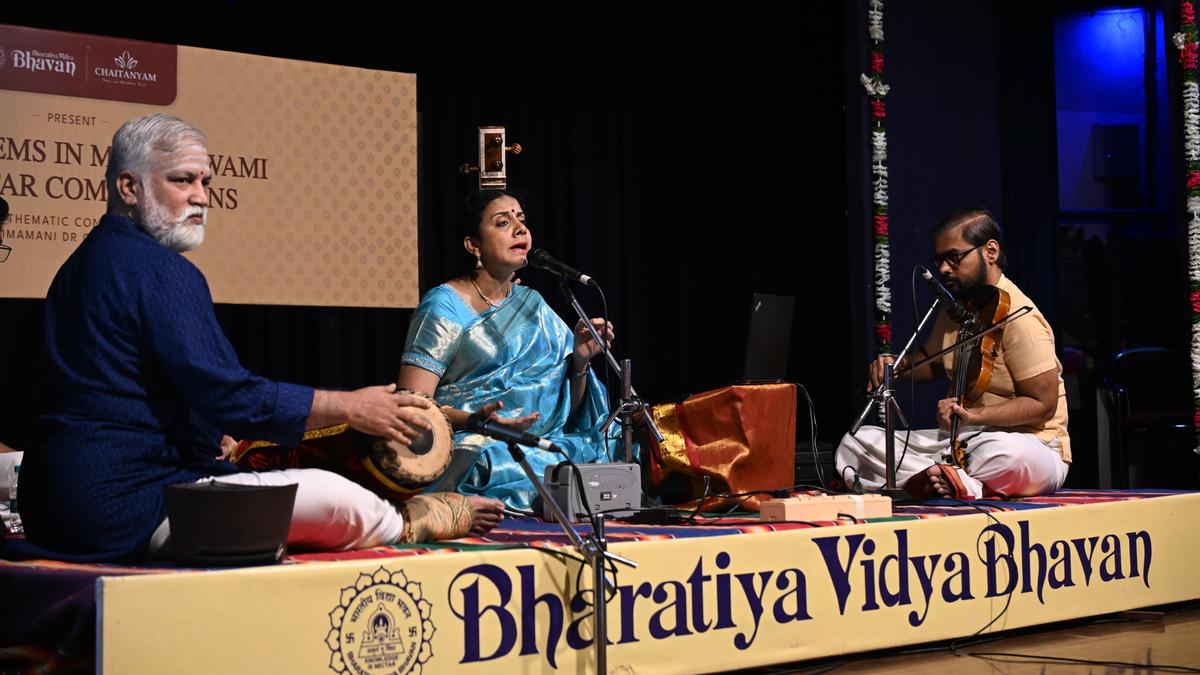
Ever wondered if music could paint a map? Not just any map, but a spiritual journey across ancient temples, each note a step, each raga a sacred space. That’s precisely what Muthuswami Dikshitar, one of the revered ‘Trinity’ of Carnatic music, achieved with his extraordinary ‘kshetra compositions.’ His work isn’t just about melody; it’s an immersive experience, a devotional travelogue crafted with unparalleled artistic genius.
### A Pillar of Carnatic Music
Born in Tiruvarur, Tamil Nadu, in the late 18th century, Muthuswami Dikshitar (often simply known as Dikshitar) wasn’t just a composer; he was a philosopher, a linguist, and a profound devotee. His early life was steeped in traditional learning, including Sanskrit, Vedic scriptures, and astrology, which profoundly influenced his compositions. Crucially, he spent several years in Varanasi, exposing him to Hindustani music and a broader spiritual landscape, which subtly enriched his Carnatic style upon his return to the South.
Alongside Tyagaraja and Syama Sastri, Dikshitar shaped the very bedrock of Carnatic music, leaving behind a legacy that continues to inspire and challenge musicians worldwide. His unique approach emphasized intricate raga structures and lyrical depth, setting him apart as a true innovator in the classical arts.
### The Kshetra Vision: Music as Sacred Map
Dikshitar’s genius particularly shines in his ‘kshetra kritis’ or kshetra compositions. ‘Kshetra’ literally means a ‘place’ or ‘field,’ often referring to a sacred temple town. Unlike many other composers who might write generally devotional songs, Dikshitar’s kshetra kritis are intricately tied to specific deities in specific geographical locations.
Think of them as musical postcards, each carrying the essence, history, and spiritual aura of a particular shrine. These aren’t just tributes; they are deeply researched, meticulously crafted pieces that encapsulate the very soul of the place and its presiding deity, making the listener a participant in a sonic pilgrimage.
### Journey Through Temples, Etched in Raga
Imagine Dikshitar journeying across South India, visiting temples dedicated to Shiva, Vishnu, Devi, and other deities. He would immerse himself in their unique energy, observe the rituals, listen to the local lore, and then translate that entire experience directly into music. Each composition becomes a vibrant sonic snapshot, a living testament to his devotion and keen observation.
For instance, he might compose a series of kritis dedicated to Lord Shiva in the famous Chidambaram temple, capturing the deity’s cosmic dance, or invoke the grandeur of Goddess Meenakshi in Madurai. His lyrics, almost exclusively in Sanskrit, would meticulously describe the deity’s attributes, the temple’s architectural details, specific legends associated with the site, and even the subtle nuances of the presiding deity’s form. It’s like a guided tour, where the guide is a musical genius and the language is pure devotion, drawing you into the very fabric of these sacred places.
### The Dikshitar Legacy: Intricacy Meets Devotion
What makes Dikshitar’s approach truly unique is the unparalleled depth and complexity of his musical structures. His compositions are often characterized by their grand scale, intricate raga movements, and sophisticated use of tala (rhythmic cycles). He mastered the art of ‘raga mudra,’ subtly weaving the name of the raga into the lyrics, a testament to his linguistic and musical prowess.
Famously, he used the ‘Guruguha’ mudra (his nom de plume, referring to Lord Muruga as his guru) in almost all his kritis, signing off his divine creations. His work demands intense study and offers endless layers of discovery for both performer and listener. Musicians often spend years mastering the nuances of a single Dikshitar kriti, appreciating the profound philosophical depth and structural brilliance embedded in every phrase. His compositions are considered touchstones for understanding the classical grammar of Carnatic music at its finest.
### More Than Just Songs: An Enduring Resonance
From the grandeur of Madurai Meenakshi to the serene beauty of Tirupati Venkateswara, Dikshitar’s music transports you directly to these hallowed grounds. His ability to fuse profound philosophy, linguistic artistry, and unparalleled musical architecture ensures his compositions remain central to Carnatic concerts, academic studies, and spiritual practice.
They are not merely songs; they are spiritual treatises, historical records, and vibrant artistic expressions that have stood the test of time, revered for their intellectual rigor and devotional fervor. Performing Dikshitar’s kritis is often considered a pinnacle for Carnatic musicians, challenging their technical skill while elevating their spiritual connection to the music.
### Why This Matters
In a world increasingly disconnected from its roots, Dikshitar’s legacy reminds us of the profound connection between art, faith, and geography. His kshetra compositions offer a unique window into India’s rich spiritual heritage, showcasing how music can be a powerful vehicle for storytelling, cultural preservation, and personal devotion. Understanding his work isn’t just about appreciating classical music; it’s about understanding a unique way of experiencing and mapping the divine through sound, a timeless pursuit relevant to anyone seeking depth and meaning in art and culture today.
Muthuswami Dikshitar’s kshetra compositions are more than just a collection of songs; they are a monumental achievement in sound, devotion, and cultural mapping. They invite us to listen deeply, to explore not just the melodies but the stories, the places, and the profound spiritual insights they contain. A true journey for the ears and the soul.