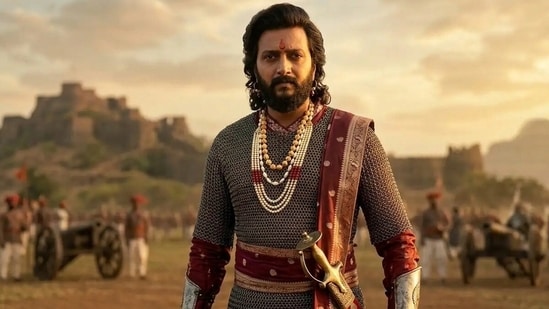
Mumbai, India – History has been rewritten in Marathi cinema, and it’s a moment that resonates far beyond the silver screen. Ten years after *Sairat* created an unprecedented wave, Riteish Deshmukh’s ambitious historical drama, *Raja Shivaji*, has not only broken its lifetime box office record but has galloped its way to become the highest-grossing Marathi film of all time. This isn’t just a win for a single film; it’s a resounding declaration of the growing power and reach of regional cinema.
### A New Monarch Ascends the Throne
The numbers are in, and they paint a picture of undeniable triumph. *Raja Shivaji*, the grand historical epic championed by Riteish Deshmukh, has reportedly raked in an astounding ₹93.00 crore nett within India. Its global conquest has been even more impressive, pushing its worldwide gross to a staggering ₹114.80 crore. These figures aren’t just statistics; they represent millions of moviegoers, captivated by a story that has clearly struck a chord deep within the collective consciousness.
This monumental achievement officially dethrones *Sairat*, the groundbreaking 2016 romantic tragedy that had held the ‘highest-grossing Marathi film’ title for nearly a decade. For any film to command such an audience, especially one that delves into a significant historical narrative, speaks volumes about its quality, vision, and the passion behind its creation.
### Remembering *Sairat*’s Historic Reign
To truly appreciate *Raja Shivaji*’s success, we must first look back at the film it has surpassed. In 2016, Nagraj Manjule’s *Sairat* wasn’t just a film; it was a cultural phenomenon. It shattered preconceived notions about regional cinema’s commercial viability by becoming the first Marathi film to cross the coveted ₹100 crore mark at the worldwide box office.
*Sairat* wasn’t just a box office hit; it was a critical darling, praised for its raw storytelling, powerful performances, and unflinching social commentary. Its impact was so profound that it spawned multiple remakes in other languages, cementing its place as a landmark in Indian cinema history. For a decade, its record stood firm, a testament to its singular achievement. Many tried, but none could match its unprecedented run – until now.
### Riteish Deshmukh: From Actor to Visionary Filmmaker
While Riteish Deshmukh has been a familiar face in Bollywood and Marathi cinema for years, his journey with *Raja Shivaji* marks a significant chapter in his career. Beyond acting, Deshmukh has increasingly ventured into production and direction, showcasing a deep commitment to Marathi storytelling. The sheer scale and historical accuracy required for a film like *Raja Shivaji* demand a visionary at the helm, and it appears Deshmukh has delivered precisely that.
His dedication to the project has been palpable, with whispers of the film being a passion project years in the making. The implicit “almost gave up, but it kept coming back” quote (from a previous article referenced in the original text) hints at the arduous, decade-long commitment involved in bringing this epic to life. This isn’t just another role; it’s a testament to his belief in the story and the power of Marathi heritage.
### The Power of Historical Epics
The success of *Raja Shivaji* also underscores a broader trend in Indian cinema: the enduring appeal of historical epics. From Bollywood blockbusters to regional triumphs, stories rooted in India’s rich past continue to captivate audiences. These films often offer a blend of grandeur, drama, valor, and cultural pride, resonating deeply with viewers looking for both entertainment and a connection to their heritage.
*Raja Shivaji*’s monumental success demonstrates that regional films, when executed with scale, authenticity, and compelling storytelling, can not only compete with but also outperform their larger-budget counterparts. It’s a clear signal that audiences are hungry for diverse narratives from all corners of the country.
### What This Means for Marathi Cinema
This record-breaking achievement is a huge shot in the arm for the entire Marathi film industry. It proves that ambitious projects, even those with significant budgets, can find widespread commercial success. This could lead to:
* Increased Investment: More producers and investors might be willing to back bigger, bolder Marathi films.
* Wider Reach: The success could encourage wider distribution and exhibition for Marathi films in other states and internationally.
* Talent Attraction: It could inspire more talent – both on-screen and behind the camera – to contribute to Marathi cinema.
* Diverse Storytelling: The confidence gained from such a success could pave the way for a broader range of genres and narratives to be explored.
### Why This Matters
The success of *Raja Shivaji* isn’t just about box office numbers; it’s a powerful narrative about cultural pride, cinematic ambition, and the evolving landscape of Indian entertainment. It highlights the strength of regional storytelling and shows that a compelling story, backed by passion and vision, can transcend language barriers and create history. It solidifies Marathi cinema’s position as a formidable and vibrant force in the Indian film industry, signaling a golden era where local narratives can command global attention.