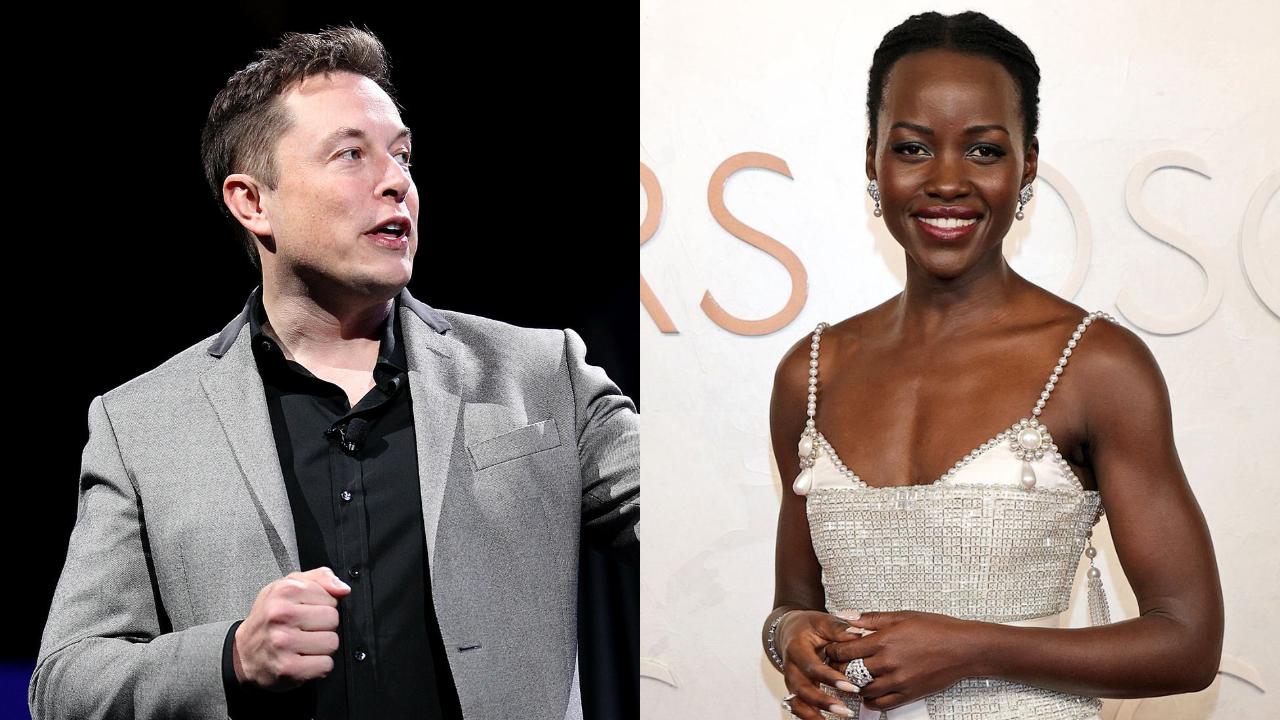
It seems there’s no corner of the internet, or indeed, the cinematic universe, safe from Elon Musk’s pronouncements. The Tesla CEO and X owner has once again ignited a fiery debate, this time wading into the hotly anticipated Christopher Nolan adaptation of Homer’s epic, *The Odyssey*. His target? The casting of Oscar-winning actress Lupita Nyong’o as the iconic Helen of Troy.
### The Trojan Horse of Controversy
According to a report by Deadline, the controversy first surfaced after director Christopher Nolan confirmed that Nyong’o would not only portray Helen of Troy but also her sister, Clytemnestra, in his ambitious new take on the ancient Greek poem. While many in Hollywood and among film enthusiasts celebrated the casting of a talent like Nyong’o, known for her powerful performances in films like *12 Years a Slave* and *Black Panther*, Musk saw things differently.
Musk reportedly responded to criticisms swirling online about Nyong’o’s casting, suggesting that Nolan’s decision was influenced more by “diversity and inclusion standards” than by artistic merit or traditional interpretation. This isn’t the first time Musk has voiced opinions on casting choices he perceives as driven by modern diversity mandates, aligning with a segment of public discourse that often questions such decisions in historical or mythological adaptations.
### The Players: A Trio of Titans
Elon Musk: A figure synonymous with disruption and controversy. Whether it’s electric vehicles, space travel, or social media, Musk’s opinions frequently send ripples across the globe, often sparking intense online debates. His foray into film casting, particularly one as high-profile as Nolan’s *Odyssey*, is par for the course for a man who rarely shies away from a cultural battle.
Christopher Nolan: The visionary director behind mind-bending blockbusters like *Inception*, *The Dark Knight* trilogy, and *Oppenheimer*. Nolan is celebrated for his intricate narratives, practical effects, and distinct cinematic style. His decision to adapt *The Odyssey* immediately set the internet ablaze with anticipation, and his casting choices are typically seen as meticulously considered, even when unconventional.
Lupita Nyong’o: An actress of immense talent and critical acclaim. With an Academy Award under her belt and a career marked by versatile, impactful roles, Nyong’o brings gravitas and star power to any project. Her casting in a dual role in *The Odyssey* speaks volumes about Nolan’s trust in her abilities to embody complex characters.
### Helen of Troy: The Face That Launched a Thousand Ships
Helen of Troy, often referred to as “the face that launched a thousand ships,” is arguably one of the most famous figures in Western literature and mythology. Her abduction (or elopement, depending on the version) by Paris sparked the Trojan War, making her a central, albeit often passive, character in an epic saga of love, war, and destiny.
Traditionally, Helen has been depicted as a woman of unparalleled beauty, often with features consistent with ancient Greek or European ideals as interpreted through centuries of art and literature. This traditional portrayal is precisely where the modern casting debates often collide with creative reinterpretations.
### Hollywood’s Shifting Sands: Diversity and Debate
Musk’s comments tap into a larger, ongoing conversation in Hollywood about “colorblind casting” versus “historically accurate” portrayals, and the push for greater diversity and inclusion on screen. While many laud efforts to broaden representation and offer fresh perspectives on classic stories, others argue that such decisions can sometimes feel forced or detract from the original source material.
Recent years have seen similar controversies erupt around casting choices in projects like *The Little Mermaid*, *The Rings of Power*, and even documentaries like *Queen Cleopatra*. These instances highlight a cultural tension between modern sensibilities—which advocate for a more inclusive reflection of society—and a desire among some audiences to preserve traditional interpretations of beloved myths and historical figures.
Nolan, known for his ability to craft profound narratives, seems to be making a bold artistic statement with Nyong’o’s casting. Whether it’s a deliberate choice to challenge preconceptions about ancient narratives or simply a belief that Nyong’o is the best actress for the role, it positions his *Odyssey* as a film set to provoke thought long before its release.
### What’s Next for *The Odyssey*?
As pre-production likely continues, Nolan’s *The Odyssey* is now guaranteed even more attention. The conversation sparked by Musk’s comments ensures that every detail, especially regarding casting, will be scrutinized under a powerful cultural magnifying glass. For Nyong’o, the challenge will be to embody a character steeped in mythology while navigating a modern media landscape ripe for debate. For Nolan, it’s another opportunity to prove his mettle, not just as a filmmaker, but as a storyteller willing to push boundaries.
### Why This Matters
This isn’t just about a single casting choice; it’s a microcosm of a much larger cultural discussion. Elon Musk’s ability to amplify specific critiques, combined with the timeless nature of mythological tales and the evolving landscape of representation in media, ensures that this debate will continue to resonate. It forces us to ask critical questions about artistic interpretation, historical accuracy, the value of diverse perspectives, and what we collectively define as “truth” in storytelling. As Hollywood continues to grapple with its past and future, every casting announcement becomes a focal point in the ongoing evolution of how stories are told and consumed.