## Key Takeaways
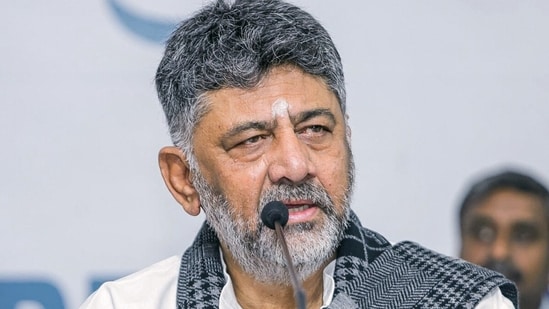
– DK Shivakumar has officially taken the oath of office as the Chief Minister of Karnataka.
– Actor-politician Ramya extended her congratulations to Shivakumar, expressing best wishes for his upcoming tenure.
– Ramya publicly described Shivakumar as a “seasoned politician” during her remarks to news agency PTI.
## Main Developments
The state of Karnataka witnessed a significant political transition recently as DK Shivakumar formally took oath as its new Chief Minister. This pivotal moment marks the commencement of a new administrative chapter for the southern Indian state, ushering in a period of fresh leadership and governance. The ceremony, a cornerstone of democratic tradition, solidified the transfer of executive power and set the stage for the state’s future trajectory under Shivakumar’s stewardship.
Following the swearing-in, prominent actor-politician Ramya publicly extended her felicitations to the newly appointed Chief Minister. Her congratulations were accompanied by sincere best wishes for his tenure, underscoring a gesture of political camaraderie and acknowledgement of the significant responsibilities that accompany the highest office in the state. Such endorsements from public figures often resonate within the political landscape, signifying broad recognition of the new administration.
In her remarks to news agency PTI, Ramya offered a characterization of the new Chief Minister, describing him as a “seasoned politician.” This descriptor carries considerable weight in the political sphere, often implying extensive experience, a deep understanding of governance mechanisms, and an adeptness in navigating the complex dynamics of public service and policy implementation. The term suggests a leader who is well-versed in the intricacies of statecraft and prepared to face the myriad challenges inherent in his new role.
The formal act of taking an oath of office is a solemn and constitutionally mandated procedure. It symbolizes a commitment to upholding the principles of the constitution and dedicating oneself to the service of the state and its citizens. For a Chief Minister, this oath is not merely ceremonial; it is a public declaration of accountability and a promise to govern with integrity and foresight. The process marks the official transition from political campaigning to the practical demands of administration.
A Chief Minister’s tenure is laden with immense responsibilities, encompassing a wide array of sectors from economic development and infrastructure to social welfare and public order. The expectations from the populace are invariably high, anticipating effective leadership that can address pressing issues and steer the state towards progress. The period following an oath-taking ceremony is often characterized by a collective sense of anticipation regarding the new government’s agenda and its approach to various policy challenges.
Ramya’s well-wishes for Shivakumar’s tenure highlight the demanding nature of the Chief Minister’s role. A successful term requires not only political acumen but also administrative efficiency, strategic planning, and the ability to forge consensus across various stakeholders. The complexities of state governance mean that a leader must be prepared for continuous engagement with public concerns, legislative duties, and the implementation of impactful programs designed for the betterment of society. The challenges can be substantial, requiring both resilience and adaptability.
The description of Shivakumar as a “seasoned politician” by a figure like Ramya speaks to the value placed on experience in leadership roles. In a dynamic political environment, leaders who possess a profound understanding of historical precedents and contemporary issues are often perceived as better equipped to formulate sound policies and manage crises effectively. Such an appraisal suggests a background rich in political engagement and a proven track record of navigating complex scenarios, which are critical attributes for a Chief Minister.
The involvement of an actor-politician like Ramya in publicly acknowledging the new leadership also underscores the interconnectedness of various public spheres. Individuals who have transitioned from entertainment into politics often bring unique perspectives and communication styles to the political discourse. Their voices can carry influence among different segments of the population, adding another layer of public engagement to significant political events such as the swearing-in of a Chief Minister.
The smooth transition of power, formalized by the oath-taking ceremony, is a testament to the robustness of democratic institutions. It assures stability and continuity in governance, irrespective of the political shifts that may occur. This process, while seemingly straightforward, is fundamental to maintaining public trust in the political system and ensuring that the machinery of state continues to function effectively for its citizens.
A Chief Minister’s tenure is a defined period during which the leader is entrusted with the mandate to implement their vision for the state. This typically involves setting policy priorities, allocating resources, and overseeing the execution of governmental programs. The initial phase of any new administration is often crucial for establishing its direction, laying the groundwork for future initiatives, and demonstrating its commitment to its electoral promises. The period is marked by intensive planning and action.
The role of news agencies, such as PTI, in disseminating information and capturing reactions like Ramya’s, is vital for a well-informed citizenry. Media platforms play a crucial part in reporting on significant political developments, providing context, and sharing various perspectives. Their reporting ensures that the public is aware of major events, leadership changes, and the accompanying public discourse, thereby fostering transparency and public engagement in political processes.
Effective leadership at the state level is paramount for the holistic development of a region. The Chief Minister is not just an administrative head but also a symbolic leader who embodies the aspirations of the people. Their decisions have far-reaching implications, impacting everything from economic growth to social harmony. Therefore, the assumption of this office is always met with considerable attention and scrutiny, as citizens look for signals of future direction and stability.
The balance between legislative duties and public representation is a constant challenge for any Chief Minister. While presiding over the state’s executive functions, the Chief Minister must also remain responsive to the needs and concerns of diverse communities across the state. This requires a delicate blend of administrative skill, political sensitivity, and a commitment to inclusive governance, ensuring that policies are formulated and implemented with the broader public interest in mind.
Anticipation invariably accompanies the installation of a new Chief Minister. Citizens and various stakeholders often harbor specific hopes and expectations regarding the new administration’s approach to long-standing issues, as well as its capacity to introduce innovative solutions. This period of transition is a critical juncture where the new leadership must begin to articulate its vision and demonstrate its readiness to tackle the complex challenges that lie ahead.
The constitutional framework provides the bedrock for such appointments, delineating the powers and responsibilities of the Chief Minister and the cabinet. Adherence to these constitutional provisions ensures that the process is legitimate and that the foundations of democratic governance remain robust. The oath-taking ceremony is a public affirmation of this adherence, binding the Chief Minister to the rule of law.
The broader democratic context of state elections and government formation underlines the significance of this event. The will of the people, expressed through the ballot box, culminates in the formation of a government and the appointment of its chief executive. This cycle of electoral participation and government formation is essential for a vibrant democracy, ensuring that leadership is responsive and accountable to its electorate.
Political continuity and the introduction of change are often intertwined during such transitions. While the administration changes hands, many governmental functions and policy frameworks continue, representing a form of institutional continuity. At the same time, a new Chief Minister inevitably brings a fresh perspective and potentially new priorities, aiming to implement changes that reflect their mandate and vision for the state’s progress.
The role of public figures’ endorsements, or in this case, congratulations, can subtly shape public perception of new leaders. When an individual with public recognition offers their good wishes, it can contribute to a narrative of broader acceptance and support for the incoming administration. This dynamic highlights the multifaceted nature of political communication and influence in the public domain.
The demanding nature of a Chief Minister’s role extends beyond administrative tasks to include extensive public engagement, diplomatic efforts, and effective crisis management. It requires an individual capable of leadership in multiple dimensions, often under intense public and media scrutiny. The office is a significant responsibility that calls for constant dedication and a profound understanding of complex societal issues.
The blend of administrative skill and political strategy is crucial for effective governance. A Chief Minister must not only be able to manage the bureaucratic machinery of the state but also possess the strategic foresight to navigate political landscapes, build consensus, and effectively implement the government’s agenda. This dual requirement underscores the multifaceted competencies expected of a state’s top executive.
The ceremonial aspects of an oath-taking contrast with the practical realities of governance that immediately follow. While the ceremony is symbolic and rich in tradition, the subsequent work involves the arduous task of policy formulation, resource allocation, and hands-on implementation. The transition from the symbolic act to the operational demands is swift and requires immediate focus and decisive action from the new leadership.
The historical significance of leadership transitions within democratic frameworks cannot be overstated. Each new Chief Minister contributes to the ongoing narrative of the state’s political evolution, impacting future policies and shaping its development trajectory. These moments are recorded as milestones, offering insights into the democratic journey and the aspirations of the people.
A collective hope for stability and progress often accompanies the swearing-in of a new Chief Minister. Citizens across the state look to the new leadership with expectations of efficient governance, equitable development, and solutions to prevailing challenges. This shared anticipation forms a significant part of the socio-political climate during a change of guard, uniting diverse expectations under a common desire for betterment.
The ongoing dialogue between politicians and the public is crucial for democratic health. Public statements, such as Ramya’s congratulations, are part of this continuous exchange, allowing citizens to gauge reactions and understand the broader political atmosphere. This interaction helps in reinforcing the communicative channels between elected representatives and the electorate, fostering transparency and accountability.
The Chief Minister’s role in fostering regional identity and development is also profound. Through policy choices and public initiatives, the CM can significantly influence the cultural, economic, and social fabric of the state. This leadership is instrumental in championing regional interests on a national platform and driving local development agendas that benefit the diverse communities within the state.
Expectations of accountability and responsiveness are central to the democratic mandate of a Chief Minister. The public anticipates that the new leader will not only govern effectively but also remain accessible, transparent, and answerable for their decisions and the actions of their administration. This commitment to accountability is a cornerstone of good governance and crucial for maintaining public trust.
The collaborative aspect of governance, involving various departments, agencies, and public bodies, falls under the ultimate purview of the Chief Minister. Orchestrating these diverse entities towards common goals requires strong leadership, effective delegation, and a clear vision. The CM acts as the central coordinator, ensuring that all components of the state machinery work in harmony to deliver public services and implement policies.
The long-term impact of a Chief Minister’s decisions can reverberate for decades, shaping the state’s infrastructure, education system, healthcare, and economic outlook. Therefore, the significance of the initial phase of their tenure, where foundational decisions are often made, is particularly high. These early choices can set precedents and determine the trajectory of the state for years to come.
The immediate tasks confronting a new Chief Minister typically involve reviewing existing policies, forming a cabinet, and setting forth an immediate action plan. These initial steps are vital for establishing administrative control and signaling the government’s priorities. Simultaneously, a longer-term vision for the state’s development, aligned with the electoral mandate, begins to take shape, guiding future policy initiatives and strategic planning.
The media’s role extends beyond mere reporting to include analysis and public discourse surrounding such significant political events. By presenting different perspectives and offering insights into the implications of new leadership, media platforms contribute to a more nuanced public understanding. This engagement helps in informing citizens and fostering a healthy democratic debate about the direction of the state.
## Why This Matters
The formal swearing-in of DK Shivakumar as Chief Minister marks a new administrative and political chapter for Karnataka, setting the stage for future governance and policy directions. This transition is crucial as it dictates the leadership that will address the state’s challenges and guide its development. The public congratulations from an influential actor-politician like Ramya underscore the broad societal acknowledgement of this change and highlight the value placed on experienced political leadership. The event signifies the dynamic nature of democratic processes and the continuous evolution of state governance.
## Frequently Asked Questions
Question 1?
Who recently took oath as the Chief Minister of Karnataka?
Answer 1
DK Shivakumar officially took the oath of office as the Chief Minister of Karnataka.
Question 2?
Which public figure congratulated DK Shivakumar on his appointment?
Answer 2
Actor-politician Ramya extended her congratulations and best wishes to DK Shivakumar for his tenure.
Question 3?
How did Ramya describe DK Shivakumar in her remarks to the press?
Answer 3
Ramya referred to DK Shivakumar as a “seasoned politician” when speaking to news agency PTI.