
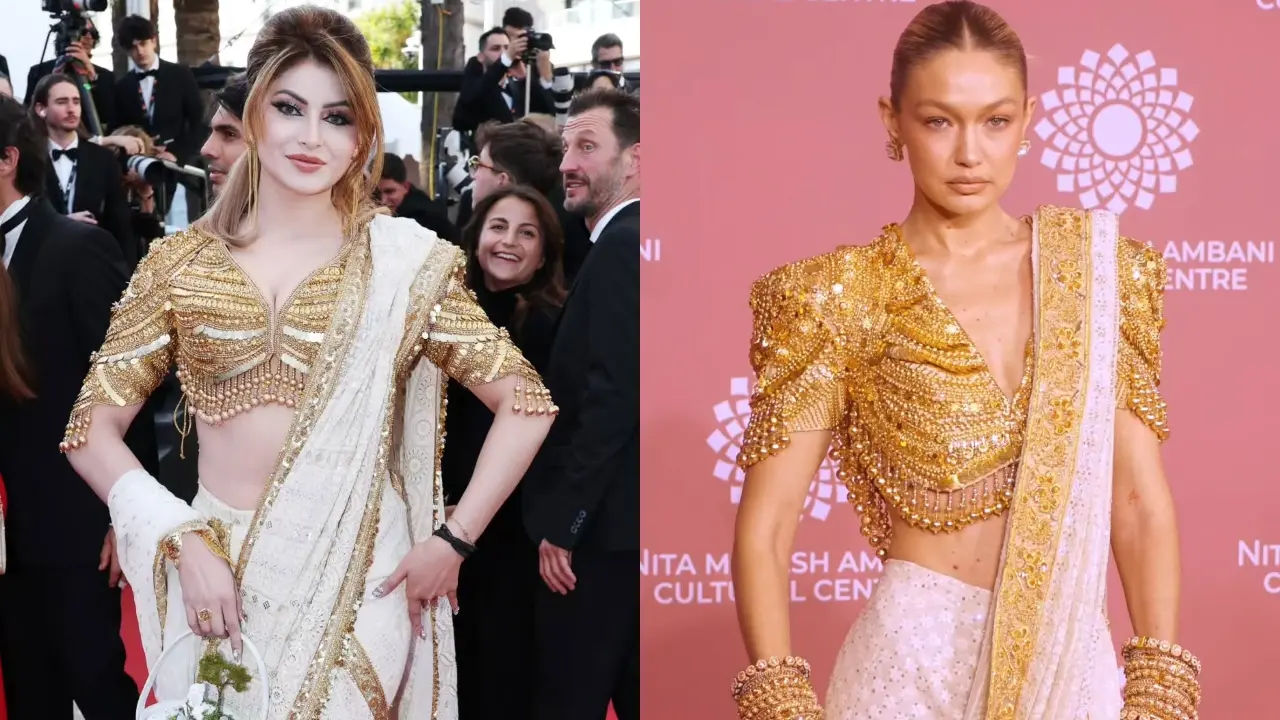
The glitz and glamour of the Cannes Film Festival are legendary, a global stage where fashion moments are made, celebrated, and sometimes, fiercely debated. This year, at Cannes 2026, Bollywood actor Urvashi Rautela found herself at the epicenter of a swirling controversy, igniting a social media storm over a red-carpet look that many claimed was an almost identical replica of supermodel Gigi Hadid’s iconic 2023 NMACC gala ensemble.
A Déjà Vu Moment on the Croisette
Urvashi Rautela is no stranger to making headlines with her bold fashion choices at international events. However, her latest Cannes appearance wasn’t lauded for its originality. Stepping onto the illustrious red carpet, Rautela was photographed in an elaborate ivory-and-gold couture creation. The outfit was a spectacle: a heavily embellished, saree-inspired gown, intricate embroidery adorning every inch, paired with dramatic, statement jewellery. The ensemble was topped off with a rather unusual accessory – what appeared to be a large, sculptural flower pot held on her arm, adding to the theatricality.
Gigi Hadid’s Ghost in the Machine
The internet, as it always does, has an elephantine memory, especially when it comes to celebrity fashion. Almost immediately, eagle-eyed users and fashion enthusiasts began drawing striking comparisons between Rautela’s 2026 Cannes outfit and the jaw-dropping look supermodel Gigi Hadid sported at the Nita Mukesh Ambani Cultural Centre (NMACC) gala in Mumbai back in 2023.
Hadid’s NMACC outfit, crafted by couturier Rahul Mishra, was a showstopper itself: an intricately embroidered ivory-and-gold saree-inspired gown, adorned with delicate threadwork and embellishments, flowing gracefully. The similarities were undeniable – from the predominant color palette and the saree-esque silhouette to the rich embroidery and the overall dramatic, almost regal aesthetic. The “flower pot” accessory, while a unique addition by Rautela, didn’t distract from the core visual echo.
The Internet’s Fashion Police Assemble
The digital courtroom convened almost instantly. Social media platforms, particularly Instagram and X (formerly Twitter), became battlegrounds of opinion. Screenshots comparing the two looks flooded feeds, with users dissecting every detail. The term “copycat” quickly became a trending hashtag.
Leading the charge in the digital fashion critique was Diet Sabya, the popular anonymous Instagram account known for its sharp, often biting, commentary on fashion “inspirations” and outright rip-offs. Diet Sabya, without explicitly naming names, posted comparisons and mocked the perceived lack of originality, fueling the debate further and drawing a flood of comments from their massive following. The general sentiment among many online users was one of disappointment and ridicule, questioning the originality and integrity of Rautela’s styling team.
Inspiration vs. Imitation: A Worn-Out Debate?
This incident reignites the perennial debate in the fashion world: where does inspiration end and imitation begin? Designers often draw from historical aesthetics, cultural motifs, or even previous iconic looks. However, when an outfit bears such a close resemblance to a recent, highly publicized ensemble, especially on such a global platform as Cannes, it inevitably raises eyebrows and accusations of plagiarism.
For celebrities, the pressure to stand out at events like Cannes is immense. Every outfit is scrutinized, every choice analyzed. The desire to make an impact can sometimes lead to playing it safe, or perhaps, in this instance, taking “inspiration” a little too literally. While fashion is cyclical and trends reappear, direct parallels like these often result in a public relations headache rather than a style triumph.
The Pressure Cooker of Cannes
Cannes is more than just a film festival; it’s a colossal red carpet event where global stars converge, showcasing their style, their projects, and their brand. For Indian celebrities, it’s a coveted platform to represent their country’s glamour and talent on an international stage. This added pressure can sometimes lead to stylists pushing boundaries or, conversely, opting for looks that have proven successful before. In Rautela’s case, while the attention was certainly garnered, it might not have been the kind she or her team had hoped for. The incident serves as a stark reminder that in the hyper-connected digital age, nothing goes unnoticed, and fashion missteps can quickly become global talking points.
Why This Matters
This fashion kerfuffle at Cannes 2026 isn’t just about two dresses; it highlights the relentless scrutiny celebrities face, the fine line between creative homage and blatant copying in the fashion industry, and the powerful, instantaneous verdict of social media. It underscores how quickly public perception can shift based on an outfit and reminds us that originality, or at least a convincing illusion of it, remains paramount on the world’s biggest stages.