
## Key Takeaways
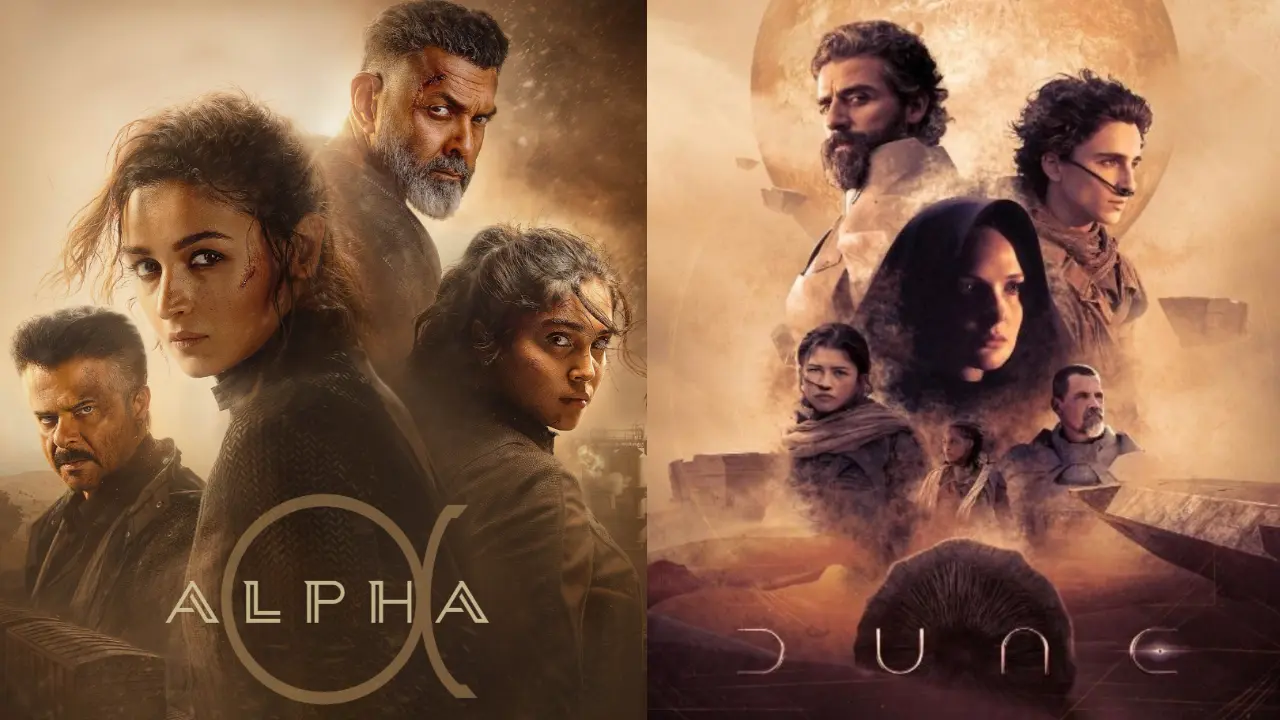
– The new promotional poster for the highly anticipated film “Alpha,” featuring Alia Bhatt, has drawn significant online criticism for alleged visual similarities to a “Dune” movie poster.
– Observers on social media platform X highlighted the “Alpha” poster’s sepia-toned, desert-like, and futuristic aesthetic as resembling “Dune’s” promotional material.
– This marks the second instance of “Alpha” promotional content facing plagiarism accusations, following earlier comparisons of its teaser to a scene from the French film “La Femme Nikita.”
## Main Developments
The upcoming YRF production “Alpha,” a film starring Alia Bhatt, Sharvari, Bobby Deol, and Anil Kapoor, is currently at the centre of a plagiarism debate following the release of its latest promotional poster. A day after the poster was unveiled, social media users quickly pointed out striking resemblances to marketing visuals from the acclaimed Hollywood science fiction epic “Dune.”
The controversy erupted on various online platforms, particularly X (formerly Twitter), where netizens actively shared side-by-side comparisons of the “Alpha” and “Dune” posters. This immediate and widespread reaction has once again put “Alpha’s” creative originality under scrutiny, sparking a wave of discussion among film enthusiasts and the broader online community.
The newly released “Alpha” poster showcases its ensemble cast in a visually distinct, rugged, and intense setting. It employs a sepia-toned, muted colour palette, which contributes to an overall gritty and futuristic atmosphere. A prominent desert-like backdrop further defines the poster’s aesthetic. These specific visual choices, as described by the filmmakers themselves when sharing the poster with the caption “THE αLPHA GANG!”, are precisely what has led to the comparisons with “Dune,” a film renowned for its own iconic desert landscapes and dystopian themes, often reflected in its promotional artwork featuring stars like Timothée Chalamet and Zendaya.
This incident is not an isolated one for the “Alpha” project. Just a day prior to the poster controversy, the film’s action-packed teaser had also garnered considerable attention for a similar reason. Online observers noted clear parallels between a particular scene in the “Alpha” teaser and a sequence from the French film “La Femme Nikita.” The back-to-back accusations concerning both the teaser and the poster have amplified the discussion surrounding the film’s originality and the creative process behind its marketing materials.
The swift identification and publicisation of these alleged similarities by netizens highlight the increasingly vigilant role of online audiences in scrutinizing new content. In an age where information and visual references are instantly accessible, promotional materials for major cinematic releases are often subjected to intense collective analysis from the moment they are made public. The discussions online suggest a growing expectation for distinct and original artistic expression in a globalized film industry.
As of an update on June 11, 2026, the online debate continues to unfold, with many awaiting further developments or potential responses from the film’s production house, YRF, or the creative team behind “Alpha.” The ongoing conversation underscores the fine line between inspiration and imitation in the visual arts and the significant impact of public perception on a film’s journey to release.
## Why This Matters
This unfolding debate around the “Alpha” film’s promotional materials holds significance for several reasons, extending beyond the immediate controversy. Firstly, it touches upon the critical issue of creative integrity within the entertainment industry. When high-profile projects face accusations of plagiarism, it can raise questions about the originality and artistic effort invested, potentially affecting public perception of the filmmakers and the studio.
Secondly, the incident highlights the potent influence of social media and the collective scrutiny of online communities. Netizens are increasingly acting as watchdogs, quickly identifying and publicizing perceived similarities in visual content. This demonstrates a shift in how creative works are evaluated and held accountable, placing more pressure on creators to ensure authenticity.
Finally, such controversies can impact a film’s brand and audience trust even before its release. In a highly competitive cinematic landscape, maintaining a reputation for innovation and unique storytelling is paramount. Questions of originality, whether fully substantiated or not, can shape audience expectations and engagement, influencing whether the public views the film as a fresh offering or a derivative work.
## Frequently Asked Questions
###What is the main accusation against the film Alpha?
The primary accusation is that the recently unveiled promotional poster for the film “Alpha” bears significant visual similarities to a poster from the Hollywood science fiction film “Dune.”
###Which elements of the Alpha poster are being compared to Dune?
Online observers have noted similarities in the “Alpha” poster’s overall aesthetic, specifically its rugged and intense setting, sepia-toned and muted colour palette, and a distinctive desert-like backdrop, which together create a gritty and futuristic tone, mirroring elements often seen in “Dune’s” promotional material.
###Is this the first time Alpha has faced plagiarism allegations?
No, this is the second instance. The film previously faced scrutiny regarding its teaser, which netizens pointed out had resemblances to a scene from the French film “La Femme Nikita.”