## Key Takeaways
– Rajesh Exports’ shares have experienced a significant decline, hitting consecutive lower circuits on the market.
– The company faces a potential removal from the government’s Production-Linked Incentive (PLI) scheme for advanced chemistry cell battery storage.
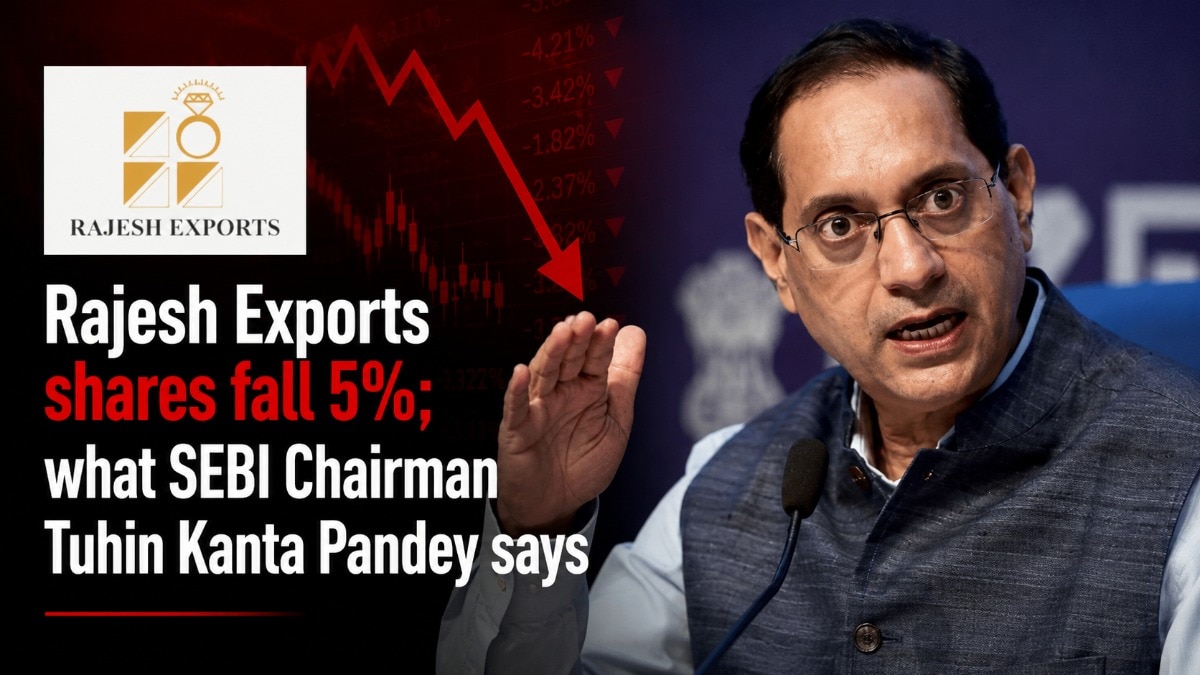
– SEBI Chairman Tuhin Kanta Pandey emphasized the importance of legal compliance and adhering to judicial processes for the company.
## Main Developments
Shares of Rajesh Exports Ltd registered a notable fall on Monday, reaching their lower circuit limit at Rs 93.80. This downturn marked the third consecutive trading session where the stock hit the circuit breaker. Over the past seven sessions, the company’s shares have experienced a fall in six of them, indicating a period of sustained pressure on its market valuation.
The primary catalyst for this recent market reaction appears to be a report from PTI, which indicated that the Ministry of Heavy Industries (MHI) is poised to make a decision regarding Rajesh Exports’ status. The report suggests the ministry may soon remove the gold refiner and jewellery exporter from the list of beneficiaries under the production-linked incentive (PLI) scheme, specifically related to advanced chemistry cell (ACC) battery storage. Such a move, if confirmed, could have significant implications for the company’s future ventures in the energy storage sector.
Production-Linked Incentive schemes are government initiatives designed to boost domestic manufacturing and reduce import dependence in critical sectors. By offering incentives, these schemes aim to encourage companies to scale up production and invest in advanced technologies. The ACC battery storage segment is considered strategic, supporting India’s transition towards cleaner energy and electric mobility. Therefore, a potential exclusion from such a scheme would mean the company could lose out on crucial financial benefits and strategic support earmarked for this growing industry.
Amidst these developments, SEBI Chairman Tuhin Kanta Pandey made a statement concerning the Rajesh Exports situation. He described the ongoing process as a “judicial process” where specific orders are issued. Chairman Pandey underscored that Rajesh Exports is expected to comply with these orders in a manner fully consistent with legal requirements and established procedures.
The Securities and Exchange Board of India (SEBI) functions as the principal regulator for the securities market in India, tasked with protecting investor interests and fostering the development and regulation of the market. When the SEBI Chairman refers to a “judicial process” in the context of a publicly listed entity like Rajesh Exports, it highlights the formal legal and regulatory mechanisms in place to address corporate matters. This implies that any actions or decisions concerning the company must adhere strictly to the rule of law, with compliance being a non-negotiable aspect for the entity involved.
The market’s reaction reflects investor apprehension regarding the potential loss of government incentives, which could impact Rajesh Exports’ strategic direction and financial performance in the ACC battery storage sector. While the Ministry of Heavy Industries’ decision is still pending, the prospect alone has been enough to trigger significant stock movement. The regulatory comments further reinforce the broader expectation for companies to operate within a transparent and legally compliant framework, especially when facing scrutiny or undergoing significant operational shifts.
## Why This Matters
The situation surrounding Rajesh Exports holds significant implications for various stakeholders. For investors, the consecutive declines in share value underscore the risks associated with market sentiment driven by potential policy changes and regulatory scrutiny. The prospect of a company being removed from a government’s Production-Linked Incentive scheme highlights the tangible benefits and strategic importance of such programs, and conversely, the potential setbacks for businesses that lose these advantages.
This case also brings into focus the crucial role of regulatory bodies like SEBI in maintaining market integrity and ensuring corporate governance. The SEBI Chairman’s emphasis on a “judicial process” and legal compliance serves as a reminder that publicly listed companies are subject to strict regulatory oversight, which is vital for protecting investor interests and fostering a fair and transparent market environment. The developments concerning Rajesh Exports thus offer a critical insight into the interplay between government industrial policy, market dynamics, and regulatory enforcement.
## Frequently Asked Questions
###What caused the recent decline in Rajesh Exports’ shares?
The recent decline in Rajesh Exports’ shares, marked by multiple lower circuit hits, is primarily attributed to a PTI report suggesting the Ministry of Heavy Industries may remove the company from the Production-Linked Incentive (PLI) scheme for advanced chemistry cell (ACC) battery storage.
###What is the PLI scheme for ACC battery storage?
The Production-Linked Incentive (PLI) scheme for advanced chemistry cell (ACC) battery storage is a government initiative designed to incentivize domestic manufacturing and reduce import dependency in the critical energy storage sector. It offers financial benefits to companies that increase production and invest in this technology.
###What did the SEBI Chairman say about Rajesh Exports?
SEBI Chairman Tuhin Kanta Pandey stated that the situation involving Rajesh Exports is a “judicial process” where orders are issued. He emphasized that Rajesh Exports is required to comply with these orders in a manner consistent with the law.