
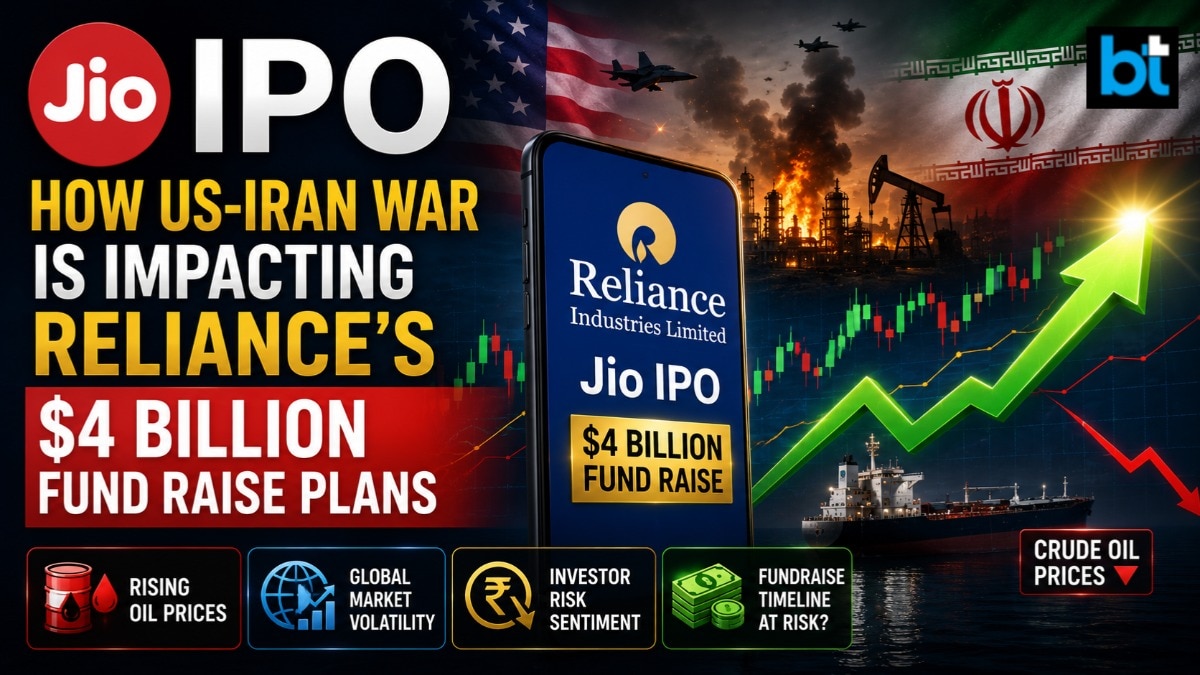
It was poised to be India’s biggest-ever initial public offering, a landmark moment for the nation’s digital future and a major win for Reliance Industries Ltd. But it seems even the mightiest plans, especially those involving a $4 billion fundraise, aren’t immune to the unpredictable currents of global geopolitics. We’re talking about Jio Platforms, Mukesh Ambani’s digital powerhouse, whose highly anticipated IPO now appears to be hitting a snag.
The IPO Dream Hits a Bump
Sources familiar with the matter, cited in a recent Bloomberg report, indicate that the ambitious plan to list Jio Platforms has slowed down significantly. Reliance Industries (RIL) is reportedly taking a step back to review the entire deal structure, a prudent move in the face of escalating geopolitical tensions and the inevitable market volatility they bring. For those keeping track, this delay casts a shadow over Ambani’s earlier commitment to complete the share sale within the first half of the year.
While draft papers could theoretically be filed at any moment, the reality is there’s no firm date on the horizon. This isn’t just a minor blip; it’s a recalibration of a massive financial undertaking, one that could redefine India’s investment landscape.
Jio Platforms: A Digital Juggernaut
Before diving into the “why,” let’s quickly remind ourselves of the sheer scale and importance of Jio Platforms. This isn’t just another tech company; it’s the digital arm of Mukesh Ambani’s Reliance empire, encompassing everything from telecom services (Jio Infocomm) to a vast array of digital apps, broadband, and enterprise solutions. It has been a catalyst for India’s digital revolution, connecting hundreds of millions to the internet and reshaping how consumers access content, communicate, and transact.
The potential IPO has been eyed by investors globally, not just for its size, but for the inherent growth story it represents – tapping into India’s burgeoning digital economy. For RIL, monetizing Jio Platforms through a public listing is a crucial part of its strategy to deleverage the parent company and unlock further value.
The Geopolitical Shadow: US-Iran Tensions
So, what exactly has caused this slowdown? The Bloomberg report points directly to the “war in Iran,” which has complicated the plan on multiple fronts. Geopolitical conflicts, especially in critical oil-producing regions like the Middle East, send ripples across global markets, creating an environment of heightened uncertainty.
Here’s how such tensions typically impact major financial events like an IPO:
* Market Volatility: Uncertainty is kryptonite for financial markets. News of conflict can trigger sharp fluctuations in stock prices, currency values, and commodity prices (especially oil). This makes it incredibly difficult for companies and their bankers to accurately price an IPO, as investor sentiment can shift dramatically overnight.
* Investor Confidence: When geopolitical risks rise, investors tend to become more risk-averse. They might pull funds from emerging markets or postpone new investments, opting for safer havens. A large, high-profile IPO requires significant institutional and retail investor appetite, which can wane in turbulent times.
* Economic Outlook: Prolonged conflict can impact global economic growth projections. Higher oil prices, disrupted supply chains, and decreased trade confidence can dampen economic activity, making investors hesitant about committing capital to new ventures, even promising ones.
* Currency Fluctuations: Geopolitical events often lead to currency volatility. For a company seeking to raise billions in a global market, currency instability can complicate financial modeling and the repatriation of funds.
The US-Iran situation, with its potential for broader regional instability and impact on global energy markets, presents a significant headwind that IPO planners simply cannot ignore.
Ambani’s Vision and the Road Ahead
Mukesh Ambani has been clear about his vision for Reliance, which involves transforming the conglomerate from an oil-to-chemicals giant into a technology and retail powerhouse. The Jio Platforms IPO is a cornerstone of this transition, aimed at unlocking substantial value and attracting global capital into India’s digital future.
The delay, while frustrating, highlights a cautious approach. RIL and its advisors are likely scrutinizing market conditions, investor sentiment, and geopolitical forecasts to determine the optimal window for a successful listing. A mega-IPO of this magnitude requires robust demand and a stable market to achieve its maximum potential valuation. Rushing into the market during a period of high volatility could risk a less-than-ideal outcome.
Why This Matters
The deferment of Jio Platforms’ IPO isn’t just a story for financial news junkies; it’s a significant indicator of how deeply global events can impact local economic ambitions. For India, it signals that even its most promising digital growth stories are interconnected with the broader world stage. For investors, it’s a reminder of the inherent risks that come with market participation, especially in an era defined by rapid geopolitical shifts. And for Reliance, it’s a strategic pause to ensure that when Jio Platforms does eventually make its market debut, it does so with the best possible chance of success, free from the shadows of global conflict.