
## Key Takeaways
– India’s total fertility rate has declined significantly over the past decade, now standing at 1.9.
– This new rate is below the critical replacement level of 2.1, indicating a shift in demographic trends.
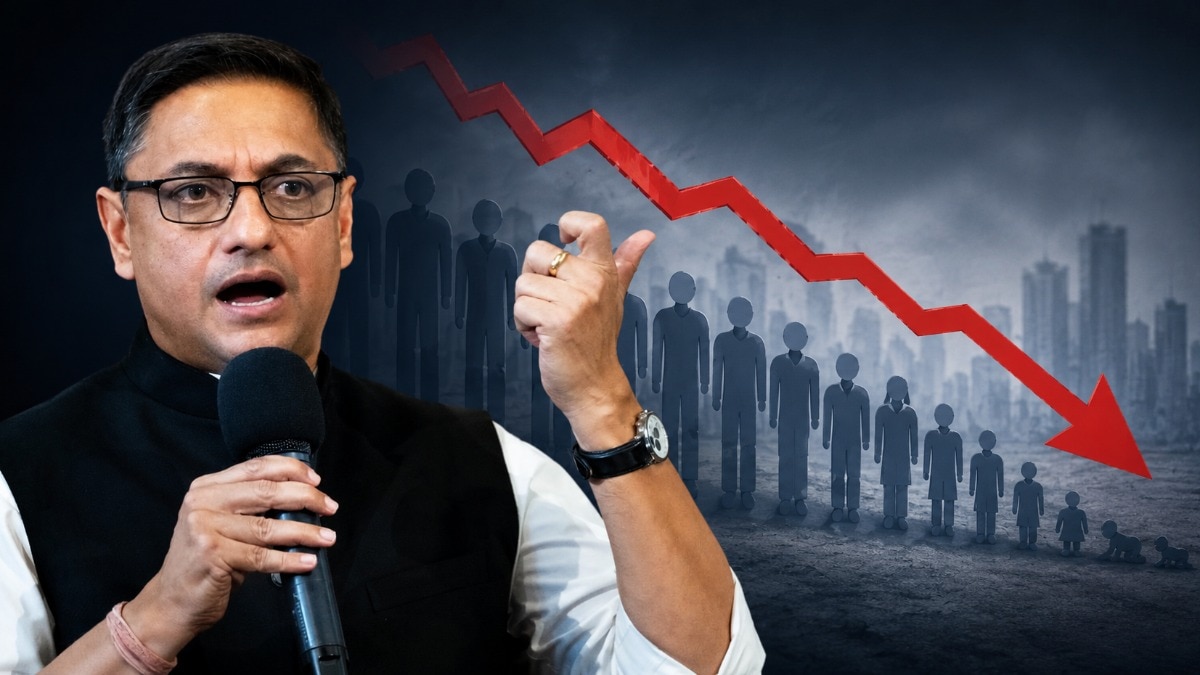
– Economist Sanjeev Sanyal suggests that India’s peak number of live births occurred in 2001, warning of potential population decline without gains in life expectancy.
## Main Developments
India is undergoing a significant demographic transition, with its total fertility rate (TFR) having fallen below the replacement level. Data indicates that the nation’s TFR has decreased from 2.3 to 1.9 over the last ten years, moving below the 2.1 rate generally considered necessary to maintain a stable population without migration. This shift signals a fundamental change in the country’s population dynamics.
Sanjeev Sanyal, a prominent economist and a member of the Prime Minister’s Economic Advisory Council, has highlighted the long-term implications of these trends. He noted that the highest number of live births in India was recorded more than two decades ago, specifically in 2001. This observation suggests that the country has already passed its demographic peak in terms of annual births.
Sanyal has been articulating this perspective for two decades, emphasizing that while the situation is not yet a “crisis,” such demographic shifts unfold over extended periods. His analysis underscores the need for a comprehensive understanding of these slow-moving but impactful changes. The economist warned that, had it not been for improvements in life expectancy, India could have seen the onset of population decline as early as the 2030s.
The sustained decline in fertility rates has broad implications for India’s future demographic structure, workforce, and social support systems. A TFR of 1.9 means that, on average, each woman is having fewer children than needed to replace herself and her partner. This trend, if continued, points towards an aging population and a potentially shrinking working-age demographic in the future.
Sanyal’s remarks came in response to discussions concerning India’s decreasing birth rates, reaffirming his long-held view on the trajectory of the nation’s population. He cautions against immediate alarm but stresses the importance of recognizing the underlying demographic currents that have been building for an extended period. The trajectory of a country’s birth rate and its impact on population size are complex phenomena, influenced by a multitude of socio-economic factors.
The data showing the TFR drop from 2.3 to 1.9 within a decade illustrates a rapid demographic transformation. This change is not uniform across all regions or communities within India, but the national average clearly signals a significant shift. The achievement of a TFR below the replacement level is a milestone that many developed nations have reached, often leading to distinct societal challenges and opportunities.
For India, a country often associated with a large and youthful population, this demographic change presents new challenges and considerations for policy-makers and economic planners. Understanding the implications of a declining birth rate, coupled with the peak birth year being in 2001, becomes crucial for anticipating future needs in areas such as education, healthcare, and pension systems. Sanyal’s contribution aims to bring this long-term perspective to the forefront of national discourse.
## Why This Matters
The decline in India’s total fertility rate below the replacement level holds significant implications for the nation’s future. A TFR of 1.9 means that the population, without factoring in life expectancy gains or migration, would eventually begin to shrink. Economist Sanjeev Sanyal’s observation that India’s peak live births occurred in 2001 further emphasizes that the country has entered a new demographic phase. This shift could lead to a different age structure, potentially resulting in an older population and a smaller proportion of working-age individuals in the coming decades. While Sanyal clarifies it is not an immediate “crisis,” the long-term nature of these demographic developments necessitates careful planning for future economic stability, social welfare, and workforce management.
## Frequently Asked Questions
##Question 1?
What is India’s current total fertility rate (TFR)?
Answer 1
India’s total fertility rate (TFR) has dropped to 1.9.
##Question 2?
What is considered the replacement level for total fertility rate?
Answer 2
The replacement level for total fertility rate is generally considered to be 2.1.
##Question 3?
According to economist Sanjeev Sanyal, when did India experience its peak number of live births?
Answer 3
Sanjeev Sanyal states that India’s peak number of live births occurred in 2001.