## Key Takeaways
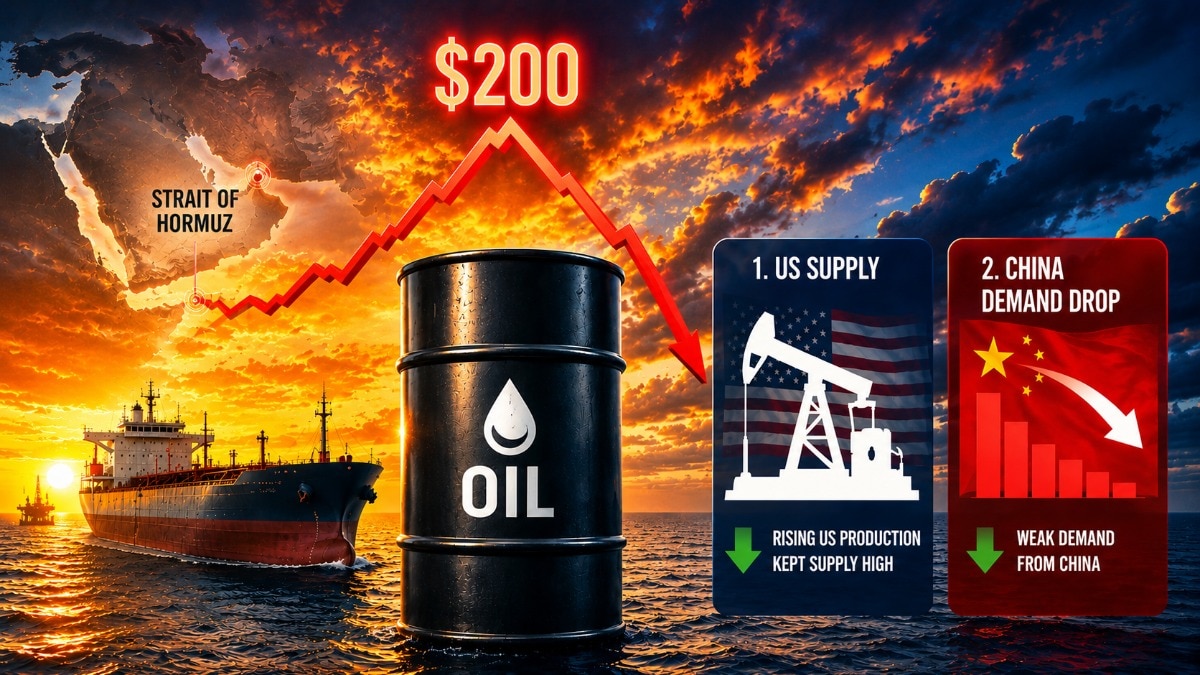
– Despite a significant supply shock from the Strait of Hormuz, global crude oil prices remained below $100 a barrel, contradicting widespread analyst forecasts of $200.
– Record-breaking crude exports from the United States played a crucial role in offsetting the loss of over 10 million barrels per day from West Asian suppliers.
– A sharp decline in demand from China, combined with unspecified emergency interventions, further contributed to stabilizing international oil prices.
## Main Developments
The global energy market recently navigated a period of intense uncertainty following a conflict that disrupted operations in the strategically vital Strait of Hormuz. This critical maritime chokepoint, essential for the transit of a substantial portion of the world’s crude oil shipments, saw its supply routes severely impacted. The disruption led to a significant reduction in oil availability, with more than 10 million barrels per day of West Asian supply effectively removed from the market.
In the wake of this severe supply disruption, numerous market analysts and industry experts projected a dramatic surge in crude oil prices, with many anticipating levels as high as $200 per barrel. The sheer scale of the lost supply and the strategic importance of the Strait of Hormuz fueled fears of an impending energy crisis and significant economic repercussions globally. Such predictions underscored the gravity of the situation and the perceived fragility of global energy supply chains.
However, more than three months after the initial disruption, these dire forecasts have not materialized. Against expectations, international crude oil benchmarks have remained firmly below the $100 per barrel mark, defying the once-prevalent predictions of a dramatic price spiral. This unexpected market resilience has prompted a closer look at the underlying factors that prevented a feared energy crisis.
A key factor in mitigating the upward pressure on oil prices was the unprecedented volume of crude oil exports from the United States. In recent years, the U.S. has transformed its role in the global energy landscape, evolving into a major producer and exporter. During this critical period, record levels of American crude flooded international markets, providing an essential buffer against the substantial supply deficit created by the Hormuz disruption. This increased availability from a non-West Asian source helped to rebalance supply dynamics.
Complementing the robust U.S. export performance was a notable decline in crude oil demand from China. As one of the world’s largest energy consumers, any significant shift in Chinese purchasing patterns has a profound impact on global commodity markets. The period following the Hormuz disruption saw a sharp drop in Chinese oil imports, indicating reduced internal consumption or inventory management strategies. This reduction in demand from a major economy helped alleviate some of the pressure that would otherwise have pushed prices higher amidst tightened supply.
Furthermore, the market’s stability was bolstered by a series of emergency interventions. While the precise nature and scope of these interventions were not detailed, their collective impact was significant in preventing a price blowout. Such actions typically involve coordinated efforts by major oil-consuming nations or international bodies to manage supply, reassure markets, and maintain stability during times of crisis. These measures, alongside the shifts in supply and demand, collectively contributed to averting the projected $200 per barrel scenario.
The combination of these factors – record U.S. exports, reduced Chinese demand, and strategic emergency interventions – created a robust counter-narrative to the initial fears. It demonstrated that even in the face of a massive and strategically critical supply shock, the global oil market possesses a degree of flexibility and resilience that many analysts had underestimated. The episode serves as a testament to the complex interplay of geopolitical events, economic forces, and market responses in shaping global energy prices.
## Why This Matters
The unexpected stability of crude oil prices following the Strait of Hormuz disruption holds significant implications for global economic stability and energy security. Had prices surged to the predicted $200 per barrel, it would have triggered widespread inflation, increased manufacturing and transportation costs, and potentially pushed many economies into recession. For consumers, this would have translated into substantially higher fuel prices, impacting daily living costs and disposable income.
This event also highlights the evolving dynamics of global energy supply. The ability of the United States to significantly increase its oil exports demonstrates a shift in energy power, providing a crucial alternative source during geopolitical crises. It underscores the importance of diversified supply chains and the role of major economies in acting as stabilizers. Furthermore, the episode offers valuable lessons for policymakers and market participants about the resilience of global commodity markets and the multifaceted factors that influence price movements, reminding them that dire predictions are not always guaranteed outcomes.
## Frequently Asked Questions
##Question 1?
Why were many analysts predicting oil prices to reach $200 a barrel after the Strait of Hormuz disruption?
Analysts predicted oil prices could soar to $200 a barrel because the Strait of Hormuz is a critical global energy chokepoint. Its disruption led to the loss of over 10 million barrels a day of West Asian supply, a massive reduction that was expected to cause a severe imbalance between global supply and demand.
##Question 2?
What factors prevented crude oil prices from soaring to $200 a barrel as feared?
The primary factors that prevented crude oil prices from spiraling higher were record crude exports from the United States, a significant drop in demand and imports from China, and the implementation of various emergency interventions aimed at stabilizing the market. These elements collectively offset the supply losses.
##Question 3?
What is the significance of the Strait of Hormuz in global energy markets?
The Strait of Hormuz is recognized as one of the world’s most vital energy chokepoints. It facilitates the transit of a substantial share of global crude oil shipments, making it an indispensable artery for international energy trade. Any disruption in this strait has profound implications for global energy security and market stability.