## Key Takeaways
– India’s Test team faces a significant challenge in establishing a consistent number three batsman following Cheteshwar Pujara’s 2025 retirement, with multiple players tried in the role.
– Assistant coach Ryan Ten Doeschate has stressed the importance of committing to either Sai Sudharsan or Devdutt Padikkal for the vital batting position to end ongoing instability.
– Fitness assessments for prominent white-ball players, Virat Kohli and Rohit Sharma, are scheduled before the upcoming One Day International series against Afghanistan.
## Main Developments
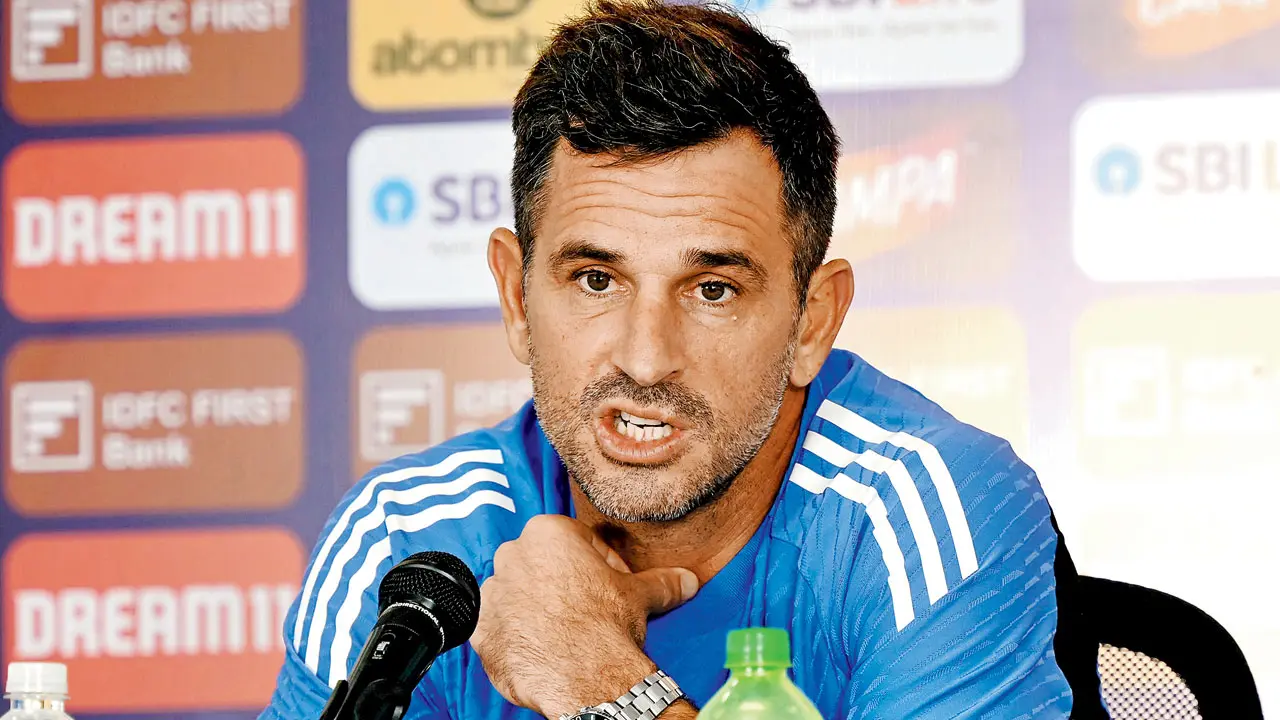
The Indian cricket team is navigating a period of considerable adjustment, particularly in its Test match batting lineup where the critical number three position remains a point of concern. Since the retirement of Cheteshwar Pujara in 2025, a player who last featured for India in the World Test Championship final in 2023, the team has experimented extensively to find a suitable successor. This ongoing search has prompted comments from India’s assistant coach, Ryan Ten Doeschate, who openly acknowledged the challenges faced by the team management.
During a press conference held on Thursday, Doeschate articulated the team’s unease regarding the frequent rotation of players in this pivotal batting slot. He characterized the repeated changes as “not ideal,” emphasizing the strategic necessity of identifying a primary candidate and then providing them with sustained opportunities to solidify their place. The assistant coach’s remarks signal a clear intent to foster greater stability within the Test batting order by committing to a chosen player for the long term.
Since Pujara’s last appearance in Indian whites, a diverse group of players has been given a chance to prove themselves at number three. These include Shubman Gill, Devdutt Padikkal, Sai Sudharsan, Karun Nair, and Washington Sundar. This roster reflects the breadth of the team’s efforts to fill a role that Pujara had made his own for many years, underscoring the difficulty in finding a like-for-like replacement or an equally effective alternative. Each player brought unique attributes to the position, yet a definitive solution has remained elusive.
The number three batting position in Test cricket is universally recognized as one of the most demanding and strategically important roles. A batsman in this slot must possess the versatility to handle various match scenarios—from stabilizing an innings after early wickets to accelerating the scoring rate when conditions are favourable. The role requires exceptional technique, mental fortitude, and the capacity for prolonged concentration under pressure. The instability highlighted by Coach Doeschate thus points to a significant tactical void that impacts the team’s overall Test match strategy and performance.
Among the current pool of talent, Sai Sudharsan and Devdutt Padikkal appear to be the primary contenders under consideration for this crucial role. Both young batsmen have been actively engaged in intensive net practice sessions, a clear indication of their prominence in the team’s future plans. Doeschate confirmed that both players are being given a “long rope at nets,” suggesting an extended period of observation and focused training. While the assistant coach prudently avoided making any premature announcements regarding selection, the dedicated attention given to Sudharsan and Padikkal underscores the meticulous process underway to make an informed decision.
Sai Sudharsan, who has already accumulated experience over six Test matches for India, currently holds a Test batting average of just over 27. This figure provides an initial snapshot of his performance at the highest level. During a recent net session, Sudharsan was observed experiencing a moment where his bat slipped from his grasp and flew backward. This incident was not isolated, having occurred twice previously in the Indian Premier League (IPL), suggesting an aspect of his technique that may require further attention. Despite this, his continued involvement in the training setup signals that the team management views him as a promising prospect.
Devdutt Padikkal, another strong candidate, is also under close scrutiny by the coaching staff. During a slip fielding drill, Padikkal was positioned alongside established players like KL Rahul and team captain Shubman Gill. This tactical placement during practice sessions often hints at a player’s potential integration into key team roles. Subsequently, after KL Rahul moved to the nets for batting practice, Sudharsan took his place in the slip cordon. These observations from training offer valuable insights into how the team is assessing and positioning its emerging talents for potential responsibilities within the squad.
Assistant coach Doeschate’s insights into the number three position reflect a foundational principle of team building: the importance of continuity and trust. His direct statement, “You need to look at the incumbents for that role and and maybe stick with someone,” conveys a clear desire to move past the phase of frequent experimentation. This approach is designed to provide a chosen player with the necessary confidence and security to perform optimally without the incessant pressure of constantly needing to re-prove their worth in every single match or series. Such stability is often considered paramount for a player’s long-term development and success, particularly in the demanding environment of Test cricket.
The retirement of Cheteshwar Pujara created a significant void in the Indian Test lineup. Pujara was renowned for his unwavering defensive technique, immense patience, and his ability to wear down opposition bowlers, often batting for extensive periods to establish strong foundations for the innings. His unique style, characterized by methodical run accumulation and sustained occupation of the crease, made him an invaluable asset. The current challenge for India extends beyond merely finding a batsman who can score runs at number three; it involves identifying a player who can either replicate Pujara’s resilience and capacity for extended stays at the wicket or offer a complementary skill set that equally strengthens the team’s overall strategic approach.
The eventual decision regarding who will secure the number three batting position is pivotal for India’s future Test campaigns. The current strategy of the team management involves a comprehensive evaluation of both Sudharsan and Padikkal, carefully weighing their present form, future potential, and their suitability for the rigours of Test match cricket. While the assistant coach has chosen not to make any premature announcements, the focused training and strategic observations strongly indicate that a decision is being meticulously considered. The overarching objective is to identify a player who can inject much-needed stability into the middle order, thereby bolstering India’s standing as a formidable force in Test cricket globally.
In addition to these Test match considerations, the fitness of key white-ball players, Virat Kohli and Rohit Sharma, is also scheduled for assessment. These evaluations will precede India’s upcoming One Day International (ODI) series against Afghanistan. Although the specific reasons for these fitness checks were not detailed in the source, they are standard protocol for elite athletes. Such assessments are crucial for ensuring that these vital players meet the physical demands required for competitive international cricket, reflecting the team management’s commitment to maintaining peak performance across all formats.
The dual focus on resolving a long-standing Test batting conundrum and the routine monitoring of seasoned ODI campaigners underscores a particularly active period for the Indian cricket establishment. Under the guidance of coaches like Ryan Ten Doeschate, efforts are diligently underway to ensure both the Test and limited-overs squads are optimally prepared and balanced for their respective challenges. The upcoming assessments and selection decisions are set to play a significant role in shaping India’s cricketing trajectory in the immediate future.
## Why This Matters
The ongoing instability at the number three batting position in Test cricket is a critical concern for the Indian team, impacting both immediate match results and long-term strategic planning. This spot is foundational to a Test innings, often dictating momentum and providing stability. Without a consistent performer, the entire middle order can become vulnerable, placing undue pressure on other batsmen. Assistant coach Ryan Ten Doeschate’s candid admission highlights a fundamental challenge in the team’s Test setup that needs urgent resolution to maintain India’s competitive edge in the longest format of the game. Furthermore, the routine assessment of key players like Virat Kohli and Rohit Sharma for the ODI format underscores the continuous importance of fitness management for top athletes in a demanding international schedule, ensuring the team’s readiness across all formats.
## Frequently Asked Questions
What is the main challenge facing the Indian Test cricket team?
The Indian Test cricket team is primarily challenged by the lack of a consistent and established batsman for the crucial number three position, following Cheteshwar Pujara’s retirement in 2025. Several players have been tried in this role, but a long-term solution has yet to emerge, leading to instability in the batting order.
Who are the main contenders for the number three batting position?
Sai Sudharsan and Devdutt Padikkal are currently the leading candidates being assessed by the team management for the number three slot. Assistant coach Ryan Ten Doeschate mentioned that both players are receiving extensive practice in the nets, indicating they are under close consideration for the role.
Which key players’ fitness is being assessed for upcoming ODIs?
The fitness of star batsmen Virat Kohli and Rohit Sharma is slated for assessment ahead of India’s upcoming One Day International (ODI) series against Afghanistan. This is a standard procedure to ensure their readiness for international competition.