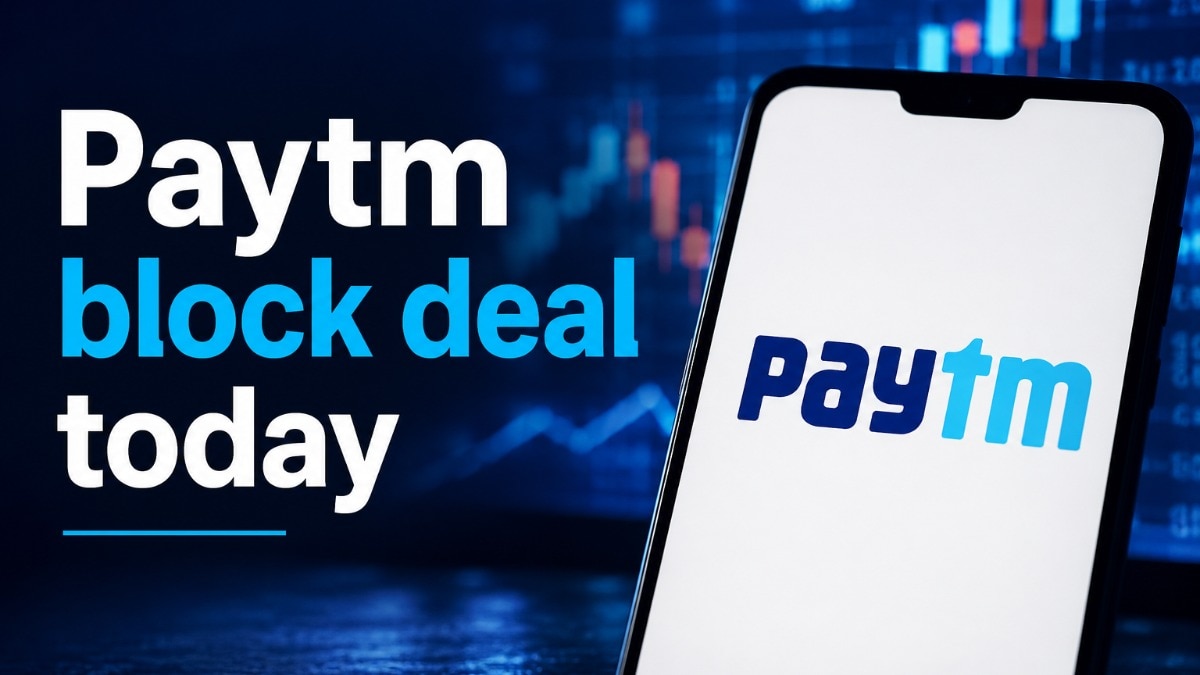
Get ready for some serious action on the stock market today, as digital payments giant Paytm is at the heart of a massive share transaction. We’re talking about a block deal worth a staggering Rs 963.60 crore, or approximately $100 million, set to unfold this Friday morning. This isn’t just a regular day of trading; it’s a significant move that sees some early investors likely cashing in, and it’s making waves across the financial world.
The Big Deal, Explained
So, what exactly is happening? Reports indicate that up to 86 lakh shares of One 97 Communications Ltd, the company behind the popular Paytm app, are slated to change hands. To put that in perspective, that’s roughly 1.3 per cent of the company’s total outstanding shares. This isn’t a trickle; it’s a substantial chunk.
The deal is expected to be executed at a floor price of Rs 1,120.65 per share. If you’re quick with numbers, you’ll notice that this is a 2.99 per cent discount compared to Paytm’s closing price of Rs 1,155.30 on the BSE just yesterday. A nearly 3% discount might sound small, but when you’re dealing with hundreds of crores, it translates into quite an incentive for the buyers.
Who’s Cashing Out? Early Backers Step Aside
The spotlight isn’t just on the money; it’s also on the sellers. Sources familiar with the transaction have revealed that several key shareholders are participating in this block deal. Among them are prominent names like Saif III Mauritius Company Limited, Saif Partners India IV Limited, and Elevation Capital V Limited.
These names might not ring a bell for every casual observer, but within the investment ecosystem, they are recognized as early and significant backers of Paytm. Venture capital and private equity firms like these typically invest in promising startups during their early growth phases, nurturing them until they are ready for public markets or other liquidity events. For them, a block deal like this represents an opportunity to realize returns on their long-term investments, potentially reallocating capital to new ventures or distributing profits to their own limited partners. Their exit, even partial, signifies a new phase in Paytm’s shareholding structure.
Understanding a Block Deal: Why It Matters
For those new to the financial jargon, a “block deal” is a specific type of trade that takes place on the stock exchange. Unlike regular trades where shares are bought and sold in small quantities by individual investors throughout the day, a block deal involves a single transaction of a large number of shares. The minimum quantity for a block deal is usually 500,000 shares, or a minimum value of Rs 10 crore.
These deals are often executed through a separate trading window provided by the stock exchanges, ensuring that such a large transaction doesn’t unduly influence the regular market price during continuous trading hours. They are typically pre-arranged between institutional buyers and sellers. This mechanism allows large investors to move significant positions without causing immediate, volatile swings in the stock’s price, making it a smoother process for all involved.
The Discount: A Buyer’s Incentive
Why would shares be sold at a discount, even a small one? It’s a common practice in block deals. The discount acts as an incentive for large institutional buyers to commit to purchasing such a massive block of shares. Buying such a large quantity on the open market would likely drive the price up, making the overall cost higher for the buyer and potentially harder to acquire all the desired shares.
By offering a slight discount, sellers can attract a pre-identified buyer (or a small group of buyers) who are willing to absorb the entire block. It ensures liquidity for the seller and an attractive entry point for the buyer, making it a win-win for both parties in a large-scale transaction.
Paytm’s Journey So Far: A Brief Recap
Paytm, under its parent company One 97 Communications, has been a significant player in India’s digital payment landscape for years. Its super app status, offering everything from mobile recharges and bill payments to movie tickets and financial services, has garnered it millions of users. However, its journey on the public markets has been quite the rollercoaster since its much-hyped IPO.
After a blockbuster listing that didn’t quite meet expectations, Paytm’s stock has seen its fair share of volatility. Yet, the company has continued to expand its services and user base, constantly adapting to the dynamic fintech environment in India. Deals like today’s block trade are a natural part of a company’s evolution, as early investors reach their investment horizons and new institutional money steps in.
Investor Outlook and Market Reaction
So, what does this massive block deal signal for Paytm investors and the broader market? For some, it might be seen as early investors taking profits, which is a normal part of the investment cycle. It could also suggest a belief that the stock has reached a favorable valuation for these particular early backers.
For others, the influx of new institutional buyers could be a vote of confidence, indicating that large investors see long-term value in Paytm at the current price levels. The market will be closely watching how the stock reacts post-deal, as any significant price movements could provide further clues about investor sentiment. It’s a rebalancing act, and the market’s reaction will tell us a lot about how this transition is perceived.
Why This Matters
This significant block deal isn’t just about a large sum of money changing hands; it’s a window into the evolving ownership structure of one of India’s most prominent fintech companies. For existing Paytm shareholders, it represents a shift in institutional holdings, potentially impacting liquidity and future stock performance. For potential investors, it could offer a new entry point or signal confidence from new institutional players. Ultimately, it underscores the dynamic nature of public markets and the continuous re-evaluation of a company’s value by its stakeholders.