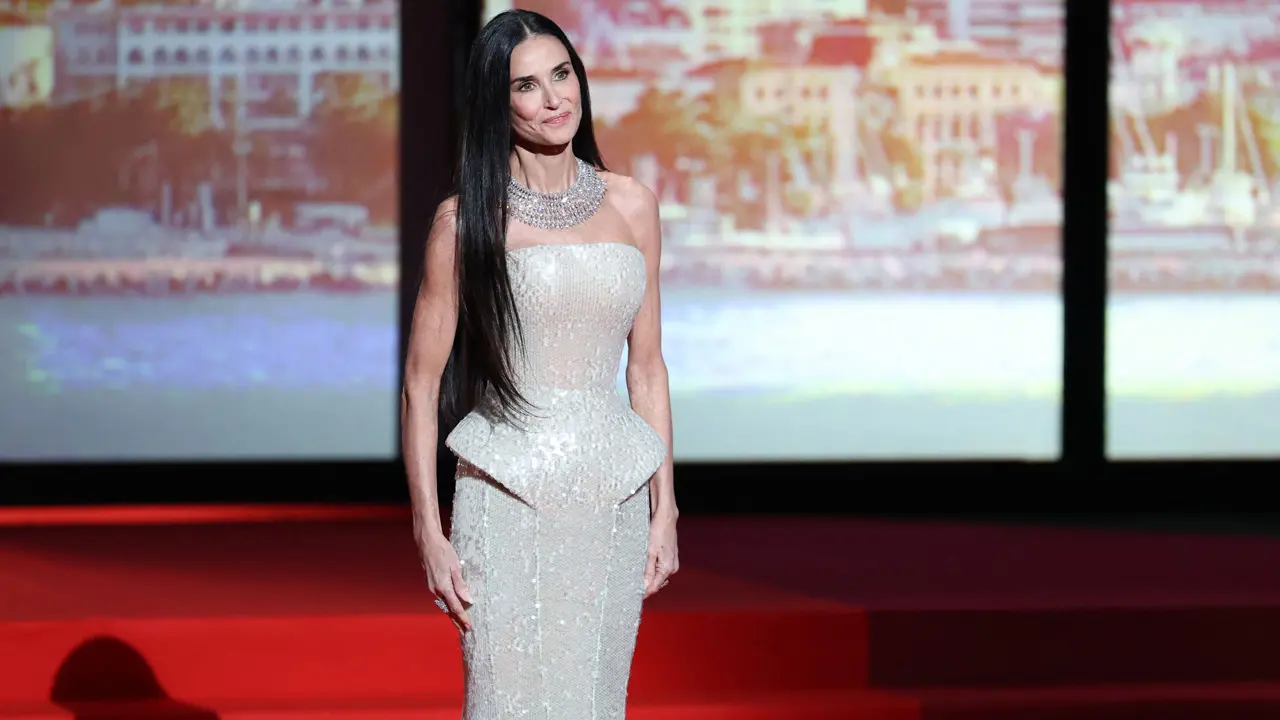
Cannes Film Festival, 2026. The French Riviera is, as ever, abuzz with cinematic glamour and industry chatter. But amidst the red carpets and premieres, one Hollywood icon delivered a dose of candid reality that has resonated far beyond the Croisette: Demi Moore. Speaking at a press conference on Tuesday, the veteran actor weighed in on the hot-button issue of Artificial Intelligence in film, delivering a surprisingly pragmatic, albeit stark, assessment of its future in the industry.
### The Inevitable Tide of AI
Moore, known for her powerful performances and enduring career, didn’t mince words. While discussing the pervasive impact of AI, she acknowledged its growing presence with a forthrightness that few in Hollywood have dared to articulate so directly. According to reports from the festival, Moore stated unequivocally, “It’s a battle that we will lose.” This isn’t a declaration of surrender, however, but rather a pragmatic recognition that AI isn’t a fleeting trend but an irreversible force demanding adaptation.
Her message was clear: Hollywood needs to stop fighting the inevitable and, instead, learn how to coexist and “work with it.” This isn’t just about technological advancement; it’s about the very future of storytelling and the livelihoods of countless individuals within the entertainment ecosystem.
### Beautiful Aspects, Irreplaceable Human Touch
While acknowledging the undeniable power of AI, Moore was quick to draw a critical line in the sand. She highlighted that despite the “many beautiful aspects” to using AI, it possesses a fundamental limitation. “It can never replace the human experience or touch,” she emphasized. This distinction is crucial, cutting to the heart of what makes art, and specifically cinema, so uniquely compelling: its ability to connect with us on a profoundly human level.
The “human experience or touch” encompasses everything from an actor’s nuanced performance to a director’s vision, a writer’s emotional depth, and a cinematographer’s artistic eye. These are the elements that imbue a film with soul, authenticity, and relatability – qualities that, for now, remain beyond the grasp of even the most sophisticated algorithms. Moore’s statement underscores a collective anxiety within the industry: how do we harness AI’s efficiency and innovation without sacrificing the very essence of what makes film art?
### Hollywood’s AI Reckoning
Moore’s comments arrive at a pivotal moment for Hollywood. The specter of AI loomed large over the recent WGA and SAG-AFTRA strikes, with concerns over job displacement, intellectual property, and the ethical use of digital likenesses becoming central to negotiations. Writers worried about AI generating scripts; actors feared digital doubles being used without consent or fair compensation. The strikes, which brought the industry to a standstill, were a stark indicator of just how seriously Hollywood takes this emerging technology.
From deepfakes and de-aging technology (which has already seen stars like Robert De Niro and Samuel L. Jackson digitally rejuvenated for roles) to advanced CGI and virtual production, AI is already deeply integrated into various stages of filmmaking. Its potential extends to script analysis, voice synthesis, automated editing, and even creating entirely synthetic actors or virtual worlds. The conversation, therefore, isn’t about *if* AI will be used, but *how*, and under what ethical and creative frameworks.
### Finding the Balance: Coexistence, Not Conflict
Moore’s pragmatic outlook suggests that the path forward lies not in outright resistance, but in strategic integration. The challenge for Hollywood now is to define the boundaries and establish the rules of engagement. This means developing robust guidelines for consent, compensation, and copyright; investing in upskilling programs for creative professionals; and fostering a collaborative environment where human ingenuity is augmented, not replaced, by artificial intelligence.
Many believe that AI, when used as a tool, can free up artists from repetitive tasks, allow for more ambitious visual storytelling, and open new creative avenues. However, the fear remains that unchecked, it could dilute the human element, homogenize content, and fundamentally alter the nature of creative work. Moore’s stance, therefore, isn’t one of passive acceptance but rather an urgent call for proactive engagement to shape AI’s role rather than be shaped by it.
### Why This Matters
Demi Moore’s frank assessment at Cannes serves as a powerful wake-up call for the entertainment industry and beyond. Her words highlight the undeniable reality that AI is here to stay, and our focus must shift from simply resisting to actively strategizing how to harness its power responsibly. For creators, this means adapting skills and understanding new technologies. For studios, it means establishing ethical frameworks and fair compensation models. And for audiences, it means grappling with new forms of storytelling and the evolving definition of authenticity in an increasingly digital world. The future of film, and indeed many creative fields, hinges on finding a sustainable balance where technology elevates, rather than diminishes, the irreplaceable human spirit.