
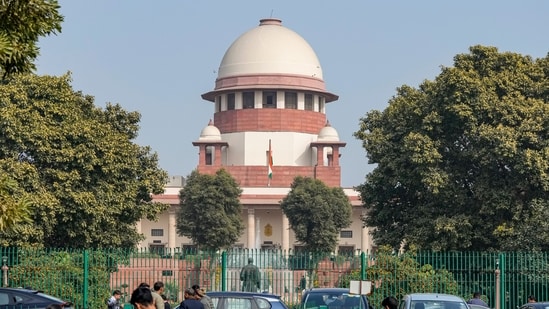
India’s Supreme Court criticizes SBI and other banks for harsh small loan processing and leniency on large loans, urging fairer practices for ordinary borrowers.
## Key Takeaways
– The Supreme Court heavily criticized the State Bank of India (SBI) and other banks.
– Banks were accused of “borderline harassment” towards ordinary borrowers seeking small loans.
– Conversely, the court noted banks were “casual” with massive loans to larger entities that frequently default.
– The court urged financial institutions to implement fairer loan practices for individuals.
## Main Developments
The Supreme Court of India has issued strong criticism against the State Bank of India (SBI) and other banking institutions. This censure specifically addresses the methods used for processing loans.
The court highlighted a significant disparity in banking practices. It noted that ordinary individuals applying for small loans often face “borderline harassment.”
In contrast, banks tend to be “casual” when sanctioning very large loans. These substantial loans are typically extended to bigger corporate entities.
The Supreme Court pointed out that these larger entities frequently end up defaulting on their massive loans. It thus drew a sharp comparison between the treatment of different borrower types.
The court explicitly urged banks to adopt fairer practices. This call for reform is specifically aimed at improving the experience for ordinary borrowers.
## What Next
Following the Supreme Court’s criticism, banks, including SBI, are now under increased pressure. They are expected to re-evaluate and adjust their loan processing protocols for individual borrowers.
The directive places an onus on these financial institutions to ensure fairer and less strenuous practices. This aims to alleviate the “borderline harassment” previously noted by the court.
## Why This Matters
This development is significant for millions of ordinary citizens across India. It addresses a systemic issue concerning the fair treatment of individuals seeking financial assistance.
The Supreme Court’s intervention highlights accountability for major financial institutions. It underscores the importance of equitable banking practices for all customers.
For borrowers, this ruling could potentially lead to improved experiences and more transparent processes. It aims to reduce undue stress during the loan application period.
## Frequently Asked Questions
### What was the Supreme Court’s main criticism regarding banks?
The Supreme Court primarily criticized banks, including SBI, for subjecting ordinary borrowers to “borderline harassment” during small loan processing. It also noted their “casual” approach to massive loans given to larger entities that often default.
### Which specific bank was mentioned in the criticism?
The State Bank of India (SBI) was specifically named by the Supreme Court. The criticism extended to “other banks” as well, indicating a broader systemic concern.
### What did the Supreme Court urge banks to do?
The Supreme Court urged banks to adopt fairer practices, particularly when dealing with ordinary borrowers. This call aims to ensure a more equitable and less burdensome loan processing experience for individuals.