
## Key Takeaways
– The Cockroach Janta Party (CJP) rapidly emerged as a significant online movement, originating from a controversial judicial statement.
– Founded by Abhijeet Dipke, the CJP garnered immense digital traction, including an Instagram following that quickly surpassed 22 million.
– The movement now faces the challenge of transitioning from a viral online phenomenon to a traditional political protest, with its founder planning a return to India to lead demonstrations amid uncertainty over official permissions.
## Main Developments
The political landscape is witnessing the emergence of an unconventional force: the Cockroach Janta Party (CJP). This movement, spearheaded by founder Abhijeet Dipke, has rapidly evolved from a digital meme into a burgeoning online political symbol, capturing widespread public attention and mobilizing a substantial following. Its genesis is particularly unique, stemming directly from a provocative statement made by the Chief Justice of India.
The CJP’s accidental birth on May 16 followed the Chief Justice’s controversial remark that controversially likened jobless individuals to “roaches.” This statement served as an unexpected catalyst, sparking outrage and, crucially, a creative response that saw the term “cockroach” reappropriated. What was intended as a pejorative label was swiftly transformed into a rallying symbol for a segment of the population feeling marginalized and unheard.
From this unusual starting point, the CJP phenomenon took root online, demonstrating the potent capability of digital platforms to foster rapid social and political mobilization. Within an astonishingly short period, the movement transitioned from a simple online meme to a widely recognized political emblem, resonating with individuals across various digital spaces.
The speed and scale of the CJP’s ascent in the digital sphere were remarkable. In just a single week, its Instagram following surged past an astounding 22 million. This rapid accumulation of followers not only underscored the CJP’s immediate appeal but also positioned it ahead of well-established political entities, including the ruling party at the Centre, which currently governs 21 states. Such a feat highlights the capacity of digitally native movements to quickly outperform traditional political structures in online reach and engagement.
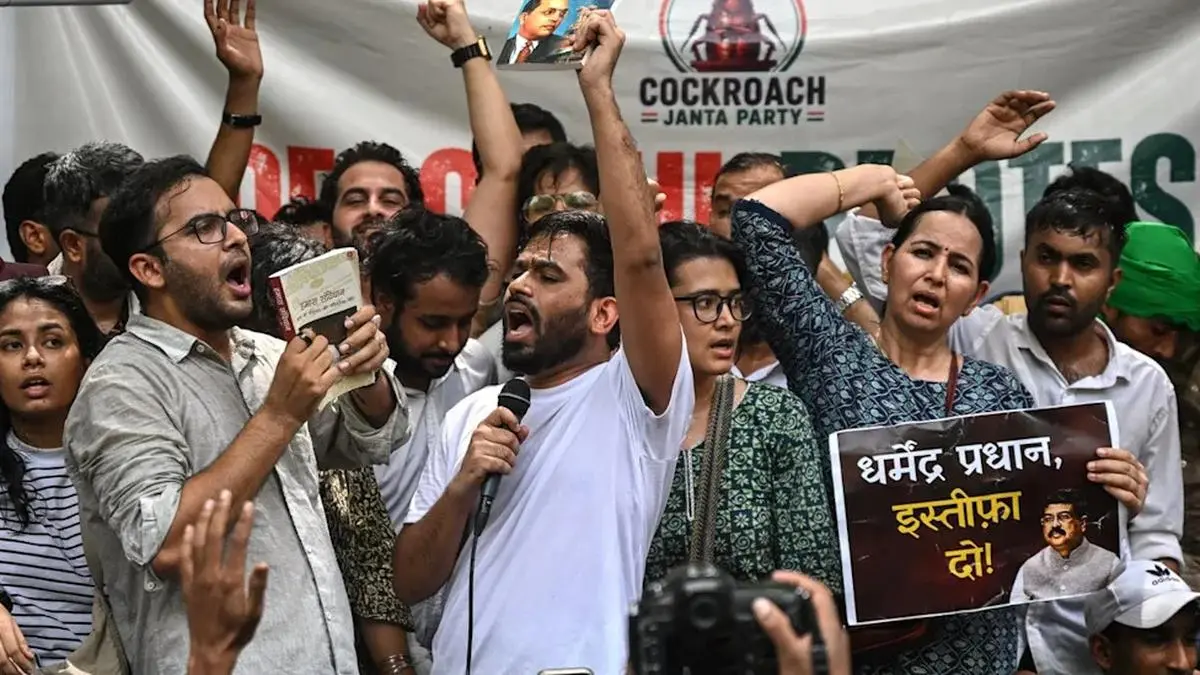
With its robust online presence firmly established, the CJP now contemplates a significant shift from its virtual origins to tangible, real-world action. Abhijeet Dipke, the architect behind the movement, has signaled his intention to return to India. His aim is to personally lead a protest, marking a pivotal moment for the CJP as it seeks to translate its considerable digital momentum into physical demonstrations.
However, this planned transition from the digital realm to public streets introduces a new set of complexities and challenges. At the time of reporting, uncertainty surrounded the authorization of Dipke’s proposed protest, raising questions about the immediate feasibility of the CJP’s real-world aspirations. Securing official permissions is a fundamental hurdle for any public demonstration, and the CJP’s ability to navigate these administrative processes will be a crucial test.
The very nature of “real politics,” as highlighted by observers, involves navigating a landscape defined by permissions, external pressures, and intense scrutiny. Unlike the comparatively uninhibited environment of online virality, organizing and executing a physical protest requires adherence to regulations, strategic engagement with authorities, and preparedness for public and media examination. These elements present a distinct set of operational and strategic challenges for a movement born and nurtured in cyberspace.
The CJP’s viral rise was not an isolated incident but tapped into a broader undercurrent of public dissatisfaction. The movement found resonance by aligning with existing public anger over critical societal issues. Specifically, it connected with widespread concerns regarding employment opportunities, the quality and accessibility of education, and general discontent with the functioning of established institutions. This confluence of factors provided fertile ground for the CJP’s rapid popularization.
The movement effectively harnessed this collective sentiment, offering a new, albeit symbolically provocative, platform for expressing grievances that had been simmering within the populace. By adopting the “cockroach” as a political symbol, the CJP facilitated a unique form of identity and solidarity among those who felt overlooked or dismissed, particularly concerning their economic and educational futures.
As the CJP prepares to take its next steps, the coming months are anticipated to be decisive in determining its trajectory and ultimate character. The effectiveness of its transition from a digital phenomenon to a coherent, actionable political entity will be closely watched. Its ability to maintain its broad appeal while contending with the demands and realities of traditional activism will define whether it can truly “survive the real world.”
The journey of the Cockroach Janta Party, from a spontaneous online reaction to a planned real-world protest, underscores a contemporary evolution in political mobilization. It serves as a compelling case study on how rapidly an online movement can gain traction, driven by symbolic reclamation and deep-seated public sentiment, while simultaneously grappling with the significant hurdles inherent in traditional political engagement.
## Why This Matters
The rise of the Cockroach Janta Party (CJP) is a powerful illustration of how digital platforms can rapidly transform public sentiment into a formidable social and political force. Its journey highlights the increasing capacity for online movements, often born from unexpected catalysts, to mobilize millions and challenge established political narratives. This phenomenon underscores the potential for new symbols to emerge from adversity and unite communities facing shared grievances, particularly regarding issues like unemployment and educational dissatisfaction. Furthermore, the CJP’s imminent attempt to transition from digital activism to physical protest raises fundamental questions about the integration of virtual movements into traditional political structures, showcasing the complex interplay between online momentum and the practical demands of real-world activism.
## Frequently Asked Questions
##What is the Cockroach Janta Party (CJP)?
The Cockroach Janta Party (CJP) is an online political movement founded by Abhijeet Dipke, which originated in response to a statement by the Chief Justice of India that equated jobless individuals with “roaches.” It quickly adopted the “cockroach” as its central political symbol.
##How did the CJP gain prominence?
The CJP rapidly gained prominence as an online phenomenon, starting as a meme on May 16. Within just one week, its Instagram following surged to over 22 million, significantly surpassing that of the ruling party and demonstrating extraordinary digital mobilization.
##What are the CJP’s immediate plans?
The CJP’s founder, Abhijeet Dipke, plans to return to India to lead a protest, aiming to translate the movement’s substantial online support into real-world action. However, at the time of reporting, it was uncertain whether the planned protest would receive official permission.