
## Key Takeaways
– Central investigative agency, the ED, conducted raids linked to former CM Pinarayi Vijayan over a money laundering probe.
– The Left Democratic Front (LDF) accused the newly installed United Democratic Front (UDF) state government of complicity in the ED action.
– Kerala Chief Minister V.D. Satheesan successfully navigated the political controversy, with the LDF’s accusations failing to gain significant public traction.
## Main Developments
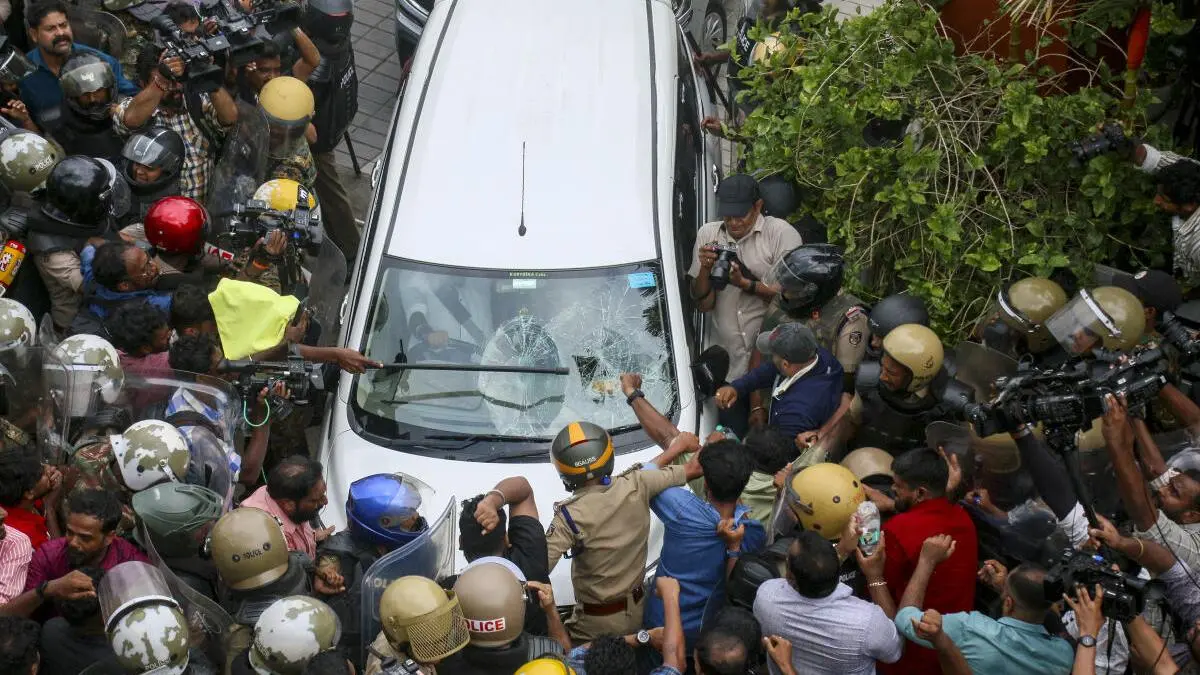
In late May 2026, Kerala found itself embroiled in a significant political controversy, just as the United Democratic Front (UDF) government, led by Chief Minister V.D. Satheesan, was settling into power after a decade-long hiatus. The storm was ignited by actions taken by the Enforcement Directorate (ED), a central investigative agency, which carried out raids on premises connected to former Chief Minister Pinarayi Vijayan, a prominent veteran of the Communist Party of India (Marxist) and the Left Democratic Front (LDF). These operations, occurring on May 27, were reportedly part of an ongoing investigation related to the CMRL money laundering case.
The timing of these events immediately drew scrutiny and became a focal point for political debate. Notably, the ED raids transpired merely one day after Chief Minister Satheesan had held a meeting with Prime Minister Narendra Modi. This close sequence of a high-profile state leader meeting the national head of government, followed by a central agency’s action against the former state chief, provided fertile ground for speculation and accusations from the opposition.
In the wake of the raids, the Left Democratic Front quickly launched a sharp counter-offensive. The LDF leveled a “bizarre charge,” as characterized by reports, directly against the newly established Congress-led government in Kerala. Their accusation posited that the state’s ruling front was complicit in the actions of the Enforcement Directorate, suggesting an alleged collaboration between the state government and the central investigative body to target the former Chief Minister and his associates. This specific accusation against a state government regarding the operations of a central agency, which functions independently under federal jurisdiction, formed the basis of the “bizarre” description.
Chief Minister V.D. Satheesan’s initial response to the unfolding situation was marked by a period of silence. As the political tension mounted and the LDF’s accusations intensified, the Chief Minister refrained from immediate public commentary. This strategic quiet period, coming during the “unusual first fortnight” of the UDF’s return to power, added another layer of intrigue to the political landscape. The silence was eventually broken a few days later when Satheesan delivered a “forceful riposte,” directly addressing and countering the LDF’s allegations. This definitive response aimed to dismiss the claims of complicity and assert the independence of his administration.
The incident underscored the deep-seated political rivalry between the UDF and LDF in Kerala. For the UDF, returning to governance after ten years, this episode represented an immediate and significant challenge. The LDF, now in opposition, appeared to use the ED’s actions as an opportunity to undermine the credibility and stability of the nascent UDF administration by framing it as a tool in a larger political game involving central agencies. Their goal was seemingly to cast a shadow over the new government’s integrity right at its inception.
Despite the LDF’s aggressive stance and its attempts to generate a widespread political storm, their particular charge of Congress complicity ultimately “failed to gain traction.” This indicates that the accusation did not resonate widely with the public or other political stakeholders, suggesting a lack of perceived credibility in linking the state government directly to the workings of a central investigative body in this manner. Consequently, Chief Minister Satheesan was able to “ride out” this early political tempest, demonstrating his ability to manage significant political pressure and navigate complex situations during the critical initial phase of his administration. The outcome reaffirmed the distinct separation between state and central governmental agencies in the public’s perception and highlighted the challenges opposition parties face when leveling specific accusations against a ruling government concerning federal actions. The intense political dynamics of Kerala continue to feature prominently in its governance narrative.
## Why This Matters
This political episode in Kerala is significant for several reasons. It starkly highlights the volatile and often adversarial nature of political discourse in the state, where actions by investigative agencies can swiftly become catalysts for intense inter-party conflict. The incident illustrates the delicate and frequently contentious relationship between state and central governments, especially when central agencies pursue investigations involving prominent state political figures.
For a newly installed administration like the UDF government, this event underscores the immediate scrutiny and challenges it faces. Every action, reaction, and period of silence from the leadership is closely observed by both the opposition and the public. Chief Minister Satheesan’s strategic handling of the situation—his initial silence followed by a forceful rebuttal—demonstrates the critical importance of effective communication and astute political maneuvering in crisis management.
Furthermore, the failure of the LDF’s specific charge of state government complicity to gain traction offers insight into public perception regarding the independence of central investigative bodies versus state political influence. It reflects ongoing discussions about the potential for political weaponization of such agencies and how such accusations are weighed by the electorate. Ultimately, this event is a testament to the persistent and sharp political battles between the UDF and LDF, indicating that even with a shift in power, the underlying issues of accountability, transparency, and political integrity remain central to Kerala’s governance narrative.
## Frequently Asked Questions
##Question 1?
What prompted the political storm between the UDF and LDF in Kerala during May 2026?
Answer 1
The political storm was triggered by Enforcement Directorate (ED) raids conducted on May 27, 2026, on premises linked to former Chief Minister Pinarayi Vijayan, as part of an investigation into the CMRL money laundering case. Following these raids, the LDF accused the newly elected UDF state government of complicity.
##Question 2?
How did Chief Minister V.D. Satheesan respond to the ED raids and the LDF’s accusations against his government?
Answer 2
Chief Minister V.D. Satheesan initially maintained silence for a few days after the raids and the LDF’s charges. He then issued a “forceful riposte” to counter the allegations, ultimately navigating the political controversy successfully.
##Question 3?
What was the outcome of the Left Democratic Front’s accusation against the ruling Congress government?
Answer 3
The Left Democratic Front’s accusation, which described the Congress government in Kerala as complicit in the central agency’s raids, was deemed a “bizarre charge” and ultimately “failed to gain traction” among the public, meaning it did not achieve significant political impact.